Best Crops for Aeroponic Systems: Lettuce, Herbs, Strawberries & What to Avoid
Hydroponic Systems >
Best Crops for Aeroponic Systems: Lettuce, Herbs, Strawberries & What to Avoid
Crop Turnaround: 21–35 Days (Greens)
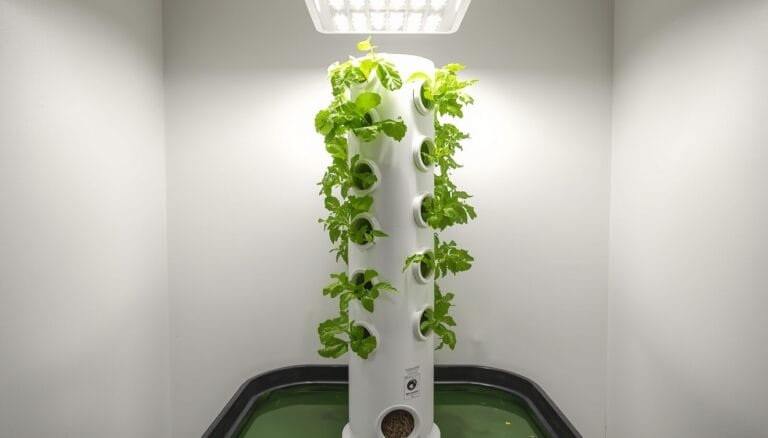
Recommended System: Low-Pressure Tower or HPA Mist Box
What Most Guides Miss (And What You Will Learn Here)
- Why heavy fruiting tomatoes tip over standard vertical aeroponic towers — and the required external ceiling trellis configuration.
- Why taproot crops (carrots and beets) grow twisted and fibrous in air chambers without mechanical soil compaction.
- Why aggressive mint root systems strangle lettuce roots inside shared mist chambers within 21 days.
- How burying strawberry crowns too deep in neoprene collars triggers rapid Botrytis crown rot from mist drift.
- How to manage EC differences when growing vegetative greens and flowering strawberries in the same reservoir loop.

1. Top 8 Aeroponic Crops: Full Performance Breakdown
The highest-yielding aeroponic crops share three characteristics: lightweight top foliage, fast vegetative turnaround (under 35 days), and non-invasive root architecture. Leafy greens and culinary herbs perform best because atomized mist delivers peak oxygen right to their feeder roots.
| Crop Name | Target EC (mS/cm) | Target pH Range | Days to Harvest | Root System Behavior in Mist |
|---|---|---|---|---|
| Butterhead Lettuce | 1.2 – 1.6 | 5.6 – 6.0 | 21 – 28 Days | Compact, fine white root mass (Tier 1) |
| Genovese Basil | 1.4 – 1.8 | 5.8 – 6.2 | 20 Days (First cut) | Vigorous feeder roots; highly aromatic |
| Everbearing Strawberries | 1.3 – 1.7 | 5.8 – 6.2 | 60 – 75 Days | Delicate roots; crowns must stay dry |
| Toscano Lacinato Kale | 1.6 – 2.2 | 5.8 – 6.3 | 30 – 40 Days | Dense fibrous root network |
| Baby Spinach | 1.4 – 1.8 | 6.0 – 6.4 | 25 – 30 Days | Sensitive to high mist temperatures |
| Cilantro / Coriander | 1.2 – 1.5 | 5.8 – 6.2 | 24 – 28 Days | Fine root hairs; bolts if EC exceeds 1.8 |
| Dwarf Bell Peppers | 2.0 – 2.6 | 5.8 – 6.3 | 65 – 80 Days | Requires bottom tower placement & support |
| Seed Potatoes (Mini-tubers) | 1.8 – 2.4 | 5.6 – 6.0 | 70 – 90 Days | Produces clean disease-free tubers in air |

2. Aeroponics vs. DWC vs. NFT Crop Turnaround Speed
Optimizing crop turnaround directly impacts profitability and production efficiency in hydroponic operations. The inherent design principles of aeroponics, Deep Water Culture (DWC), and Nutrient Film Technique (NFT) directly influence growth rates and time to harvest. Aeroponic systems consistently achieve superior growth acceleration primarily due to unparalleled root zone oxygenation and precise nutrient atomization, reducing root resistance and maximizing uptake kinetics.
Aeroponics: Accelerated Growth Through Advanced Root Oxygenation
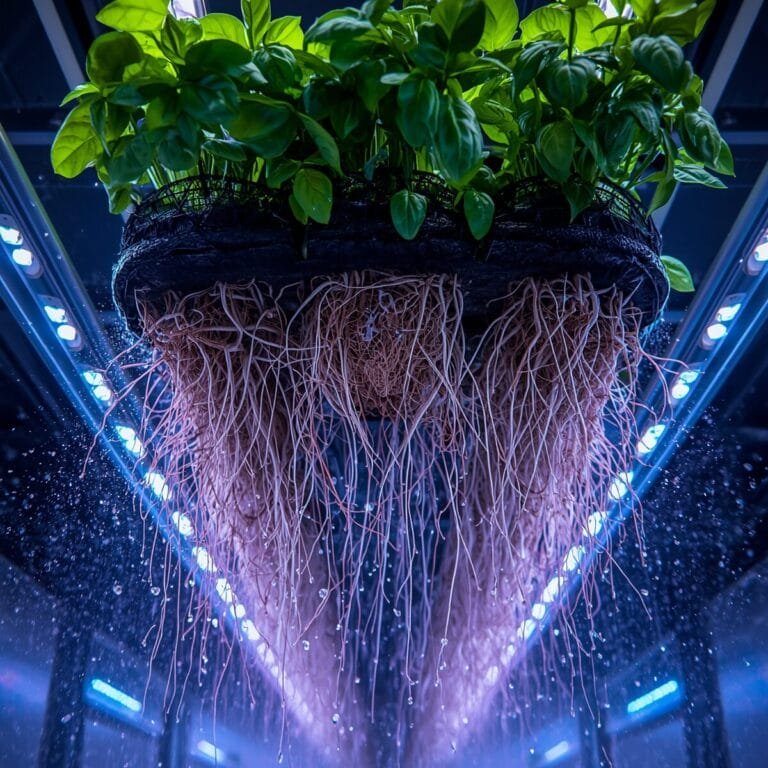
Aeroponics differentiates itself by suspending plant roots in air and delivering a finely atomized nutrient solution as a mist. This method provides near-complete root zone oxygen saturation, typically exceeding 20% atmospheric oxygen concentration at the root surface. The absence of a bulk water medium eliminates physical root resistance, enabling unhindered root proliferation and increased surface area for nutrient absorption. For leafy greens like Butterhead Lettuce or Baby Spinach, harvest cycles are often compressed by 7-10 days compared to other methods. For instance, Butterhead Lettuce reaches maturity in 21-25 days with an EC maintained between 1.4-1.8 mS/cm and a pH of 5.8-6.2. Basil varieties can be harvested in 18-21 days under similar EC/pH conditions. High-pressure aeroponics (HPA) typically employs misting nozzles producing droplets in the 30-80 micron range, cycling nutrient delivery, for example, 2-5 seconds on and 2-5 minutes off, depending on environmental conditions and crop demand. This intermittent misting ensures roots are continuously oxygenated while receiving optimized nutrient delivery.
Deep Water Culture (DWC): Balancing Oxygen and Submersion
DWC systems immerse plant roots directly into a nutrient-rich solution. While effective, the primary growth constraint is maintaining adequate dissolved oxygen (DO) levels within the reservoir. Optimizing DWC turnaround requires vigorous aeration, targeting DO concentrations above 6 mg/L, with 8 mg/L being optimal, at a solution temperature range of 18-22°C (65-72°F). Elevated water temperatures reduce oxygen solubility, impeding root respiration. For crops like Butterhead Lettuce, DWC typically requires 28-32 days to mature, with an EC target of 1.2-1.6 mS/cm and pH 5.8-6.2. However, DWC presents challenges for specific crops; strawberries, for example, are highly susceptible to crown rot when their crowns are submerged, making DWC generally unsuitable for them. Dwarf Peppers can perform adequately, maturing in 75-85 days, provided strict DO and nutrient parameters (EC 2.0-2.4 mS/cm, pH 6.0-6.5) are maintained.
Nutrient Film Technique (NFT): Intermittent Exposure and Flow Dynamics
NFT systems circulate a shallow, continuous film of nutrient solution over plant roots. This design allows a portion of the root mass to be submerged in the film while the remaining roots are exposed to air, providing a degree of oxygenation. Turnaround times in NFT often fall between DWC and aeroponics. For Butterhead Lettuce, an NFT setup will yield harvestable plants in 28-30 days, operating with an EC of 1.3-1.7 mS/cm and a pH of 5.8-6.2. Basil in NFT takes approximately 25-28 days. Maintaining a consistent nutrient film depth of 1-3 mm and a flow rate of 1-2 liters per minute per channel is critical to prevent root desiccation or excessive submersion. Large, dense root systems, such as those from mature peppers, can cause root matting that obstructs the nutrient flow in channels, making NFT less ideal for long-term fruiting crops, thus affecting overall crop cycles compared to more robust systems.
3. Crops to Strictly Avoid in Aeroponic Mist Chambers
Not all plants are suited for aeroponic chambers. Root vegetables, invasive runner herbs, and unsupported heavy fruiting vines can destabilize vertical towers or clog misting sprayers within weeks.
A. Deep Taproot Vegetables (Carrots and Beets)
True taproots require surrounding mechanical soil compaction to expand uniformly. When sprayed in open air chambers, carrots form twisted, multi-forked fibrous root tangles rather than sweet taproots.
B. Aggressive Runner Herbs (Mint and Oregano)
Mint spreads via aggressive underground rhizomes. Inside a shared aeroponic mist chamber, mint roots grow rapidly across internal manifold walls, choking neighboring lettuce net pots within 21 days.
C. Indeterminate Beefsteak Tomatoes Without External Trellising
Large indeterminate tomato vines exceed 15 pounds of top weight per plant. If grown in vertical hobby towers without external ceiling support cables, the leverage will tip over the mist chamber.
Insights Most Growers Overlook
- Planting strawberries in the top tiers of vertical aeroponic towers prevents nutrient spray drift from reaching delicate crowns.
- Harvesting butterhead lettuce using the “cut-and-come-again” method yields 3 consecutive harvests from a single aeroponic root mass.
- Lowering reservoir EC to 1.4 mS/cm when combining herbs and leafy greens prevents leaf margin burn on basil.
- Running a 1-minute ON / 4-minute OFF cycle timer prevents root saturation and produces the sweetest leaf flavor.
Common Mistakes to Avoid
- Never plant mint in the same aeroponic tower loop as delicate butterhead lettuce.
- Never submerge strawberry plant crowns below the neoprene collar level.
- Never grow high-EC fruiting peppers (2.4 EC) in the same reservoir as salt-sensitive seedlings (1.0 EC).
- Never allow aeroponic mist chamber temperatures to climb above 68°F (20°C).
- Never use un-filtered tap water when growing delicate culinary herbs in fine mist nozzles.
4. How to Prevent Strawberry Crown Rot in Neoprene Collars
4. How to Prevent Strawberry Crown Rot in Neoprene Collars
-
Precise vertical positioning of the strawberry crown within the neoprene collar is paramount for *Botrytis cinerea* prophylaxis. The plant crown must consistently reside a minimum of 12-15 mm (approximately 0.5 inches) above the uppermost plane of the collar. This critical clearance ensures atomized nutrient mist, characteristic of high-pressure aeroponics (HPA) systems operating at 60-80 PSI, never directly impinges upon or accumulates around the vegetative crown tissue. Direct or continuous mist contact creates a persistently saturated microenvironment, facilitating rapid germination of *Botrytis* spores and subsequent hyphal penetration into the succulent crown parenchyma, leading to necrosis and systemic infection. The neoprene collar’s primary function is mechanical support; it must not wick moisture into the crown.
-
Strict environmental atmospheric controls are indispensable for mitigating fungal proliferation. Maintain ambient relative humidity (RH) within a tightly controlled range of 60-70% during vegetative growth, decreasing to 55-65% during fruiting stages. High humidity, especially above 75%, significantly elevates the vapor pressure deficit (VPD) and condenses on plant surfaces, promoting fungal sporulation. Implement robust air circulation via oscillating fans to prevent stagnant air pockets and reduce boundary layer humidity around individual crowns. Ensure adequate air exchange rates to remove moisture vapor. Day temperatures should ideally be sustained at 20-24°C, with night temperatures dropping to 16-18°C, which helps prevent condensation and reduces fungal growth rates.
-
Meticulous management of the nutrient solution profile directly impacts plant resilience against pathogens. Maintain the nutrient solution pH consistently between 5.8 and 6.2; deviations outside this range impair nutrient uptake, stressing the plant and diminishing its inherent resistance. Electrical conductivity (EC) should be precisely calibrated: target 1.2-1.6 mS/cm during vegetative phases and 1.8-2.2 mS/cm for reproductive stages, adjusted for specific cultivar requirements. Ensure the nutrient solution temperature remains within an optimal range of 18-22°C (64-72°F) to prevent root system stress, which can indirectly compromise crown health. Sustained dissolved oxygen (DO) levels above 6 ppm are non-negotiable for robust root development, directly underpinning overall plant vigor and defense mechanisms.
-
Implement rigorous sanitation protocols throughout the cultivation cycle. All system components, including reservoirs, plumbing, and growing chambers, must be disinfected between crop cycles using a sterilant such as 3% hydrogen peroxide or a 0.5% sodium hypochlorite solution, followed by thorough rinsing. Regularly inspect and remove any senescent or damaged foliar material, as these tissues provide entry points and serve as primary inoculum sources for *Botrytis*. Promptly isolate or remove any plants exhibiting early signs of crown discoloration, softening, or fuzzy gray mold to prevent pathogen dissemination to healthy specimens.
5. Multi-Crop Reservoir EC and pH Balancing
5. Multi-Crop Reservoir EC and pH Balancing: Precision Hydroponics
Managing nutrient solutions for diverse plant species within a singular aeroponic or hydroponic system presents a unique challenge. Achieving optimal growth for each crop necessitates a precise understanding of their individual ionic uptake rates and proton concentration tolerances. The recommended “middle-path” strategy, targeting an Electrical Conductivity (EC) of 1.4 to 1.6 mS/cm and a pH of 5.8, is engineered to mitigate nutrient antagonism and physiological stress across a common mixed planting such as lettuce, basil, and strawberries.
While individual species exhibit distinct preferences, this averaged set point minimizes the risk of nutrient lockout for lower-feeding plants and severe deficiencies for higher-feeding ones. For instance:
- Lettuce (Lactuca sativa) generally thrives at a lower EC range of 0.8-1.2 mS/cm and a pH of 5.5-6.0. The “middle-path” EC of 1.4-1.6 mS/cm is slightly elevated but remains within a tolerable margin, provided root oxygenation is high.
- Basil (Ocimum basilicum) prefers a moderate to high EC, typically 1.6-2.2 mS/cm, with a pH range of 5.5-6.5. The compromise EC of 1.4-1.6 mS/cm ensures adequate nutrient availability for robust vegetative growth without inducing tip burn.
- Strawberries (Fragaria x ananassa), particularly during fruiting stages, demand a higher EC between 1.8-2.2 mS/cm and a pH of 5.8-6.2. The 1.4-1.6 mS/cm range will support vegetative development but may necessitate supplemental foliar feeding or a temporary EC increase if fruiting performance lags.
Rigorous daily monitoring of both EC and pH is non-negotiable for system stability. Utilize a calibrated EC meter and pH meter, adjusting the reservoir solution with hydroponic-grade pH Up (potassium hydroxide) or pH Down (phosphoric or nitric acid) in minute increments to maintain the 5.8 target. EC adjustments involve adding concentrated nutrient solution to raise conductivity or distilled/RO water to dilute and lower it. A complete reservoir flush and nutrient replenishment every 7-14 days is advised to prevent accumulation of elemental imbalances and maintain solution stability, irrespective of top-off volumes.
Observe plant morphology for early indicators of nutrient stress: chlorosis (yellowing) may suggest nitrogen or iron deficiency (often pH-related), while leaf margin necrosis can indicate potassium deficiency or nutrient toxicity from excessively high EC. Root health, visible as clean, white, and robust structures, directly correlates with successful nutrient uptake at the specified parameters.
Key Takeaways
- Butterhead lettuce, basil, and everbearing strawberries are the top aeroponic performers.
- Avoid taproot carrots and invasive mint runners in vertical mist towers.
- Keep strawberry plant crowns strictly elevated above neoprene foam collars.
- Use a balanced EC of 1.4–1.6 mS/cm for mixed leafy green and herb reservoirs.
Save this guide for later!
Pin this aeroponic crop cheat sheet to your favorite Pinterest board so you never lose these harvest targets.

6. Frequently Asked Questions
What is the easiest crop for aeroponic beginners?
Butterhead lettuce is the easiest crop. It requires low EC (1.2–1.6 mS/cm), tolerates slight pH fluctuations, and reaches harvest maturity within 21 to 25 days.
Can I grow root crops like carrots or potatoes in aeroponics?
Seed potatoes grow exceptionally well in dark aeroponic chambers because tubers hang cleanly in air. However, carrots and beets grow twisted and fibrous without soil compaction.
Why do my aeroponic strawberries get crown rot?
Crown rot happens when strawberry crowns sit below the neoprene collar level where mist droplets accumulate. Always position crowns 0.5 inches above the collar.
Can I grow heavy beefsteak tomatoes in a vertical aeroponic tower?
Only if you install external overhead support cables. Un-trellised tomato vines weigh over 15 pounds and will tip over standalone hobby towers.
What is the best EC when growing lettuce and herbs together?
Maintain a balanced reservoir EC of 1.4 to 1.6 mS/cm. This provides enough nitrogen for basil without causing tipburn on delicate lettuce.
Why should I avoid mint in an aeroponic system?
Mint spreads via aggressive runner roots that colonize mist chamber manifolds and choke out neighboring plant roots within three weeks.
How do aeroponic crop yields compare to DWC and NFT?
Aeroponic leafy greens grow up to 30% faster than DWC and NFT, allowing commercial growers to harvest 14 complete crop cycles per year instead of 10.
🌿 Complete Aeroponic Growing Series
Explore our comprehensive aeroponic engineering library:
- What Is Aeroponics? Complete Beginner’s Guide
- Aeroponic Tower Misting Schedule Guide — Ideal ON/OFF timer cycles
- How to Prevent Algae in Hydroponic & Aeroponic Chambers
- EC to PPM Conversion Calculator — Dial in your misting solution strength