Gardening Guides

Gardening Guides for soil, hydroponic, and aeroponic systems. Learn expert tips, plant care, and tool tutorials to grow healthier, high-yield gardens

  • Soil Fertilizer Timing Guide: When to Apply NPK, Top-Dress, and Fix Deficiencies

    When to apply NPK, how often to top-dress compost, and how to read plant deficiency signs before your crops suffer Key Takeaways Apply a balanced NPK fertilizer (10-10-10) 2 weeks before planting and again every 4–6 weeks during the active growing season — not at every watering. Top-dressing with 1 inch of compost every 6 weeks replenishes organic matter and adds slow-release nitrogen equivalent to roughly 0.5 lbs of 10-0-0 fertilizer per 10 sq ft. Nitrogen deficiency shows as yellowing that starts on the oldest (lowest) leaves and moves upward — phosphorus deficiency shows as purple-red discoloration on leaf undersides. Over-fertilizing with nitrogen during the fruiting stage delays harvest by…

  • Raised Bed Gardening Guide: How to Build, Fill & Manage Your Beds

    Building, filling, and managing raised beds for year-round vegetable production Key Takeaways A standard 4×8 ft raised bed holds roughly 12 cubic feet of growing mix — enough for 32 lettuce plants or 5 tomato plants. The ideal raised bed soil blend is 60% topsoil, 30% compost, and 10% perlite — this drains 40% faster than native clay soil. Beds 10–12 inches deep suit 90% of vegetables; root crops like carrots need at least 16 inches. Raised beds warm up 8–10°F faster than in-ground soil in spring, extending your growing season by 3–4 weeks each year. Proper plant spacing in a 4×8 bed can produce up to 4× more yield…

  • Composting Tips: How to Turn Kitchen & Garden Waste Into Black Gold

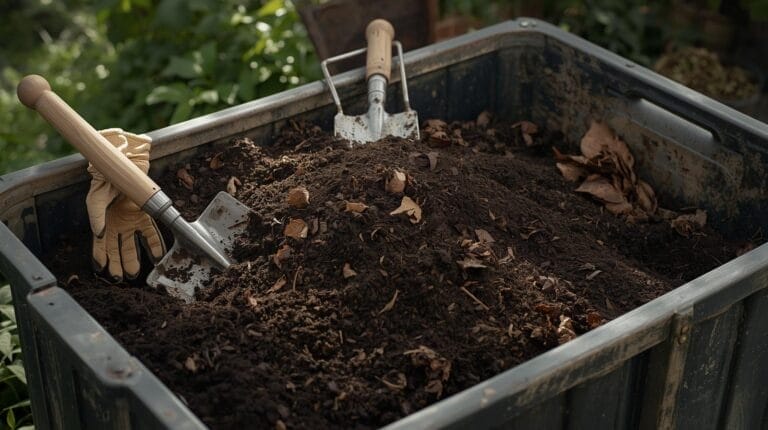
    Composting is one of the easiest and most effective ways to improve your garden’s soil health while reducing household waste. Whether you’re a beginner or an experienced gardener, learning how to compost correctly will help you create nutrient-rich organic matter that your plants will love. And if you’re planning a large composting project, don’t forget to use our handy Compost Calculator to quickly estimate how much compost you’ll need for your garden beds, lawn, or landscaping. Why Composting Matters Healthy soil is the foundation of strong, productive plants. Composting not only cuts down on landfill waste but also: Composting Basics: What You Can and Can’t Compost ✅ What to Compost…

  • Mulch and Substrate Guide: Cover Soil and Fill Beds Accurately

    Choosing the right amount of mulch or substrate is one of the simplest ways to keep your plants healthy and your budget in check. Adding too little won’t give the full benefits, while ordering too much means wasted time, money, and storage space. That’s where our Mulch & Substrate Calculator comes in — helping you find the exact volume you need in cubic feet, cubic yards, or liters. Whether you’re spreading bark mulch over garden beds, enriching soil with compost, or filling hydroponic containers with coco coir, perlite, or gravel, this tool ensures you get accurate results every time. Why Use a Mulch & Substrate Calculator? When gardening or setting…

  • US to Metric Conversion for Growers: Easily Switch Between Measurements

    Accurate measurement is key for gardening and hydroponics. Use our US to Metric Unit Converter for fast, easy US to Metric conversion of volume, weight, and length.. Avoid miscalculations in watering, nutrient dosing, or planting spacing with this simple, reliable tool. Why Use a Unit Converter? Common US/Metric Conversions Unit Type US Unit Metric Unit Conversion Volume 1 gallon (US) 3.785 liters 1 gal × 3.785 = L Volume 1 liter 0.264 gallons 1 L × 0.264 = gal Weight 1 pound (lb) 0.454 kilograms 1 lb × 0.454 = kg Weight 1 kilogram (kg) 2.205 pounds 1 kg × 2.205 = lb Length 1 inch 2.54 cm 1 in…

  • Water Volume Converter: Measure and Manage Water Needs

    Water management is the foundation of successful gardening and hydroponics. Our Water Volume Calculator and Water Volume Converter help you determine exactly how much water your plants or system requires. Whether you are filling a reservoir, planning an irrigation system, or mixing nutrient solutions, this tool makes water measurement fast and accurate. Why Use a Water Volume Calculator? Common Water Volume Conversions Unit Equivalent Usage Example 1 liter (L) 0.264 gallons (US) Mixing small nutrient batches 1 gallon (US) 3.785 liters Watering houseplants 1 cubic meter (m³) 1000 liters Irrigation tanks or farm reservoirs 10 liters 2.64 gallons Hand-watering container gardens 50 gallons 189 liters Hydroponic nutrient reservoir How to…

  • Growth Rate Calculation: Monitor Plant Development Over Time

    Healthy plant growth depends on consistent monitoring. Our Growth Rate Tracker helps record and analyze crop growth in soil or hydroponics, providing accurate growth rate calculations. By tracking stem height, leaf count, and overall biomass, you can predict harvest time, identify growth issues early, and maximize yields. Perfect for home gardeners, hydroponic hobbyists, and commercial growers. Why Track Plant Growth Rate? Growth rate tracking is not just about measuring height—it’s about understanding plant health. Monitoring progress allows you to: Average Growth Rates for Common Plants Plant Growth Rate (per week) Optimal Conditions Notes Lettuce 2–4 cm Cool temps, 14–16 hrs light Harvest-ready in 4–6 weeks Tomatoes 5–8 cm Warm temps,…

  • Seed Germination Guide: Track Your Plant Sprouting

    Germination is the first step in growing healthy plants. Every seed has its own sprouting timeline depending on species, temperature, and growing medium. Our Seed Germination Timer and Seed Germination Guide helps you predict when your seeds will sprout, so you can plan transplanting, nutrient schedules, and harvest cycles with precision. Whether you’re starting herbs on a kitchen counter or managing a hydroponic farm, this tool keeps your gardening on track. Why Use a Seed Germination Timer? Timing is everything in gardening. Knowing when seeds will sprout ensures you avoid overwatering, overcrowding, or nutrient mismanagement. With germination data, you can: Seed Germination Timelines (Average Days) Plant Germination Time Ideal Temperature…

  • Yield Predictor: Estimate Your Garden Harvest

    Knowing your expected yield before planting helps you plan space, nutrients, and harvest cycles effectively. Our Yield Estimator uses crop type, spacing, growth duration, and environment to give you a realistic estimate of your garden or hydroponic system’s harvest potential. Whether you’re a hobby grower or managing a commercial farm, this tool helps reduce guesswork and improve productivity. Why Use a Yield Predictor? Yield prediction is crucial for both small and large-scale growers. It ensures proper resource allocation, avoids overcrowding, and helps forecast market supply for commercial growers. In hydroponics, where precision is key, this tool can help optimize nutrient schedules and planting density for maximum harvest. Sample Crop Yields…

  • Plant Spacing Converter: Maximize Your Garden Yield

    Correct plant spacing is one of the simplest ways to boost your garden’s productivity. Whether you’re growing lettuce, tomatoes, or herbs, proper spacing ensures each plant receives adequate sunlight, airflow, and nutrients. This Plant Spacing converter helps you quickly determine the ideal distance between plants for maximum growth and harvest. Why Use a Plant Spacing Converter? Many gardeners underestimate how crucial spacing is. Overcrowding leads to competition for water and nutrients, increases the risk of disease, and reduces yields. With our tool, you can easily plan your garden layout—whether in raised beds, containers, or hydroponic systems. Internal Links FAQs Why is plant spacing important? Proper spacing prevents overcrowding, reduces the…