Seed Germination Guide: The Science of Sprouting

| Factor | Optimal Range/Condition | Impact on Germination | Notes |
|---|---|---|---|
| Temperature | 18–28°C (species-dependent) | Too low: dormancy/slow growth. Too high: damages embryo. | Use heating mats for cold environments. |
| Moisture | Consistently moist, not soggy | Too dry: no activation. Too wet: rot/anaerobic conditions. | Ensure good drainage to prevent waterlogging. |
| Light | Varies (some need, some avoid) | Light-dependent: surface sow. Dark-dependent: cover. | Always check specific seed requirements. |
| Oxygen | Good air circulation | Insufficient: suffocates embryo and promotes pathogens. | Well-draining medium prevents compaction and encourages airflow. |
| Seed Depth | 2-3x seed diameter | Too shallow: dries out easily. Too deep: exhausts reserves before reaching light. | Exception: very small seeds and light-dependent seeds need surface sowing. |
| Pre-Treatment Method | Description | Benefits for Germination | Suitable for Seeds like | Key Consideration |
|---|---|---|---|---|
| Soaking | Submerging seeds in room-temperature water for 6-24 hours. | Softens hard seed coats, initiates water absorption. | Peas, Beans, Spinach, Chard, Beet | Change water every 8-12 hours; avoid over-soaking delicate seeds. |
| Scarification | Mechanically nicking, scratching, or abrading the seed coat. | Breaks dormancy by allowing water to penetrate hard shells. | Lupine, Morning Glory, Sweet Pea, many tree seeds | Be careful not to damage the embryo; use sandpaper or a sharp knife. |
| Stratification | Exposing seeds to cold, moist conditions for a period. | Mimics winter, breaking natural dormancy for temperate plants. | Lavender, Coneflower, Apple, many perennial flowers | Typically 4-12 weeks in a refrigerator with moist sand or paper towel. |
| Priming | Controlled hydration followed by drying before planting. | Synchronizes germination, improves speed and uniformity. | Many commercial vegetable seeds (e.g., carrots, lettuce) | Often a commercial process, but home kits exist for advanced growers. |
| Light Exposure | Specific light or dark conditions during germination. | Activates light-sensitive hormones; prevents photo-inhibition. | Lettuce (light), Celery (light), Onion (dark), Cabbage (dark) | important for very small seeds often sown on the surface (light-dependent). |
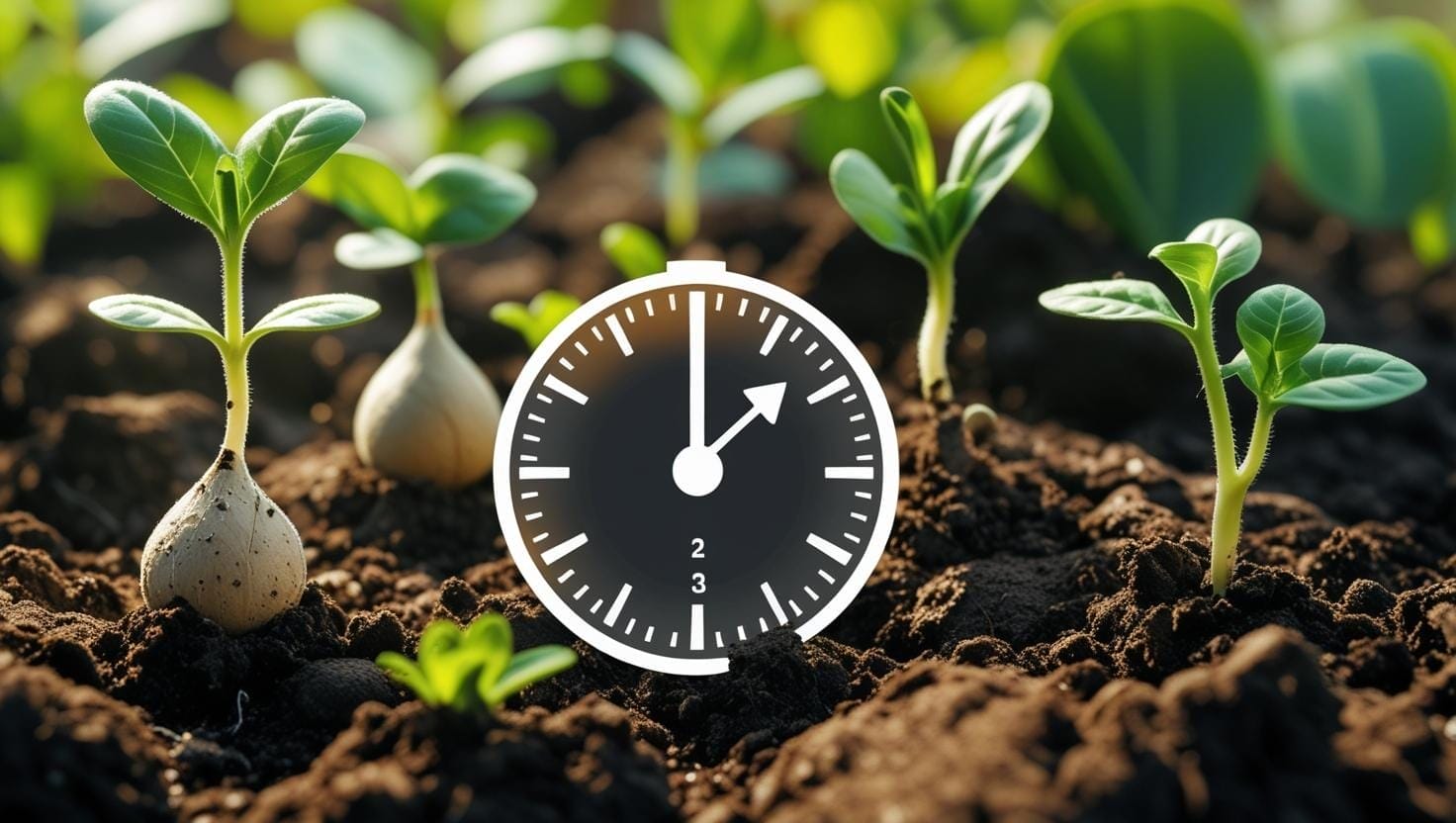
Why Use a Seed Germination Timer? (Seed Germination Science)
Timing is everything in gardening. Knowing when seeds will sprout ensures you avoid overwatering, overcrowding, or nutrient mismanagement. With germination data, you can: To easily convert between these measurements for your nutrient solution, use our free EC to TDS converter.
- Plan your seedling transfers to soil or hydroponic systems
- Avoid delays in crop cycles
- Schedule lighting, watering, and nutrient supply more efficiently
Seed Germination Timelines (Average Days)
| Plant | Germination Time | Ideal Temperature | Notes |
|---|---|---|---|
| Lettuce | 2–5 days | 18–22°C | Fast sprouting in hydroponics |
| Tomatoes | 5–10 days | 20–25°C | Needs warmth for best results |
| Basil | 5–7 days | 22–28°C | Keep consistently moist |
| Spinach | 7–14 days | 10–20°C | Cool-season crop |
| Strawberries | 14–28 days | 15–21°C | Slow germination; patience required |
Insights Most Growers Overlook

- The important Role of Water Temperature: While moisture is key, the temperature of the water you use for soaking or watering can significantly impact germination speed and success. Cold water can shock seeds, slowing down activation. Aim for room temperature or slightly warm (not hot) water.
- No Nutrients Needed Yet: Seeds contain all the food reserves they need for germination and initial seedling growth. Introducing fertilizers too early can burn delicate roots and hinder development. Wait until the first set of ‘true leaves’ (not cotyledons) appear before considering a very diluted nutrient solution.
- Airflow Prevents Disaster: Good air circulation, even during germination, is vital. Stagnant, humid air creates a perfect breeding ground for fungal diseases like ‘damping-off,’ which can wipe out an entire tray of seedlings overnight. A gentle fan can make a huge difference.
- The Secret Life of Dormancy: Not all seeds are ready to sprout just because they’re wet and warm. Many require specific cues (like cold stratification or scarification, as detailed above) to break natural dormancy. Ignoring these can lead to frustratingly low germination rates for certain species.
- Quality Over Quantity with Moisture: Consistently moist, but never soggy. Overwatering suffocates the embryo by displacing oxygen in the soil, leading to rot and anaerobic conditions. Proper drainage and a gentle, consistent watering approach are far more effective than heavy, infrequent watering.
- Record Keeping is Your Best Friend: Documenting your germination process—seed variety, date sown, pre-treatment, temperature, and actual sprout date—provides invaluable data for future seasons. This helps you identify what works best in your specific environment and adjust your techniques for optimal success.
Overcoming Seed Dormancy

Successful seed germination often involves breaking natural dormancy mechanisms built into the seed. For stubborn varieties, techniques like scarification (gently nicking the seed coat) or cold stratification (simulating winter conditions) can dramatically improve germination rates. Understanding the specific evolutionary triggers for your crop ensures that you achieve rapid, uniform sprouting, setting a strong foundation for a healthy hydroponic cycle.
The Role of Stratification and Scarification in Stubborn Seeds
While standard garden vegetables like lettuce and tomatoes germinate effortlessly with simple warmth and moisture, many perennial herbs, medicinal plants, and tree seeds possess deep evolutionary dormancy mechanisms. If you try to germinate these “stubborn” seeds normally, they will sit in the soil for months doing absolutely nothing. To wake them up, you must mimic the harsh conditions of nature.
Cold Stratification: Faking a Winter
Many seeds, such as lavender, rosemary, and milkweed, will not sprout unless they have experienced a hard winter freeze.
This prevents them from accidentally germinating during a warm autumn week, only to be killed by incoming snow. To break this dormancy, we use cold stratification. Place the seeds inside a slightly damp paper towel, seal them in a Ziploc bag, and leave them in the refrigerator for 3 to 6 weeks. This prolonged period of cold and moisture signals to the seed’s internal chemistry that “winter” has passed, and when you finally move them to a warm grow mat, they will sprout immediately, assuming it is spring.
Scarification: Breaching the Hull
Some seeds, like nasturtiums, morning glories, and tough legumes, have incredibly thick, rock-hard outer seed coats that are completely waterproof.
In nature, these seed coats are slowly ground down by the digestive tracts of animals or the freezing and thawing of soil over years. In the garden, you must artificially breach this hull—a process called scarification. Using a piece of fine sandpaper, gently rub the outer edge of the seed until you barely see the lighter-colored interior. Alternatively, you can use nail clippers to nick a tiny piece off the opposite end of the “eye.” Once the waterproof seal is broken, soak the seed in warm water for 24 hours; it will swell to twice its size and germinate rapidly.
Pin this Germination Guide!
Save this visual guide to your gardening board on Pinterest so you never lose it!

Frequently Asked Questions
Written by Sarah Collins
Sarah Collins is a hydroponic grower and horticultural researcher with 8+ years of hands-on experience in DWC, NFT, recirculating, and soil systems. She designs tools and publishes guides at currentgardening.com to help indoor growers optimize their yields.