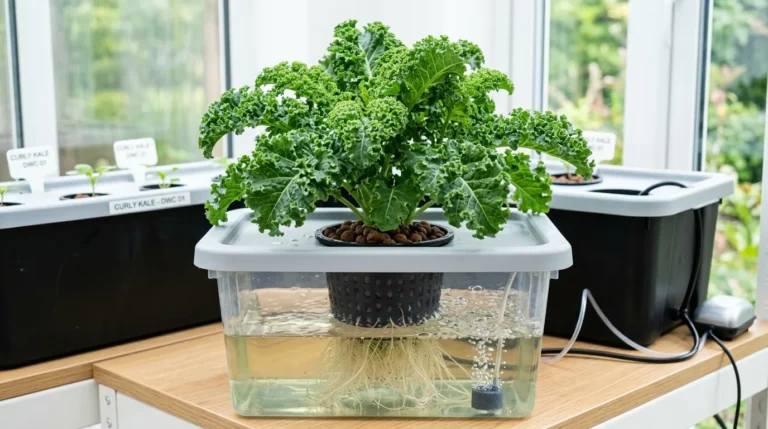
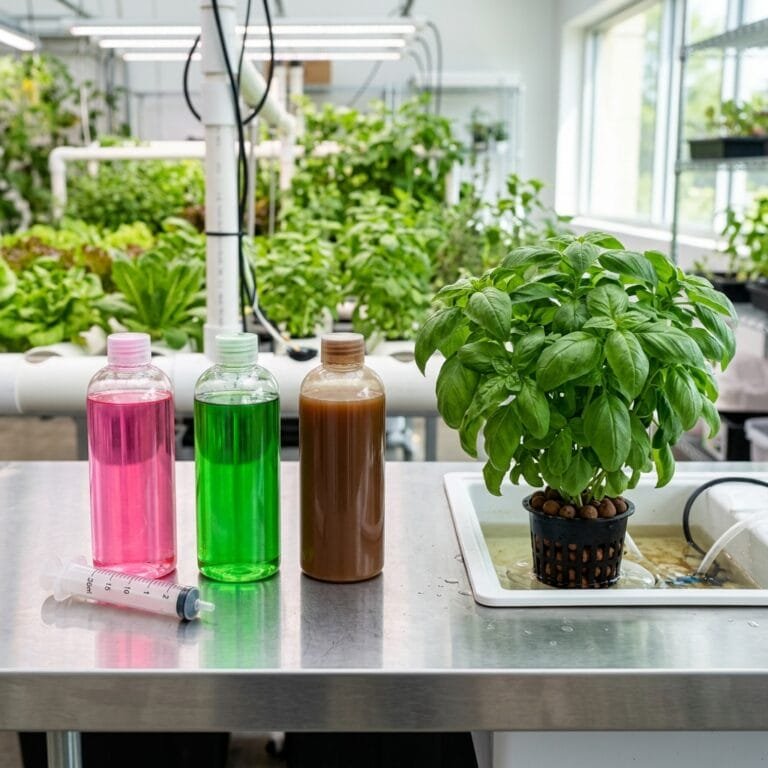
DIY DWC Bucket: Complete 5 Gallon Hydroponics Setup Guide
What Most Guides Miss (And What You Will Learn Here)
- The Light Leak Algae Risk: Why orange and blue buckets are not lightproof and how to mask them to prevent reservoir algae growth.
- The Net Pot Depth Ratio: Why 6-inch net pots work best for large plants, and why using 2-inch net pots in DWC buckets leads to top-heavy plant tipping.
- Air Gap Dynamics: Why drowning your net pot in water kills young plants, and how to maintain the perfect 1.5-inch air gap.
- Salt Scaling on Pebbles: Why failing to rinse clay pebbles before use causes pH swings and white salt scaling in DWC.
- The Sight Tube draining hack: How to build a simple external drain assembly to easily empty water without lifting heavy plants.

Insights Most Growers Overlook
- Don’t drill your net pot hole exactly to the stated diameter of the pot; make it 1/8 inch smaller so the lip of the pot sits firmly without falling through when the plant gets heavy.
- Using a bucket that is completely opaque is critical. Even slightly translucent white buckets let enough light in to trigger explosive root rot and algae.
- Always add a water level indicator tube using a grommet on the outside of the bucket so you don’t have to lift a massive, mature root ball just to check the nutrient level.
Why Build a homemade deep water culture Setup?

Hydroponics has a reputation for being expensive and overly complex. Commercial systems can easily cost hundreds of dollars for basic setups.
However, you can achieve the exact same explosive growth rates using a standard **DIY 5-gallon bucket DWC system**. This diy dwc bucket setup is highly customizable, extremely cheap, and easy to build in a single afternoon. According to the Virginia Cooperative Extension, building your own home hydroponic system is an excellent, low-cost way to grow fresh leafy crops year-round.
Building a diy dwc bucket is the easiest way to experience the rapid growth of water-based gardening on a budget.
A 5-gallon bucket DWC system provides a large enough water volume buffer to support heavy-feeding plants like tomatoes or peppers. Unlike small hydroponic planters, a 5-gallon volume naturally resists daily shifts in water temperature, pH, and EC. This stability makes it the ideal starting system for beginners learning the ropes of indoor growing.
Do I need an air stone in a 5-gallon DWC bucket?
What nutrients work best in a 5-gallon bucket DWC?
Can I grow multiple plants in one 5-gallon DWC bucket?
Diagnosing 7 Common DIY DWC Bucket Problems
Ensure your DIY build is successful by identifying and resolving these seven common 5-gallon bucket problems.
| Symptom / Problem | The Root Cause | How to Fix It |
|---|---|---|
| Problem 1: Algae Growth from Thin Walls | Blue, orange, or white hardware store buckets allow light leaks, prompting rapid algae colonies in water. | Always use solid black HDPE buckets, or wrap thin buckets in lightproof foil tape. |
| Problem 2: Net Pots Slipping into Lids | Hole cut in lid is too large, causing the pot to slip under mature plant weight. | Use a hole saw 1/4-inch smaller than net pot rim, or buy heavy-duty net pot lids. |
| Problem 3: Seedling Drowning | Water level touches the base of net pot, keeping rockwool soaking wet and rotting stems. | Maintain a strict 1-to-2-inch air gap below the net pot base once root tips emerge. |
| Problem 4: Salt Scaling on Clay Pebbles | Unwashed pebbles or continuous top-feeding causes white mineral crusts to form. | Wash pebbles thoroughly before loading. Turn off top-feeding lines once roots hit reservoir. |
| Problem 5: Hard Water pH Spikes | Alkaline tap water contains calcium carbonate buffers that pull pH up above 7.0. | Use RO water or filtered rainwater, or dose pH Down to stabilize at 5.8. |
| Problem 6: Difficult Water Changes | Lifting heavy plant net pots to empty and refill buckets stresses root structures. | Install a quick drain bulkhead and clear vinyl indicator tube near the bucket base. |
| Problem 7: Small-Volume Overheating | 5-gallon volume heats up rapidly from grow lights and floor conduction, prompting rot. | Insulate buckets in reflective wrap and elevate them off hot floors using wooden slats. |
DIY 5-Gallon Bucket Bill of Materials & Costs

You can source all the necessary parts for a DIY bucket system at local hardware stores and online shops. Our diy dwc bucket parts list covers everything from the reservoir bucket to the net pot lid.
| Component | Specification | Estimated Cost (USD) |
|---|---|---|
| 5-Gallon Bucket & Lid | Food-grade, solid black plastic HDPE | $6.00 |
| Net Pot Disc/Lid | 6-inch wide heavy-duty plastic net pot | $4.50 |
| Air Pump | Single outlet, rated for 5 LPM flow rate | $12.00 |
| Air Stone & Line | 4-inch disc ceramic stone + 6ft silicone tubing | $7.00 |
| Check Valve | One-way air check valve (standard 1/4-inch) | $1.50 |
| Clay Pebbles | Expanded clay grow media (washed) | $4.00 |
| pH Testing Kit | Manual liquid drops or digital pocket pH pen | $10.00 |
Step-by-Step DIY DWC Assembly Guide

Building a diy dwc bucket is a highly rewarding project that delivers fresh produce in weeks. It is budget-friendly, highly scalable, and teaches you the basics of hydroponics.
Your first action is to get a black bucket and a 6-inch net pot lid. Mix your first reservoir nutrients and measure the volumes using our Water Volume Calculator. Dial in the air gap and watch your plants grow at double speed.
Accessibility requirement: the accordion toggle must include aria-expanded (toggling true/false on click) and aria-controls pointing to the answer block’s id. Do not rely on onclick alone.
Conclusion & Next Steps
Building a diy dwc bucket is a highly rewarding project that delivers fresh produce in weeks. It is budget-friendly, highly scalable, and teaches you the basics of hydroponics.
Your first action is to get a black bucket and a 6-inch net pot lid. Mix your first reservoir nutrients and measure the volumes using our Water Volume Calculator. Dial in the air gap and watch your plants grow at double speed.
Advanced Tips & Daily Maintenance
- Daily Check: Verify your reservoir water level and temperature are stable.
- Weekly Maintenance: Calibrate your pH pen and verify your EC readings are accurate.
- System Flush: Remember to completely flush and replace your nutrient solution every 10-14 days to prevent salt buildup.
Insights Most Growers Overlook
- Avoid Home Depot Orange Buckets: The bright orange (or white) 5-gallon buckets found at hardware stores are translucent. If you put a flashlight inside one, you’ll see it glows. That means grow lights will penetrate the plastic, causing massive algae blooms in the nutrient water. Only use solid black buckets.
- Check Valves are Non-Negotiable: A tiny $2 plastic check valve on your airline tubing is the most important piece of the system. If the power goes out, the air pump stops, and gravity will literally siphon all 5 gallons of nutrient water backwards through the air tube, destroying your air pump and flooding your floor.
Frequently Asked Questions
Continue Learning

Frequently Asked Questions About DIY DWC
How do I check the pH and EC if the plant is huge and I can’t lift the lid?
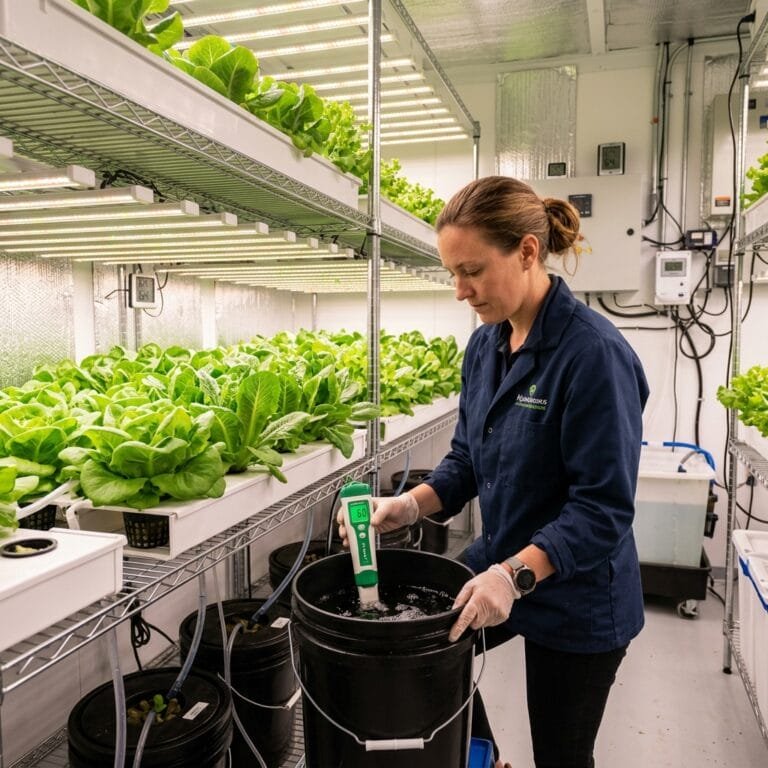
This is the biggest flaw of simple DIY DWC buckets. To solve this, drill a 1-inch hole near the edge of the lid before planting. You can drop your pH pen or top-off water through this access hole without disturbing the massive root system.
Can I drill a water level indicator tube into the side?
Yes, many growers drill a hole at the bottom and use a rubber grommet and a clear piece of blue poly tubing strapped to the side of the bucket to see the water level. However, clear tubing allows light in, which grows algae. You must cover the clear tube with tape or a sleeve when not checking it.