Optimal Plant Density: Maximizing Hydroponic Growth

What Most Spacing Guides Miss (And What You Will Learn Here)
- The Square Foot Gardening Myth: Why blindly following the 1×1 grid system fails for indeterminate tomatoes and sprawling vines.
- Airflow vs Powdery Mildew: How 2 extra inches of spacing can completely prevent fungal outbreaks in humid climates.
- Root Zone Competition: Why hydroponic plants can be spaced 30% closer together than soil plants without sacrificing yield.
- Intercropping Geometry: How to safely plant shade-loving lettuce beneath the canopy of sun-blocking peppers to maximize small spaces.
- Hexagonal vs Grid Planting: Why staggering your rows in a triangle pattern yields 15% more crops per square foot than a traditional grid.
Insights Most Growers Overlook
- It is human nature to want to pack as many seedlings into a bed as possible. However, 12 properly spaced tomato plants will yield double the fruit of 24 overcrowded, diseased tomato plants in the exact same footprint.
- Light penetration is the ultimate limiting factor. If the lower leaves are completely shadowed by overlapping canopies, the plant will abort those leaves and focus energy solely on the top, resulting in tall, spindly, unstable stems.
- Root masses are often a mirror image of the canopy. If a pepper plant grows 2 feet wide above ground, its roots extend 2 feet wide below ground. Spacing them 12 inches apart guarantees severe subterranean warfare over water.
Why Exact Plant Spacing Matters
Achieving **optimal plant density** in your grow room is the secret to maximizing yields while preventing airflow issues.
When you hold a tiny, 2-inch tomato seedling in your hand, placing it 24 inches away from its neighbor feels like a massive waste of garden real estate. Three weeks later, you realize you made a terrible mistake. Plant spacing is entirely about predicting the mature, full-grown size of the crop at the peak of summer. Ensuring optimal plant density is correct is vital for success. Learn more about hydroponics research.
Proper spacing ensures three critical resources: light, airflow, and root access. When canopies overlap, leaves are deprived of the photons required for photosynthesis. When leaves are crammed together, morning dew cannot evaporate, creating a literal petri dish for fungal spores. And when roots intertwine, the fastest-growing plant will steal the majority of the nitrogen and water, leaving the adjacent plants stunted and sickly. Ensuring optimal plant density is correct is vital for success. If you are looking to maximize yields in these setups, check out our guide on the best crops for aeroponic systems.
Soil Spacing vs Hydroponic Spacing
A fascinating biological truth is that hydroponic plants can be spaced significantly closer together than plants grown in dirt. In a soil garden, plants must send their roots far and wide to aggressively hunt for water and pockets of nutrients. This requires massive root zones and generous spacing between crops. Ensuring optimal plant density is correct is vital for success.
In hydroponics, the water and nutrients are delivered directly and infinitely to the root zone.
The roots do not need to hunt; they just sit and absorb. Therefore, hydroponic root masses remain remarkably small and dense compared to their soil counterparts. Because there is no subterranean competition for nutrients, the only limiting factor in hydroponics is the physical canopy space required for light and airflow. This allows commercial indoor farms to achieve 30% higher planting densities than traditional soil farms.
Master Spacing Chart for Common Crops

Use this baseline reference chart when planning your garden grid. Note that these are for standard soil beds; you can reduce these by roughly 20% in high-flow hydroponic systems.
| Crop Type | Spacing Between Plants | Spacing Between Rows | Mature Canopy Note |
|---|---|---|---|
| Tomatoes (Indeterminate) | 24 – 36 inches | 36 – 48 inches | Requires vertical trellising; very susceptible to mildew if crowded. |
| Tomatoes (Determinate/Bush) | 18 – 24 inches | 24 – 36 inches | Grows into a dense, compact 3-foot wide bush. |
| Peppers (Bell & Jalapeno) | 15 – 18 inches | 24 inches | Can safely touch canopies slightly for mutual support. |
| Lettuce (Head) | 10 – 12 inches | 12 – 18 inches | Needs space to form a tight, unblemished central head. |
| Lettuce (Loose Leaf) | 4 – 6 inches | 12 inches | Can be planted densely for continuous “cut and come again” harvesting. |
| Cucumbers (Trellised) | 12 inches | 36 inches | Vertical string trellising saves massive amounts of space. |
| Carrots & Radishes | 2 – 3 inches | 8 – 12 inches | Must thin seedlings ruthlessly or the roots will deform each other. |
Common Spacing Mistakes to Avoid
- Mistake: Planting indeterminate tomatoes using the “Square Foot Gardening” method (1 per square foot).
Fix: Indeterminate tomatoes grow 8 feet tall and 3 feet wide. 1 square foot will result in a tangled, diseased jungle. Give them 2 to 3 square feet minimum. - Mistake: Refusing to “thin” your seedlings.
Fix: When you plant 3 carrot seeds in one hole and they all sprout, you MUST ruthlessly pull two of them out. If you leave all three, you will get three twisted, worthless strings instead of one large carrot. - Mistake: Planting short crops (like spinach) on the north side of tall crops (like corn).
Fix: The corn will completely block the sun. Always plant the tallest crops on the northernmost edge of your garden.
Hexagonal Offset Planting (15% More Yield)
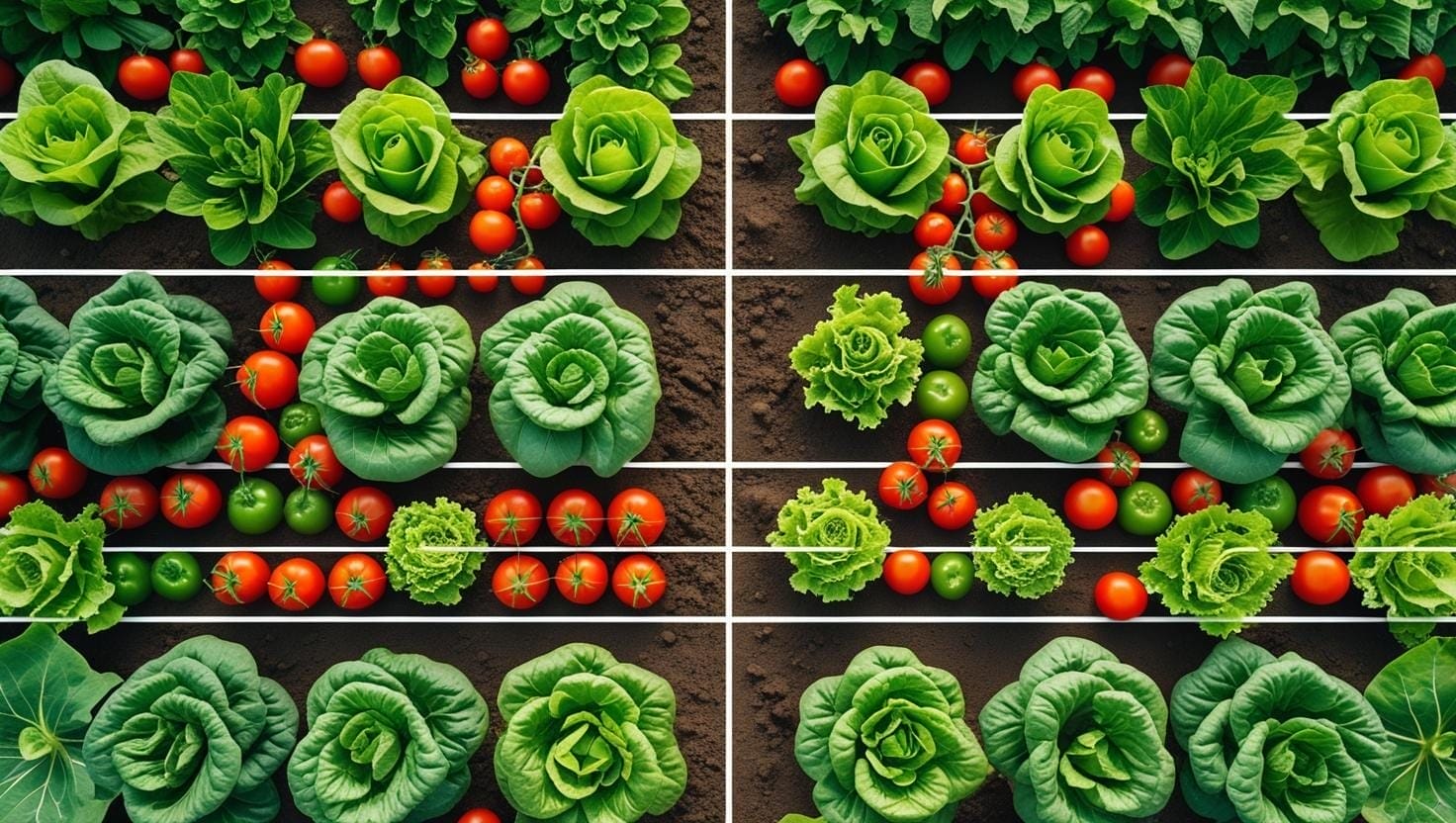
Most beginners plant in perfectly square grids (like a chessboard). This leaves large pockets of empty, unused soil in the corners of every square. If you want to maximize yield in a small raised bed, you should use hexagonal (or staggered/offset) planting.
Instead of planting Row 2 directly next to Row 1, you shift Row 2 so that its plants sit in the “gaps” or triangles created by Row 1.
Think of how a honeycomb is structured. By staggering the rows, every plant is equidistant from all of its neighbors in a circle, rather than a square. This simple geometrical trick allows you to fit 10% to 15% more plants in the exact same footprint without violating their minimum spacing requirements.
The Hidden Dangers of Overcrowding
| The Issue | Visual Symptom | The Root Cause |
|---|---|---|
| Powdery Mildew | White, dusty patches on the surface of overlapping leaves. | Zero airflow. Humidity becomes trapped between the dense canopy leaves. |
| Leggy / Spindly Stems | Plants grow unnaturally tall and thin, eventually snapping in the wind. | Severe light competition. Plants stretch desperately upwards to escape the shade. |
| Blossom Drop | Healthy-looking yellow flowers dry up and fall off without producing fruit. | Nutrient starvation or lack of pollinator access due to the dense jungle. |
| Pest Infestations | Explosive aphid or spider mite colonies hidden deep inside the canopy. | Predatory insects (ladybugs) cannot penetrate the dense canopy to hunt the pests. |
| Yellowing Lower Leaves | The bottom 12 inches of the plant turns yellow and dies off. | The plant intentionally kills leaves that are fully shaded to conserve energy. |
| Deformed Root Vegetables | Carrots and radishes spiral around each other or remain tiny. | Failure to thin seedlings. Roots physically crush each other as they expand. |
| Stunted Growth | The entire row of plants stops growing at half their normal size. | Subterranean root competition. There is simply not enough water/NPK to go around. |
Calculate Your Maximum Garden Yield
Don’t try to draw out a planting grid by hand. Whether you are using traditional rows, square foot gardening, or the high-yield hexagonal offset method, you need to know exactly how many plants will fit in your specific raised bed or plot. Use our free Plant Spacing Calculator to instantly generate your maximum plant count and avoid overcrowding.
Pin this Plant Density Guide!
Save this visual guide to your gardening board on Pinterest so you never lose it!

Frequently Asked Questions
Written by Sarah Collins
Sarah Collins is a hydroponic grower and horticultural researcher with 8+ years of hands-on experience in DWC, NFT, recirculating, and soil systems. She designs tools and publishes guides at currentgardening.com to help indoor growers optimize their yields.
About the Author: Sarah Collins
Sarah Collins is a horticultural researcher with 8+ years of hands-on experience in soil ecology and organic amendment strategies. She designs tools and publishes guides at currentgardening.com to help growers optimize their harvests naturally.