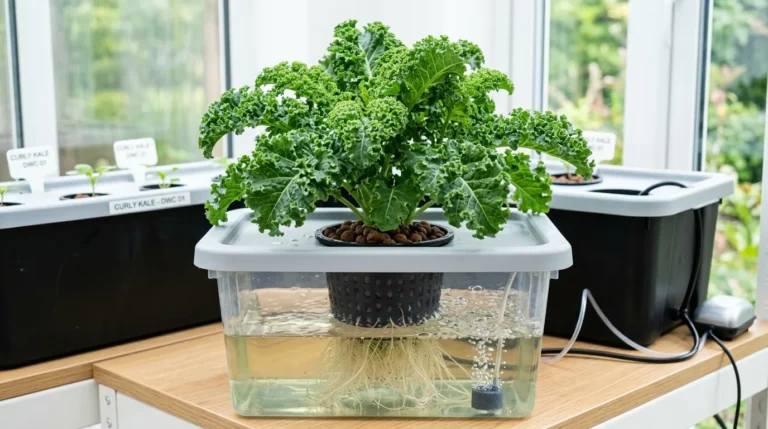
DWC Hydroponic System: Complete Beginner Guide to Deep Water Culture (2026)
Hydroponic Systems >
DWC Hydroponic System: Complete Beginner Guide to Deep Water Culture (2026)
Assembly Time: 30–45 Minutes
Estimated Cost: 35 – 65 per bucket
What Most Guides Miss (And What You Will Learn Here)
- Why standard blue aquarium air stones dissolve or clog in mineral salts — and why sintered carborundum discs are essential.
- How water temperatures above 72°F drop dissolved oxygen capacity below 6 mg/L, triggering Pythium slime overnight.
- Why placing net pots too deep in the water during seedling stage causes collar rot before roots emerge below.
- How sizing your air pump below 1 watt per gallon leaves dead zones at the bottom of 5-gallon DWC buckets.
- Why clear airline tubing allows internal green algae strings to form inside your air supply channels.

1. How Deep Water Culture Works: Dissolved Oxygen & Root Dynamics
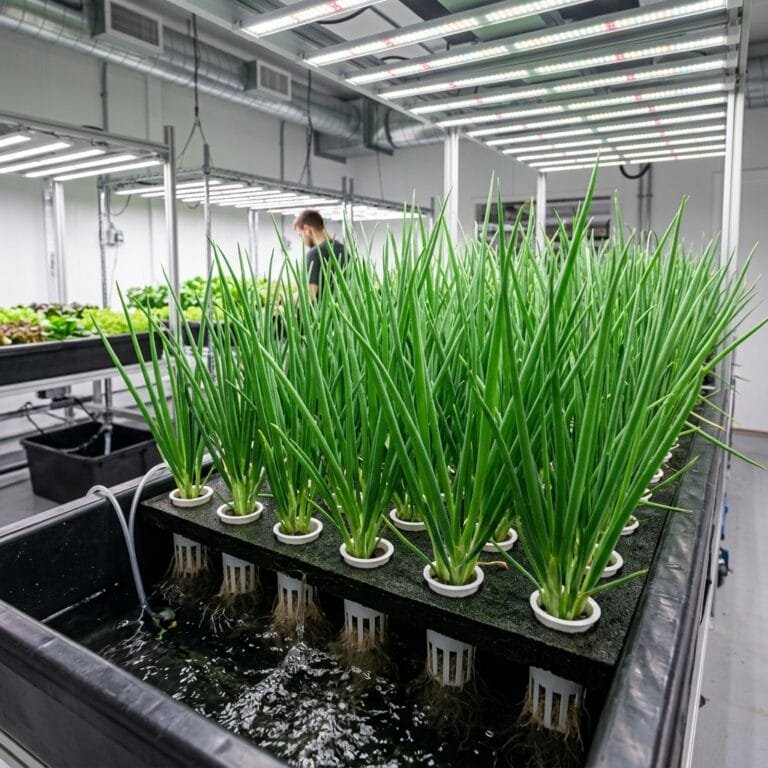
Deep Water Culture accelerates vegetative growth by eliminating soil resistance and bathing roots in a continuous supply of highly oxygenated nutrient solution (8 to 10 mg/L DO).
Read our full guide on ideal DWC water temperature →

2. Complete DWC Hardware Parts List & Air Pump Engineering Sizing
Always rule of thumb for DWC aeration sizing is 1 watt of air pump power per gallon of nutrient solution, combined with a sintered carborundum disc air stone.
Selecting the wrong air stone or undersized air pump is the #1 cause of DWC failure among beginners. Cheap blue sand air stones produce large, noisy bubbles that rush to the surface quickly, providing minimal surface area for oxygen transfer.
Invest in a **4-inch sintered carborundum (silicon carbide) disc** or ceramic diffuser. These heavy discs stay resting flat on the bottom of the bucket and shear air into microscopic bubbles that linger in the water column longer, boosting oxygen absorption efficiency by over 60%.
| Reservoir Volume | Minimum Pump Wattage | Airflow Output Target | Air Stone Type | Target Dissolved Oxygen |
|---|---|---|---|---|
| 5-Gallon Bucket | 4 – 6 Watts | 3.5 – 5.0 L/min | 4″ Sintered Disc | 8.5 – 9.5 mg/L DO |
| 10-Gallon Dual Bucket | 8 – 10 Watts | 7.0 – 9.0 L/min | Dual 4″ Discs | 8.5 – 9.5 mg/L DO |
| 17-Gallon Tote Reservoir | 15 – 18 Watts | 12 – 15 L/min | 8″ Sintered Bar | 8.0 – 9.2 mg/L DO |
| 27-Gallon Multi-Plant Tote | 25 – 35 Watts | 25 – 35 L/min | Dual 8″ Bars | 8.0 – 9.0 mg/L DO |
| Recirculating RDWC System | 45 – 60 Watts | 45 – 65 L/min | 4 x Sintered Discs | 9.0 – 10.0 mg/L DO |
| Warm Water Scenario (72°F+) | Double Output | Maximum Airflow | Sintered Disc + Chiller | Prevents DO dropping below 6 mg/L |
| Emergency Blackout Backup | Battery Operated | 2.0 – 3.0 L/min | Standard Disc | Maintains emergency survival oxygen |

3. Step-by-Step DIY DWC 5-Gallon Bucket Assembly
Building a 5-gallon DWC bucket requires drilling an airline notch in the bucket rim, installing an inline check valve, and filling the reservoir so bubbles splash just below the net pot base.
A. Preparing the Bucket and Airline Port
Drill a 1/4-inch hole near the top rim of your 5-gallon black HDPE bucket, 1 inch below the net pot lid seal. Feed the black opaque airline tubing through this hole so the lid can be lifted during weekly maintenance without pinching or pulling on the air hose.
B. Installing Check Valve and Sintered Air Stone
Connect one end of the airline tubing to your sintered carborundum air stone inside the bucket. Install an inline silicone check valve outside the bucket between the air pump and the entry port (arrow pointing toward the bucket) to prevent back-siphoning during power outages.
C. Nutrient Filling and Air-Gap Root Calibration
Fill the bucket with pH 5.8 buffered nutrient solution until the waterline rests exactly **0.5 inches below the bottom of the net pot**. Turn on the air pump: bursting bubbles should splash a fine mist upward onto the clay pebbles, keeping seedling roots moist without drowning the crown.
Insights Most Growers Overlook
- Wrapping your black DWC bucket in reflective aluminum bubble foil drops internal water temperature by up to 5°F.
- Using two smaller 2-inch sintered air stones instead of one large stone creates more uniform bubble turbulence.
- Adding beneficial Bacillus root inoculants (like Hydroguard) prevents opportunistic fungi from colonizing warm reservoirs.
- Keeping a 1-inch air gap between the water surface and net pot base prevents stem collar rot in mature plants.
Common Mistakes to Avoid
- Never place your air pump lower than the water level without an inline check valve installed.
- Never use translucent white food buckets without painting or taping the outside 100% opaque black.
- Never submerge the plant stem or Rockwool cube directly underwater in a DWC bucket.
- Never turn off your DWC air pump at night to save electricity; roots suffocate within hours without aeration.
- Never mix concentrated A and B fertilizers directly together inside the bucket without diluting first.

4. Water Temperature Management & Pythium Root Rot Prevention
Water temperature is the absolute Achilles’ heel of Deep Water Culture. According to gas solubility laws, warm water physically cannot hold as much dissolved oxygen as cool water. At 65°F (18°C), fresh water holds **9.5 mg/L** of dissolved oxygen. If your indoor grow room warms the reservoir to 75°F (24°C), maximum DO capacity crashes to **8.2 mg/L**, while plant root respiration demand increases by 50%.
When DO drops and temperatures climb above 70°F, waterborne *Pythium ultimum* zoospores attack root tips, turning healthy white roots into brown, foul-smelling slime. Always insulate DWC buckets, keep ambient floor temperatures cool, and dose beneficial *Bacillus amyloliquefaciens* bacteria weekly to outcompete root rot pathogens.

5. Weekly DWC Nutrient Maintenance & Top-Off Protocols
As mature plants transpile up to 1 liter of water daily, reservoir liquid levels drop. Never top off a DWC bucket with full-strength fertilizer, as plants transpire pure water faster than mineral salts, leaving remaining liquid hyper-concentrated.
Follow the **Half-Strength Top-Off Rule**: top off lost volume with half-strength nutrient solution balanced to pH 5.8. Every 14 days, perform a complete reservoir change out to prevent toxic mineral imbalances and salt buildup.
Key Takeaways
- DWC submerges plant roots in aerated water using a commercial air pump and air stone.
- Target at least 1 watt of air pump output per gallon of reservoir volume.
- Maintain water temperatures strictly between 64°F and 68°F to prevent Pythium root rot.
- Perform a complete nutrient reservoir flush and replacement every 14 days.
Save this DWC Setup Guide!
Pin this Deep Water Culture hardware checklist and aeration sizing chart to your indoor gardening board.

6. Frequently Asked Questions
What size air pump do I need for a 5-gallon DWC bucket?
Use an air pump rated for at least 4 to 6 watts delivering 3.5 to 5.0 liters per minute of airflow per 5-gallon bucket.
Why are my DWC roots turning brown and slimy?
Brown slimy roots indicate Pythium root rot caused by water temperatures exceeding 72°F or insufficient dissolved oxygen. Add beneficial Bacillus bacteria and insulate your bucket.
Should net pots touch the water in a DWC system?
Only during the first 7 days of seedling establishment. Once roots descend into the liquid, maintain a 1-inch air gap below the net pot to prevent collar rot.
How often should I change the water in a DWC bucket?
Perform a complete reservoir drain, rinse, and refill with fresh nutrient solution every 14 days.
Can I turn off my DWC air pump at night?
Never turn off a DWC air pump. Root respiration continues 24/7; turning off aeration at night causes root hypoxia within 4 hours.
What is the ideal pH and EC for DWC lettuce?
Maintain pH strictly between 5.6 and 6.0, and keep nutrient EC between 1.2 and 1.6 mS/cm (600–800 PPM).
Why is foam or bubbles accumulating on top of my DWC water?
Foam indicates organic bacterial buildup or root decay. Drain the bucket, clean with 3% hydrogen peroxide, and refill with fresh mineral nutrients.
🌿 Complete Hydroponic Systems Series
Explore our comprehensive Deep Water Culture and hydroponic systems guides: