Raised Bed Soil Mix Recipe: Mel’s Mix & Bulk Calculator
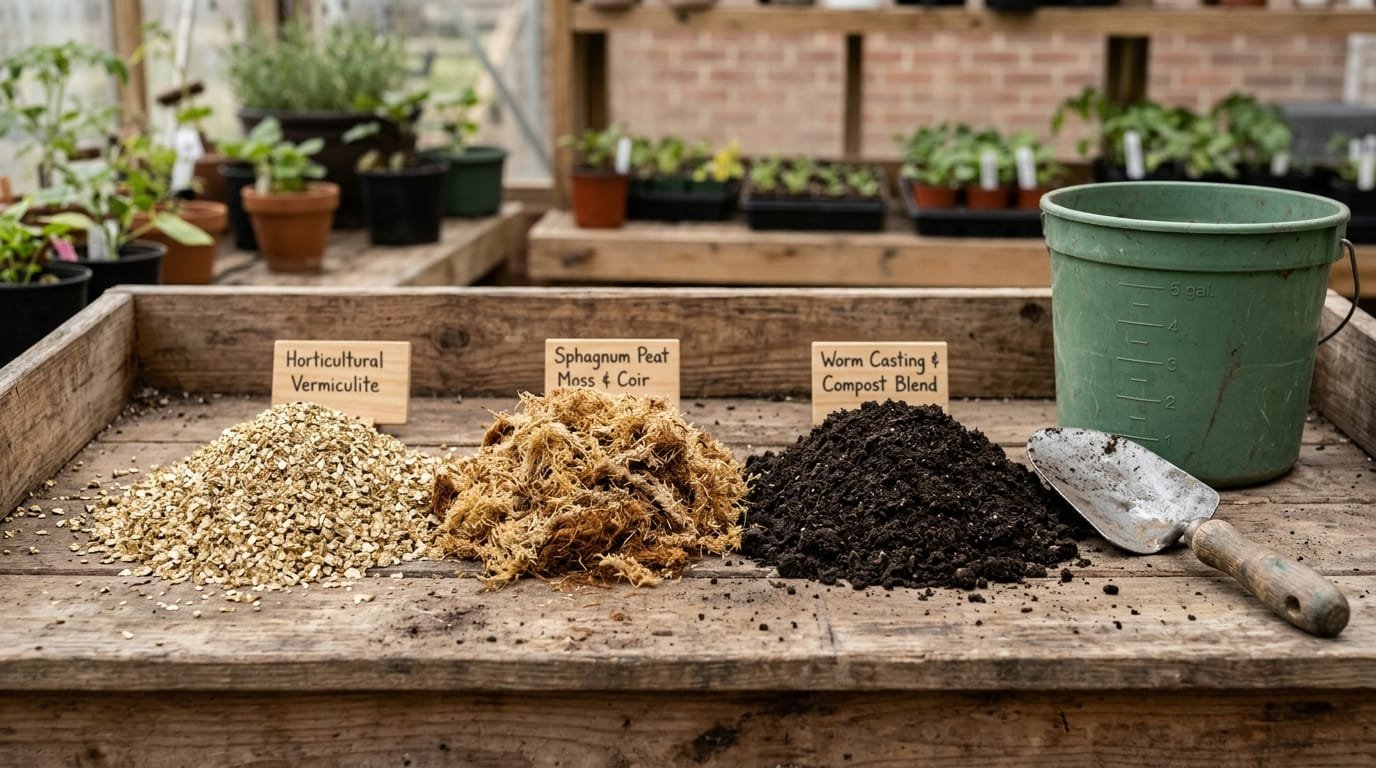
The premier raised bed soil recipe is the classic Mel’s Mix: 1/3 coarse horticultural vermiculite, 1/3 sphagnum peat moss or washed coconut coir, and 1/3 blended organic compost sourced from at least three different origins. A standard 4×8-foot bed (10.5″ deep) requires 28 cubic feet (1.04 cubic yards) of total soil.
1/3 : 1/3 : 1/3
Vermiculite + Coir + Compost
28 cu ft (~1.04 cu yd)
Requires 14 standard 2-cu-ft bags
6.2 to 6.8 pH
Ideal for 95% of vegetables
Up to 45% Cost Cut
Wood base reduces soil volume
Table of Contents
- 1. Essential Equipment & Shopping List
- 2. Step-by-Step Soil Blending Walkthrough
- 3. Mel’s Mix Formula: The Science of the 1/3 Ratio
- 4. Raised Bed Soil Volume & Bag Calculation Matrix
- 5. Cost-Saving Base Layering (The Hugelkultur Foundation)
- 6. Organic Amendments & Living Biology Fortification
- 7. Common Raised Bed Soil Problems & Corrective Actions
- 8. Save This Visual Soil Recipe Blueprint to Pinterest
- 9. Frequently Asked Questions
- 10. Research References & Extension Citations
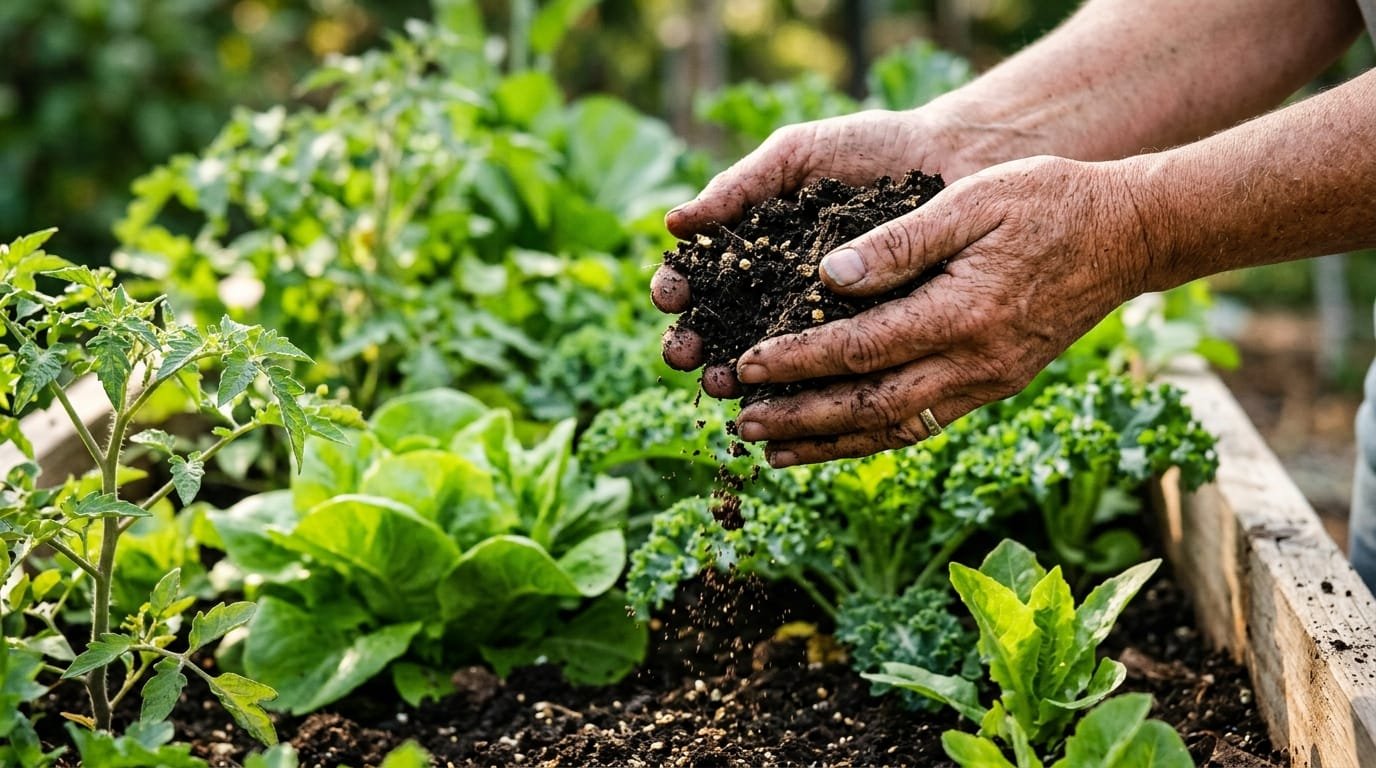
Building sturdy wooden frames is only half the battle when setting up high-yield garden beds. As demonstrated in our carpentry guide on DIY raised garden bed plans, a structural box creates an elevated container, but the biological engine inside determines whether your vegetables produce heavy baskets of produce or struggle with yellow leaves and stunted root systems.
One of the most expensive blunders new gardeners make is either filling their beds with heavy, compacted native backyard dirt or buying cheap “topsoil” bags from big-box retailers that turn into dense clay cement after two watering cycles. In this evidence-based guide, we examine the agronomic science of the famous Mel’s Mix recipe, provide exact volume and bag calculations for all common bed sizes, and reveal how to incorporate organic amendments and cost-saving hugelkultur layers to build a permanent, living soil ecosystem.
1. Essential Equipment & Shopping List
Blending raised bed soil at home requires bulk soil amendments, protective safety equipment, and simple mixing tools. Below is the itemized cost breakdown of essential components versus optional microbial boosters:
| Category | Ingredient / Tool | Specification / Grade | Estimated Cost (USD) |
|---|---|---|---|
| Essential | Coarse Horticultural Vermiculite | Grade 3 or 4 Coarse (High CEC moisture sponge) | $24.00 – $32.00 (4 cu ft bag) |
| Essential | Sphagnum Peat Moss or Washed Coco Coir | Compressed 3.8 cu ft bale (expands to 7.5 cu ft) | $18.00 – $24.00 |
| Essential | Blended Organic Compost (3 Sources) | Worm castings + Cow manure + Mushroom compost | $28.00 – $42.00 |
| Essential | Heavy-Duty Mixing Tarp | 10 × 12 ft Polyethylene Tarp (10-mil thickness) | $12.00 |
| Essential | Dust Respirator / N95 Mask | NIOSH-approved particulate mask for vermiculite dust | $3.50 |
| Optional | Pure Worm Castings (Vermicompost) | 15-lb bag of biologically active worm castings | $14.00 |
| Optional | Endo/Ectomycorrhizal Fungi Inoculant | Soluble microbial powder (Glomus intraradices strains) | $11.00 |
| Total Essential Materials Cost for a 4×8 Bed: ~$85.00 to $110.00 (under $55.00 if using homemade compost and hugelkultur base). | |||
2. Step-by-Step Soil Blending Walkthrough
Blending several cubic yards of soil components by hand can be exhausting if attempted in a small wheelbarrow. Following the commercial tarp-rolling method allows two people to blend 15 cubic feet of soil in under ten minutes with minimal physical strain.
Step 1: Calculate Bed Volume in Cubic Feet
Calculate the exact cubic footage required for your raised beds using internal measurements. For a standard 4×8-foot bed constructed from 2×10 lumber (actual height 9.25 to 10.5 inches):
4 ft × 8 ft × 0.875 ft = 28 cubic feet. Dividing by 3 indicates you will need approximately 9.3 cubic feet of vermiculite, 9.3 cubic feet of peat moss or coco coir, and 9.3 cubic feet of blended compost.
Step 2: Hydrate Sphagnum Peat Moss or Coconut Coir
Dry peat moss is hydrophobic (water-repellent) and will shed irrigation if mixed dry. Place the compressed peat bale onto your mixing tarp, cut the plastic, and pour 5 to 7 gallons of lukewarm water directly over the material. Knead the peat with your hands or a garden fork until it transforms into fluffy, evenly damp sponge-like fibers. If using compressed coco coir blocks, soak them in a clean storage tote until fully expanded.
Step 3: Add Coarse Horticultural Vermiculite
Slip on an N95 dust mask before opening vermiculite bags to prevent inhalation of dry mineral dust. Pour the measured vermiculite evenly over the damp peat layer. The residual moisture in the peat moss will instantly bind with fine dust particles, creating a dust-free work area.
Step 4: Blend Three Diverse Organic Composts
Dump your compost bags directly on top of the vermiculite. Never rely on a single compost source; combining aged manure compost, commercial leaf mold, and rich worm castings (vermicompost) creates a resilient soil food web with broad nutrient diversity.
Step 5: Execute the Tarp-Rolling Blend Technique
Position one person on each side of the 10x12ft tarp. Grasp the outer tarp corners and lift them up toward the center, causing the ingredients to fold over themselves. Drop your corners and have your partner lift their side. Alternating this motion 6 to 8 times rolls the entire soil mass, thoroughly blending the three components faster and more completely than hours of shovel work.
Step 6: Incorporate Fortifying Mineral Amendments
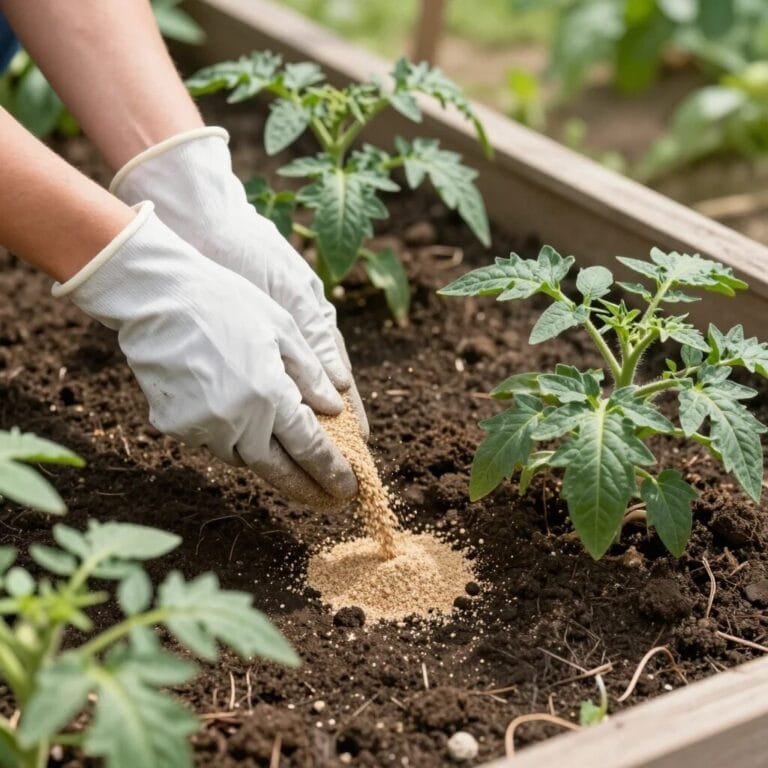
Before shoveling the mixture into your beds, sprinkle slow-release amendments across the blend: 2 cups of organic kelp meal, 2 cups of steamed bone meal, and a light dusting of endomycorrhizal fungi spores. These minerals feed beneficial rhizosphere bacteria, which will rapidly colonize the root zone when you transplant crops like strawberries or vertical climbers on your cucumber trellises.
3. Mel’s Mix Formula: The Science of the 1/3 Ratio
Originally popularized by civil engineer Mel Bartholomew in his pioneering Square Foot Gardening system, Mel’s Mix remains the gold standard of intensive urban horticulture. Each of the three components serves an indispensable mechanical and biological purpose:
| Component | Volume Ratio | Key Physical / Chemical Role | Lifespan in Bed |
|---|---|---|---|
| Coarse Vermiculite | 33.3% (1/3) | Permanent pore space; absorbs 3–4x its weight in water; delivers high Cation Exchange Capacity (CEC) to lock in fertilizer salts. | Permanent (Does not rot or decompose) |
| Peat Moss or Coir | 33.3% (1/3) | Creates loose, airy soil texture; holds capillary moisture; prevents compaction and allows feeder roots to spread effortlessly. | 5–7 Years (Breaks down very slowly) |
| Blended Compost | 33.3% (1/3) | Supplies complete spectrum of macro and micronutrients; introduces billions of beneficial bacteria and mycorrhizae. | 1 Year (Consistently consumed by plants & microbes) |
| Because vermiculite and peat/coir are virtually permanent, you only need to replenish the 1/3 compost portion annually. | |||
Research published by the Oregon State University Extension Service confirms that soilless media mixes maintain over 25% macroporosity even when fully saturated, compared to less than 8% in native clay soils. This massive pore volume prevents root hypoxia during heavy spring rainstorms. If starting your own transplants indoors, you can use these same principles with soil blocking for seed starting to prevent root shock before planting out.
4. Raised Bed Soil Volume & Bag Calculation Matrix
One of the most frequent consumer headaches is standing in the garden center aisle trying to convert cubic yards to cubic feet and bag counts. Use the pre-calculated engineering matrix below to determine the exact number of bags needed for your bed dimensions:
| Bed Dimensions (L × W × D) | Growing Surface Area | Total Volume (Cubic Feet) | Bulk Volume (Cubic Yards) | Standard 2-Cu-Ft Bags Needed |
|---|---|---|---|---|
| 4 ft × 4 ft × 10.5 in | 16 sq ft | 14.0 cu ft | 0.52 cu yd | 7 Bags |
| 4 ft × 8 ft × 10.5 in | 32 sq ft | 28.0 cu ft | 1.04 cu yd | 14 Bags |
| 4 ft × 8 ft × 12.0 in | 32 sq ft | 32.0 cu ft | 1.18 cu yd | 16 Bags |
| 2 ft × 8 ft × 16.5 in | 16 sq ft | 22.0 cu ft | 0.81 cu yd | 11 Bags |
| 3 ft × 6 ft × 24.0 in (Waist-High) | 18 sq ft | 36.0 cu ft | 1.33 cu yd | 18 Bags (Or 10 with Hugelkultur) |
| Formula: Length (ft) × Width (ft) × Depth (ft) = Total Cubic Feet. Divide by 27 to obtain Cubic Yards. | ||||
5. Cost-Saving Base Layering (The Hugelkultur Foundation)
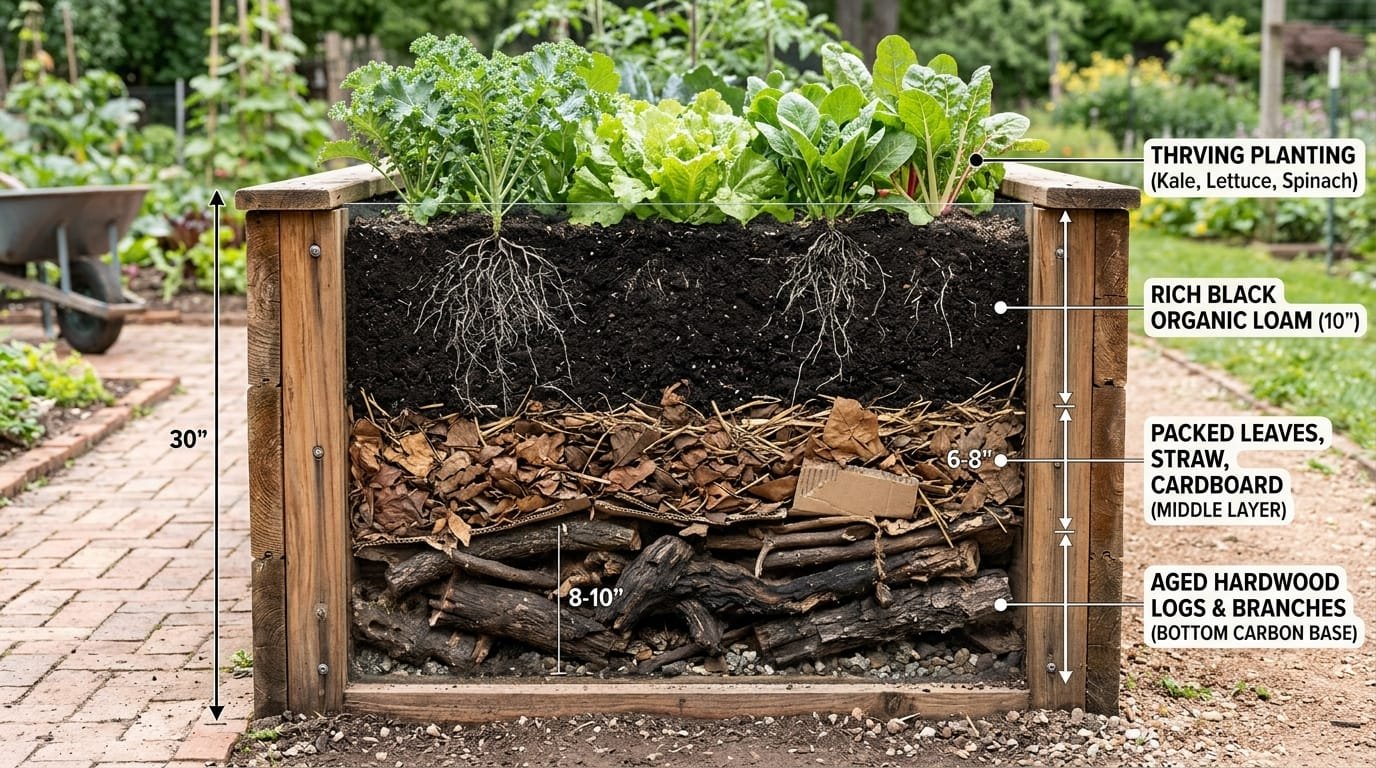
If you constructed a tall 18-inch to 24-inch waist-high raised bed, filling the entire volume with premium Mel’s Mix can easily cost over $200 per bed. Fortunately, vegetable roots rarely require more than 10 to 12 inches of active root zone.
By applying principles from our guide on hugelkultur raised bed gardening, you can fill the bottom 40% of the box with free yard waste:
- Bottom 4 to 6 Inches (Carbon Sponge): Lay thick, rotting hardwood logs (oak, maple, alder, or birch). Avoid cedar, black walnut (juglone toxin), or chemically treated construction timbers. These logs slowly sponge up winter precipitation and release it during summer droughts.
- Middle 2 to 3 Inches (Nitrogen Barrier): Pack a thick layer of pruned orchard branches, wood chips, and dried autumn leaves. Layer with green grass clippings or aged manure to jumpstart bacterial breakdown, similar to lasagna gardening sheet mulching.
- Top 10 to 12 Inches (The Mel’s Mix Layer): Fill the remaining upper space with your pristine 1/3 vermiculite, 1/3 peat/coir, and 1/3 blended compost mix. Vegetable roots will thrive in the upper layer before sending deeper anchor roots into the spongy, decomposing wood below.
6. Organic Amendments & Living Biology Fortification
While standard Mel’s Mix provides exceptional texture and aeration, adding targeted organic amendments converts sterile growing media into a biologically thriving living soil ecosystem. Reviewing leaf symptoms on our plant nutrient deficiency chart helps pinpoint which minerals your beds need most:
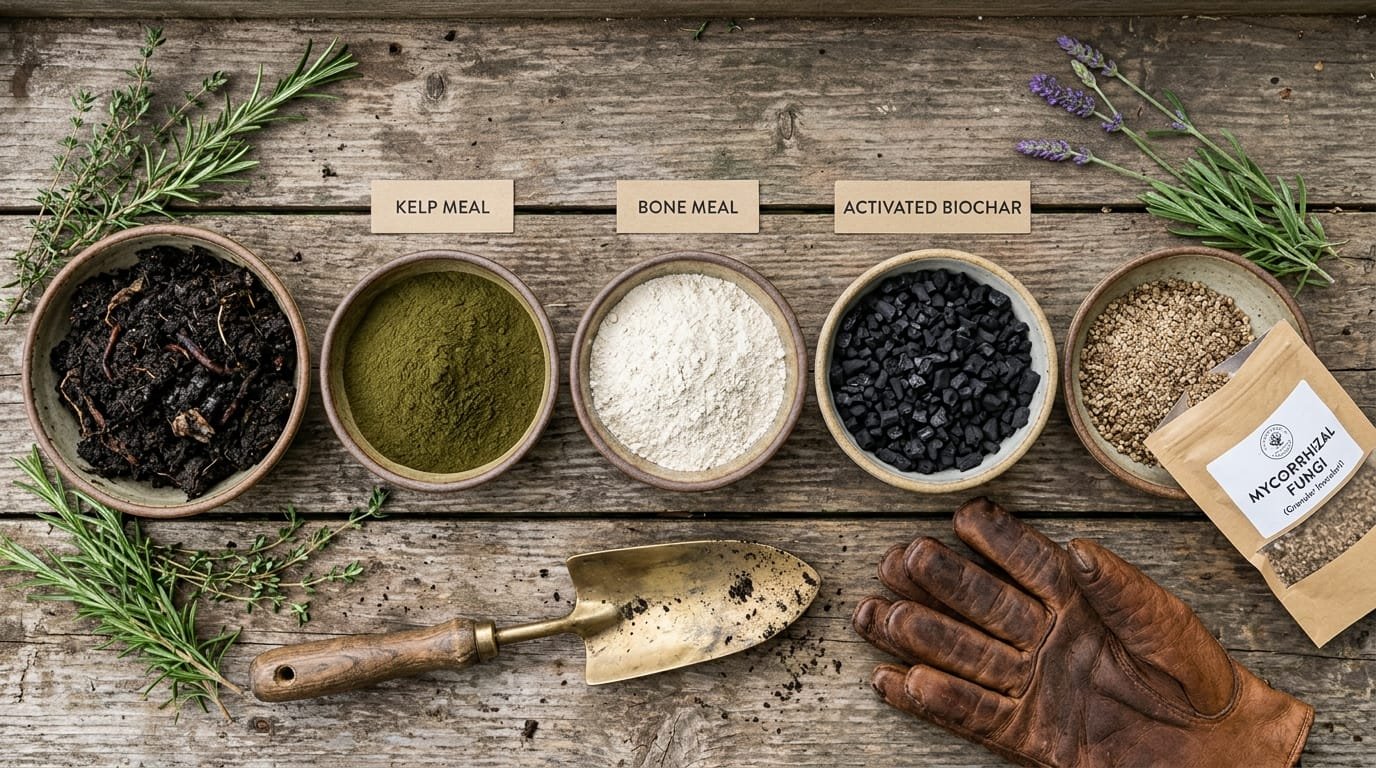
- Pure Worm Castings (Vermicompost): Add 10% by volume. Worm castings contain high concentrations of humic acids and plant growth hormones (auxins, cytokinins) that stimulate root branching.
- Organic Kelp Meal (Ascophyllum nodosum): Apply 1 to 2 cups per 32 sq ft. Kelp contains over 60 chelated trace minerals and natural potassium to enhance drought and frost tolerance in legumes like sugar snap and snow peas.
- Steamed Bone Meal (3-15-0): Apply 2 cups per bed. Provides slow-release phosphorus and calcium, preventing blossom end rot in tomatoes and peppers.
- Activated Horticultural Biochar: Add 5% by volume. Pre-inoculated biochar provides microscopic carbon housing for mycorrhizal hyphae, locking nutrients in place permanently.
- Irrigation Efficiency: Pair your newly filled bed with automated watering via our blueprint on drip irrigation for raised beds to deliver moisture directly to the root zone without splashing soil microbes onto lower foliage.
7. Common Raised Bed Soil Problems & Corrective Actions
Soil chemistry and moisture dynamics shift over time as organic matter decomposes. Use the diagnostic matrix below to troubleshoot common soil issues and restore microbial balance:
| Observed Soil Problem | Probable Root Cause | Severity Level | Corrective Agronomic Action |
|---|---|---|---|
| Water Pooling on Surface | Excessive fine clay in cheap bagged topsoil; lack of coarse vermiculite | High | Forks in 2 to 3 bags of coarse horticultural vermiculite or perlite to restore pore spaces. |
| Hydrophobic Soil Shedding Water | Sphagnum peat moss dried out completely in high summer heat | Moderate | Drench bed with warm water infused with a few drops of organic yucca extract as a natural wetting agent. |
| Soil Level Dropping 2–4 Inches | Natural microbial breakdown of organic compost and consolidation of pore spaces | Low | Top-dress each spring with 2 inches of multi-source compost and pure worm castings. |
| Pale Stunted Crops (Nitrogen Tie-Up) | Uncomposted wood chips or sawdust mixed into soil pulling nitrogen from plants | High | Drench with organic liquid fish hydrolysate and top-dress with blood meal or feather meal. |
| Soil pH Dropping Below 5.8 | High proportion of acidic sphagnum peat moss without alkaline balancing | Moderate | Broadcast 1 cup of agricultural dolomitic lime or pulverized oyster shell flour per 16 sq ft. |
| Hard White Crust on Surface | Accumulation of mineral salts from synthetic fertilizers or alkaline tap water | Moderate | Flush soil with rainwater; scrape off crust and switch strictly to organic slow-release meals. |
| Soil Baking Hard as Rock | Builder used 100% native soil without organic amendments or coarse aggregate | Critical | Excavate upper 6 inches and blend thoroughly with 50% coarse vermiculite and 50% compost. |
| Fungus Gnats Swarming Soil | Excessive moisture and uncomposted food scraps on soil surface | Low | Let top 2 inches dry out between waterings; apply Bacillus thuringiensis israelensis (BTI / Mosquito Bits). |
| Annual compost top-dressing and moisture monitoring prevent 90% of common raised bed soil failures. | |||
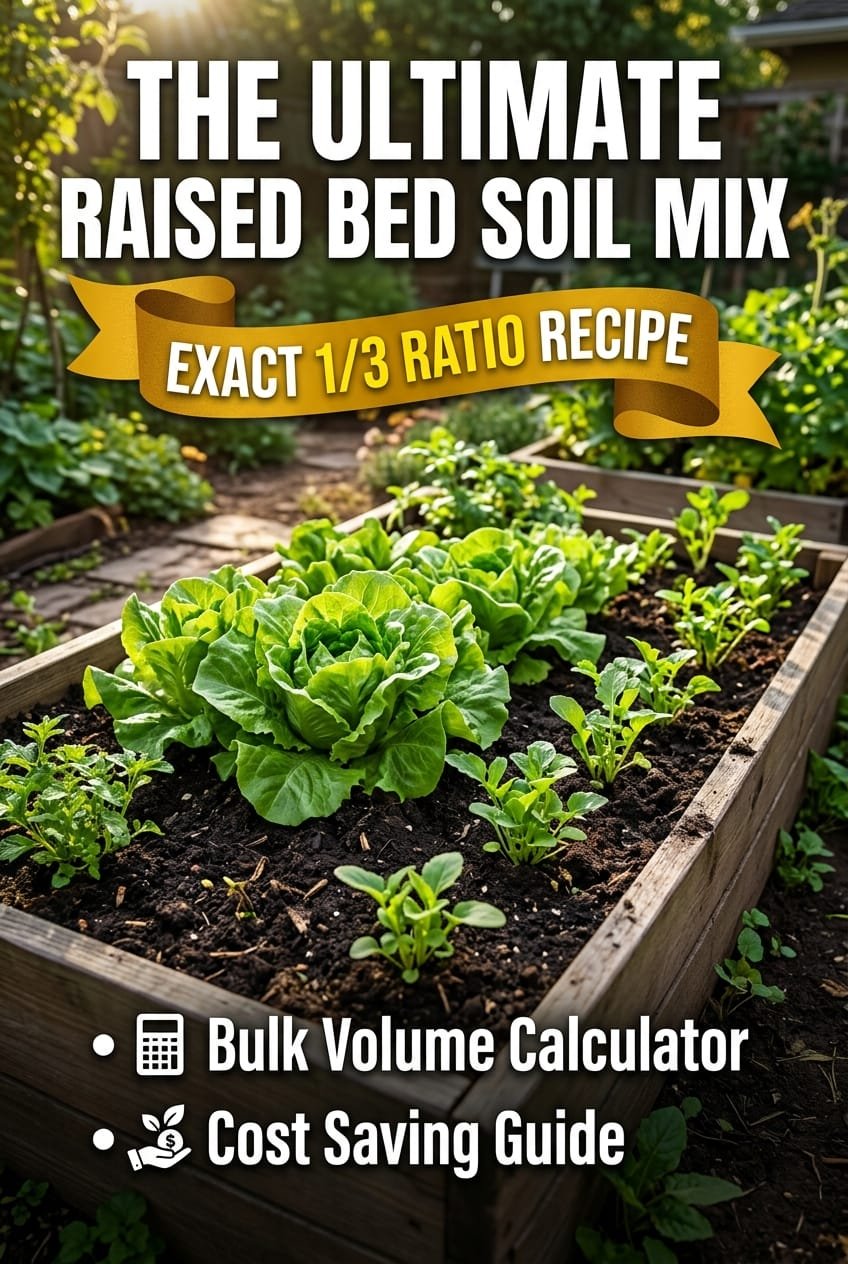
📌 Save This Raised Bed Soil Mix Recipe to Pinterest
Pin this visual reference card to your gardening or raised bed board for instant access to volume calculators and Mel’s Mix ratios.
9. Frequently Asked Questions
What is the classic Mel’s Mix recipe for raised beds?
Mel’s Mix, created by Mel Bartholomew for Square Foot Gardening, consists of exactly equal parts by volume: 1/3 coarse horticultural vermiculite, 1/3 sphagnum peat moss (or coconut coir), and 1/3 blended organic compost made from at least three different animal and plant sources. It never compacts, drains freely, and eliminates the need for native topsoil.
Can I use coconut coir instead of peat moss in raised bed soil?
Yes, washed coconut coir is an outstanding 1:1 replacement for sphagnum peat moss. Coconut coir is a renewable byproduct with a near-neutral pH (5.8 to 6.8), whereas peat moss is naturally acidic (pH 3.5 to 4.5) and requires agricultural lime to balance. Always ensure you purchase low-salinity, triple-washed coco coir.
How much soil do I need to fill a standard 4×8 raised bed?
A standard 4×8-foot bed that is 10.5 inches (0.875 ft) deep requires 28 cubic feet of soil mix, which equals approximately 1.04 cubic yards or about fourteen 2-cubic-foot bags. For a deeper 12-inch bed, you will need 32 cubic feet (1.18 cubic yards).
Why shouldn’t I use 100% native backyard garden soil in a raised bed?
Native garden soil typically contains high ratios of fine silt and heavy clay without sufficient pore space. When placed inside an enclosed wooden box and watered, native soil compacts into a rock-hard, cement-like block that restricts root respiration, strangles beneficial soil microbes, and drains very poorly.
What is the difference between vermiculite and perlite in raised bed soil?
Both are heat-expanded volcanic minerals, but they behave differently. Vermiculite is a spongy, layered mineral that absorbs and holds substantial moisture and dissolved nutrients (high cation exchange capacity). Perlite is a closed-cell volcanic glass that repels water and provides maximum drainage. For raised beds exposed to hot summer sun, vermiculite is preferred because it prevents rapid soil desiccation.
How can I fill a tall raised bed cheaply without buying cubic yards of soil?
Use the Hugelkultur layered foundation technique: fill the bottom 40% to 50% of the deep bed with fallen untreated hardwood logs, tree branches, dry leaves, and unbleached cardboard. This organic base decomposes slowly over several years, acts as an underground moisture sponge, and saves 40% to 50% on expensive potting mix.
Why is blending compost from multiple sources so important?
A single compost type (such as bagged steer manure) usually has an unbalanced nutrient profile and a limited microbial community. Blending compost from 3 to 5 distinct sources—such as worm castings, chicken manure, mushroom substrate, and green yard waste—provides a full spectrum of macro- and micronutrients along with diverse bacterial and fungal inoculants.
Do I need to replace my raised bed soil every year?
No, you should never replace the soil mix in an established raised bed. Instead, top-dress the bed every spring or fall with 1 to 2 inches of rich finished compost and a handful of worm castings. This replenishes the organic matter consumed by plants and earthworms while preserving the delicate subterranean mycorrhizal fungal network.
10. Research References & Extension Citations
- Oregon State University Extension Service: Raised Bed Gardening: Physical Properties and Moisture Dynamics of Soilless Media, Extension Publication EM 9027 (extension.oregonstate.edu/gardening).
- University of Florida IFAS Extension: Soil and Fertilizer Management for Vegetable Gardens in Florida: Organic Amendments & C:N Dynamics, EDIS Publication HS1211 (edis.ifas.ufl.edu/publication/EP472).
- Cornell Cooperative Extension: Compost Quality and Soil Texture in Intensive Raised Bed Systems, Horticultural Bulletin 142 (cals.cornell.edu/gardening).
- USDA Natural Resources Conservation Service: Soil Biology Primer: Protozoa, Nematodes and Mycorrhizae in High Organic Loam (nrcs.usda.gov/soil-health).

Written & Scientifically Reviewed by Wara Danish, MSc
Wara Danish is an Agronomist and Lead Horticultural Specialist at CurrentGardening. She holds a Master of Science in Plant Sciences and specializes in vertical bio-intensive vegetable production, organic disease prevention, and living soil dynamics.