DIY Raised Garden Bed Plans: Cheap Cut Lists, Corners & Fasteners
A heavy-duty 4×8-foot raised bed requires three 2x10x8ft boards, one 4x4x6ft corner post timber, and 3-inch exterior ceramic-coated Torx screws. Cut one 8ft board in half for the ends, join into 4×4 internal corner blocks, and anchor the 8-foot side midpoints with a center cross-brace to eliminate outward bowing.
4 ft × 8 ft × 10.5 in
Zero lumber waste build
28 cu ft (~1.04 cu yd)
Save 40% with hugelkultur
12 to 18 Years
Cedar heartwood rating
#9 × 3-Inch Torx T25
Exterior ceramic coating
Table of Contents
- 1. Essential Equipment & Shopping List
- 2. Step-by-Step Construction Walkthrough (4×8 Foot Bed)
- 3. Wood Selection: Cedar, Douglas Fir vs. Treated Lumber Safety
- 4. Raised Bed Framing Designs: Structural Comparison Matrix
- 5. Corner Joinery Mechanics & Anti-Bowing Engineering
- 6. Ground Prep, Gopher Protection & Weed Barriers
- 7. Calculating Soil Volume & The Budget Hugelkultur Base
- 8. Common Raised Bed Problems & Corrective Actions
- 9. Save This Visual Raised Bed Blueprint to Pinterest
- 10. Frequently Asked Questions
- 11. Research References & Extension Citations
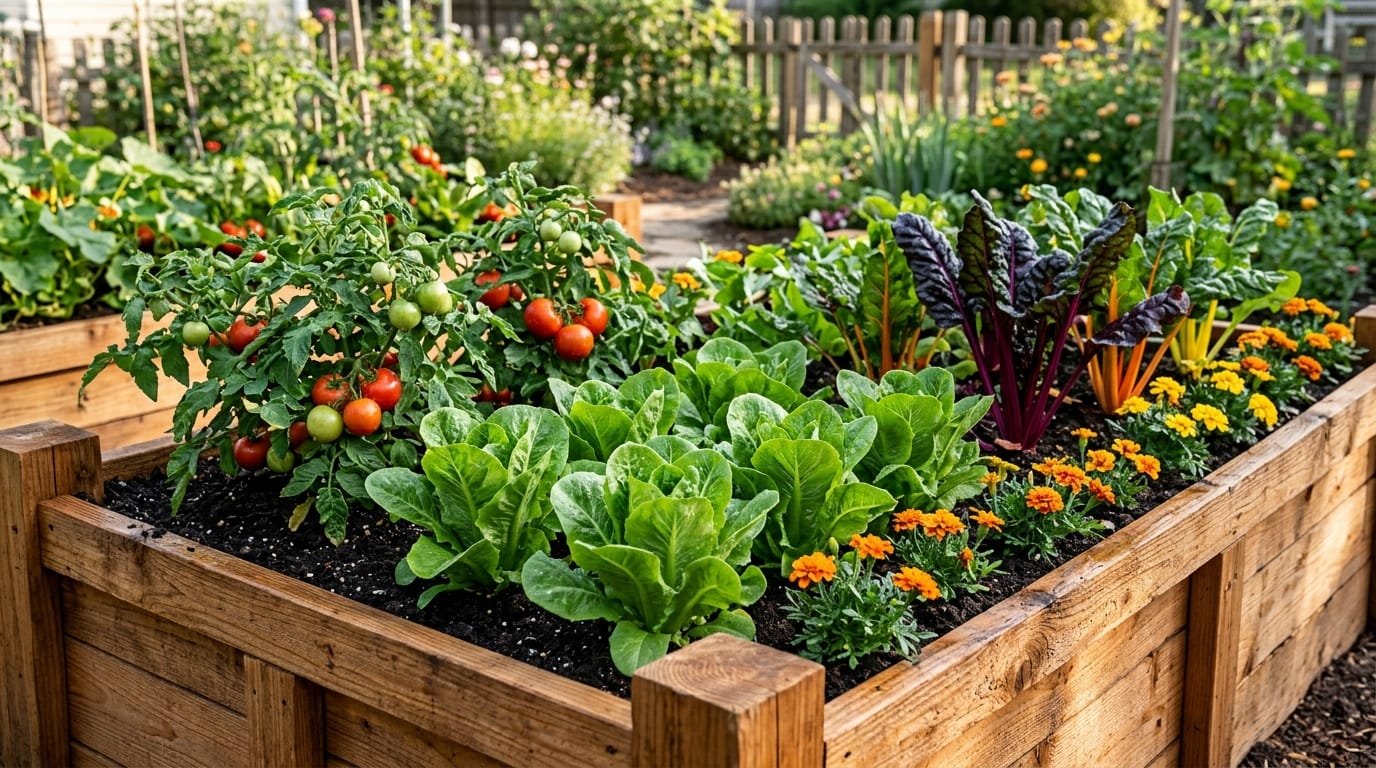
Building your own wooden raised garden beds is the single fastest way to take absolute control over soil drainage, root zone aeration, and seasonal productivity. When native garden soil consists of impenetrable alkaline clay or rocky glacial till, attempting to grow heavy-feeding vegetables directly in the ground often leads to stunted taproots, soil compaction, and severe weed pressure. A properly engineered raised bed creates an elevated horticultural sanctuary where biological amendments remain loose, crumbly, and teeming with beneficial mycorrhizal fungi.
However, many first-time builders waste money on fragile thin lumber, weak zinc drywall screws, and improper corner framing—only to watch their garden beds blow out at the corners or bow outward like an overfilled canoe after the first heavy spring rainfall. In this guide, backed by structural wood engineering and agronomic root physiology, we provide field-tested DIY raised bed plans, exact cut lists, cost comparisons, corner joint mechanics, and proper soil-filling strategies to ensure your beds remain square, rot-resistant, and productive for years.
1. Essential Equipment & Shopping List
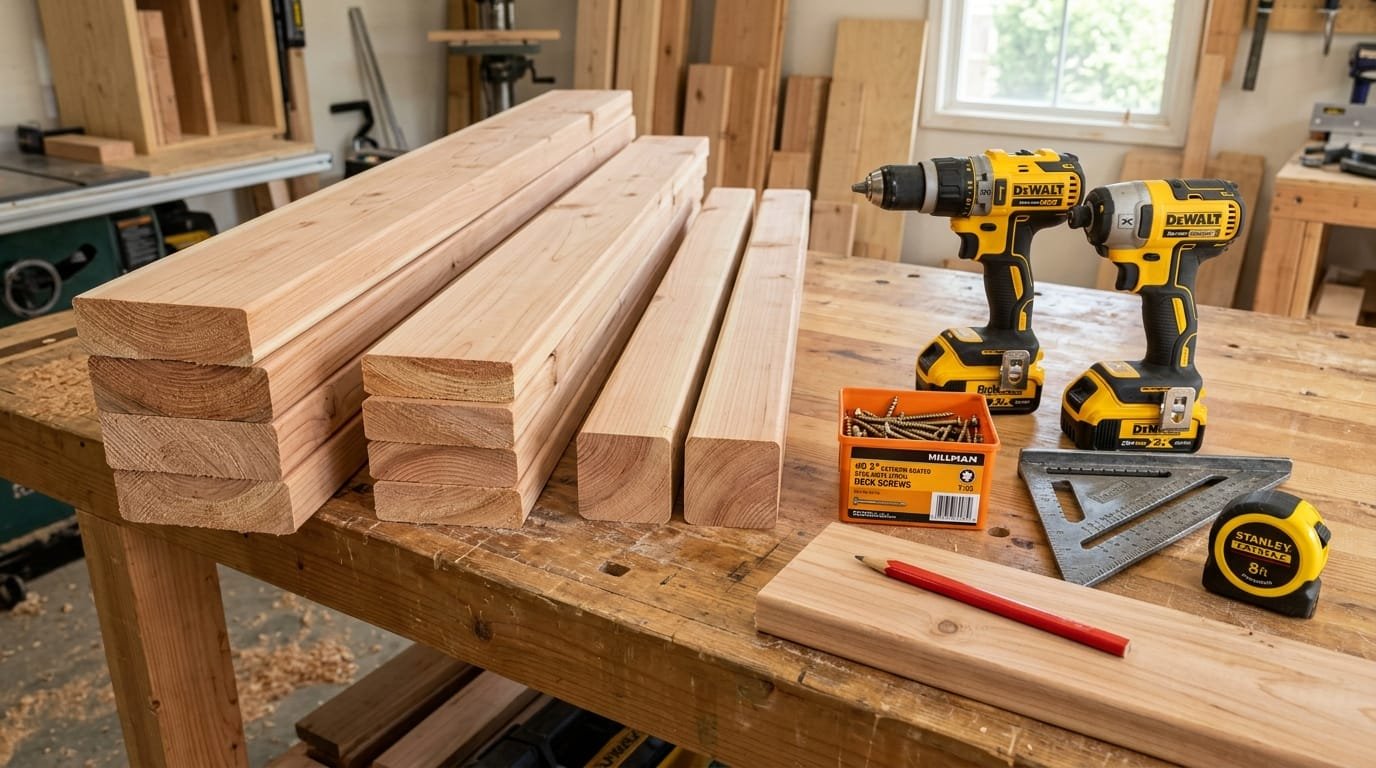
Building a durable raised garden bed requires weather-resistant materials capable of withstanding moisture and dynamic soil loads. Below is the honest gear breakdown of essential tools and materials versus optional structural upgrades:
| Category | Item Description | Specification / Grade | Estimated Cost (USD) |
|---|---|---|---|
| Essential | Side Framing Lumber (4 boards) | 2×6 or 2×10 Untreated Cedar or Douglas Fir (8ft Length) | $36.00 – $72.00 |
| Essential | End Framing Lumber (2 boards) | 2×6 or 2×10 Matching Lumber (Cut in Half to 48″) | $18.00 – $36.00 |
| Essential | Corner Blocking Timber | 4×4 Untreated Cedar or Fir Post (6ft Length) | $12.50 |
| Essential | Exterior Deck Screws | #9 × 3-inch Ceramic-Coated Star Drive (T25 Bit) | $8.50 |
| Essential | Hardware Cloth Barrier | 1/2-inch Galvanized Welded Steel Mesh (4x8ft Sheet) | $14.00 |
| Optional | Center Anti-Bowing Tie Rod | 1/2-inch Threaded Galvanized Rod with Nuts & Washers | $7.50 |
| Optional | Corner Seat Capping Rails | 2×6 Cedar Planks Mitered at 45 Degrees for Sitting | $22.00 |
| Total Essential Materials Cost: ~$89.00 using Douglas Fir ($45.00 if using budget 2×8 fir; $145.00 for premium Western Red Cedar). | |||
2. Step-by-Step Construction Walkthrough (4×8 Foot Bed)
Building a raised bed requires precise cuts and solid joinery. Follow these sequential steps to assemble a rigid 4×8-foot garden bed that will not bow or distort under hundreds of pounds of saturated soil.
Step 1: Cross-Cutting Lumber and Corner Uprights
Measure and cut all timber using a sharp circular saw or miter saw. For a double-tier 2×6 frame (10.5-inch final height), keep four 8ft planks untouched for the long side walls. Take two 8ft planks and cross-cut them at exactly 48 inches (accounting for the 1/8-inch saw blade kerf) to yield four 48-inch end planks. Cut the 4×4 post into four identical 10.5-inch corner blocking uprights.
Step 2: Square and Assemble the End Frames
Place two 10.5-inch 4×4 posts parallel on a flat workbench or level garage floor. Position two 48-inch end planks across them, stacked one on top of the other, flush with the outer post edge and top face. Pre-drill two pilot holes per plank into each post using a countersink bit. Secure each joint with two 3-inch #9 exterior ceramic-coated Torx screws (four screws per post, eight screws per end frame). Repeat this process for the second end frame.
Step 3: Connect the Long Side Planks
Stand both assembled end frames upright on edge, spaced 8 feet apart. Align one 8-foot side plank flush against the exposed 4×4 corner post. Pre-drill pilot holes and drive two 3-inch screws through the side plank into the corner post. Fasten the opposite end of the board to the second end frame. Repeat for the bottom side plank, and then attach the opposing side planks to form an enclosed rectangular box.
Step 4: Check Diagonal Squareness
Before installing internal braces, verify rectangular geometry. Hook a tape measure across opposite diagonal corners in an “X” pattern. If both diagonal measurements match (within 1/8 inch), your frame is perfectly square. If one measurement is longer, gently push the longer corners inward until the diagonals equalize.
Step 5: Install Center Anti-Bowing Reinforcements
Measure 48 inches to the exact midpoint of both 8-foot side walls. Screw a vertical 2×4 cleat inside each side wall. Connect the two opposing cleats using a horizontal 2×4 cross-brace positioned 3 inches below the top edge, or thread a 1/2-inch galvanized steel rod between the sides secured with flat washers and locking nuts. This center tie locks the long walls together and permanently prevents wet soil from bowing the wood outward.
Step 6: Attach Hardware Cloth & Ground Prep
Tilt or flip the assembled frame. Roll out 1/2-inch galvanized steel hardware cloth across the entire bottom. Stretch the mesh drum-tight and staple it every 3 inches along the wooden bottom rim using heavy-duty exterior staples. Level the designated garden site, set the bed in place, and lay two layers of brown corrugated cardboard directly inside to suppress lawn grass while welcoming earthworms.
3. Wood Selection: Cedar, Douglas Fir vs. Treated Lumber Safety
Selecting the correct lumber species determines whether your raised bed lasts three seasons or fifteen. The physical environment inside a raised bed is unforgiving: one side of the plank is in constant contact with warm, moist, biologically active organic soil filled with wood-decay fungi, while the exterior faces weathering UV sunlight, drying winds, and freeze-thaw cycles.
| Lumber Species / Grade | Typical Lifespan | Relative Cost (per 2x8x8ft) | Toxicity / Organic Status | Best Use Case & Durability Notes |
|---|---|---|---|---|
| Western Red Cedar | 12–18 Years | High ($28–$38) | 100% Organic & Non-Toxic | Naturally infused with thujaplicins (antifungal extractives). Highly resistant to moisture rot, insect bore, and warping. |
| Redwood (Con Heart) | 15–20 Years | High ($32–$42) | 100% Organic & Non-Toxic | Premium natural rot resistance. High tannin concentration naturally repels termites and subterranean fungal hyphae. |
| Douglas Fir / Hem-Fir | 5–8 Years | Low ($9–$14) | 100% Organic & Non-Toxic | The most cost-effective untreated softwood. High structural density; coat exterior with raw linseed oil for extended longevity. |
| Modern MCA Treated Pine | 15–25 Years | Moderate ($12–$18) | EPA Approved (Inorganic) | Micronized Copper Azole replaces obsolete arsenic (CCA). Copper leaching into soil is minimal (<5 ppm within 2 inches of board). |
| Untreated Pallets (HT) | 2–4 Years | Free to Negligible | Organic if stamped [HT] | Only use pallets heat-treated (HT), never methyl bromide chemically fumigated (MB). Thin 1x slat walls require frequent repair. |
| Untreated cedar or Douglas fir remains the gold standard for organic vegetable gardening; avoid 1-inch thick boards. | ||||
According to evaluations published by the USDA Forest Products Laboratory, heartwood cedar and redwood remain the benchmark for chemical-free durability because their cell walls synthesize secondary phenolic compounds that inhibit cellulase and ligninase enzymes produced by wood-decay fungi. However, if your budget demands lower upfront material costs, 2-inch thick Douglas fir framing lumber offers tremendous mechanical strength at roughly one-third the cost of clear cedar.
For gardeners integrating vertical crops alongside their raised bed walls, planning ahead for trellising is critical. Explore our detailed guide on DIY cucumber trellis ideas to learn how cattle panel tunnels and wooden A-frames mount directly to raised bed corners for maximum vertical fruit yields. Similarly, you can support early climbers like sugar snap and snow peas along the bed perimeter before summer crops take over.
4. Raised Bed Framing Designs: Structural Comparison Matrix
Raised beds can be constructed using various dimensions and joinery configurations depending on your garden footprint, physical mobility, and crop selection. Compare the performance characteristics of standard configurations below:
| Bed Model / Dimensions | Growing Surface Area | Required Soil Volume | Estimated Build Cost | Best Horticultural Application |
|---|---|---|---|---|
| Classic 4×8 ft (10.5″ Deep) | 32 sq ft | 28 cu ft (~1.04 cu yd) | $45 – $85 | Heavy vegetable production: brassicas, tomatoes, root crops, companion herbs. |
| Square Foot 4×4 ft (10.5″ Deep) | 16 sq ft | 14 cu ft (~0.52 cu yd) | $28 – $48 | Small suburban backyards, intensive grid planting, starter kitchen gardens. |
| Narrow Border 2×8 ft (16.5″ Deep) | 16 sq ft | 22 cu ft (~0.81 cu yd) | $55 – $95 | Placing along fences, property boundary pathways, single-sided reach beds. |
| Ergonomic Waist-High 3×6 ft (24″ Deep) | 18 sq ft | 36 cu ft (~1.33 cu yd) | $95 – $160 | Accessible gardening without bending; requires heavy bottom hugelkultur log base. |
| The 4×8 ft model yields the highest ratio of growing surface area per dollar of framing lumber. | ||||
5. Corner Joinery Mechanics & Anti-Bowing Engineering
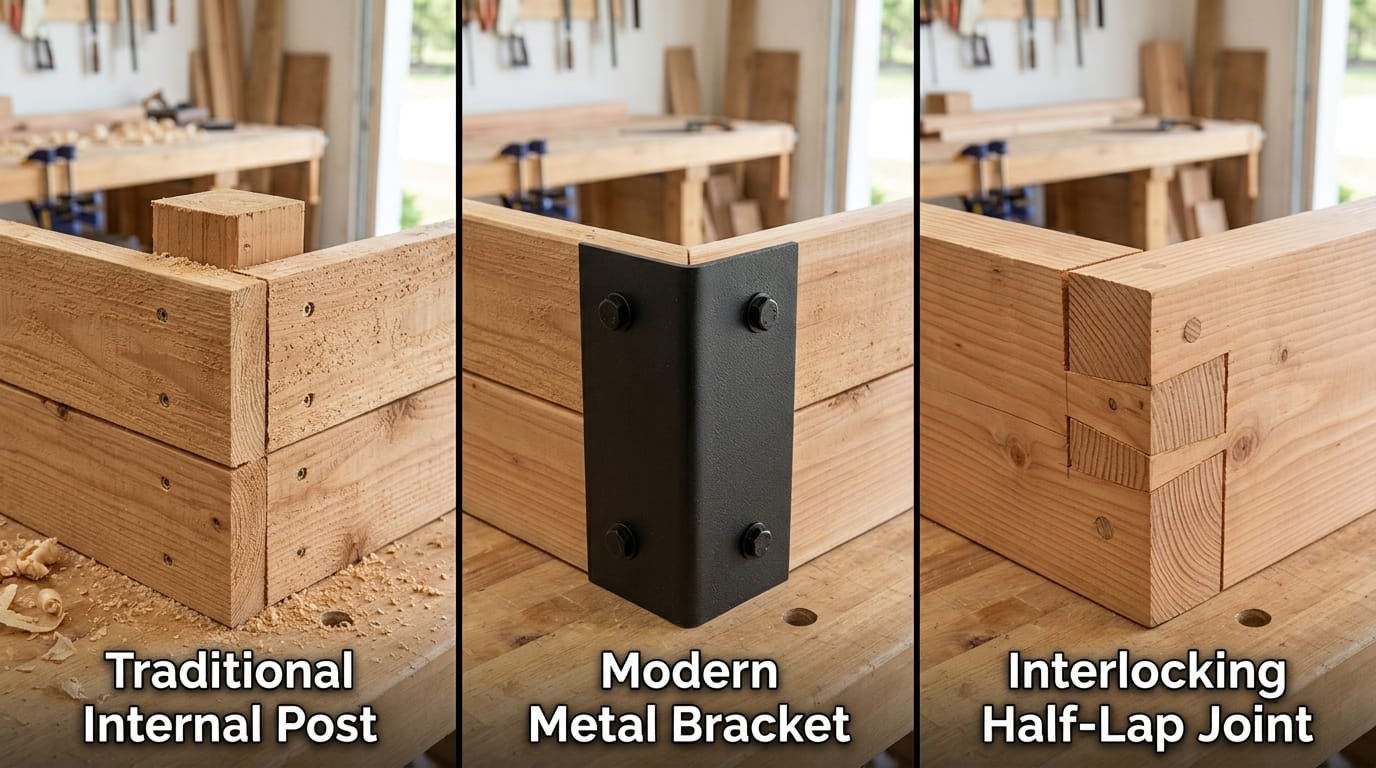
The corners and the middle of the long side walls bear 95% of all physical stress in a raised garden bed. Moist soil exerts continuous outward hydrostatic pressure, especially following torrential rains or deep irrigation cycles. Understanding the physics of wood joinery prevents messy failures.
Why End-Grain Screwing Fails
The most common amateur mistake is simply butting the side board against the cut end grain of the adjacent board and driving three screws straight into the end grain. Screws driven into end grain have roughly 60% less withdrawal resistance than screws driven perpendicular to the wood grain. Over one or two seasons, soil moisture softens the cut fibers, allowing the fasteners to pull out cleanly under soil tension.
Internal 4×4 Timber Corner Blocking
By placing a square 4×4 post inside each corner, both the side plank and the end plank are fastened into perpendicular side grain. Fasteners penetrate deep into solid wood, providing immense shear resistance. In addition, the 4×4 post creates a rigid internal pillar that prevents the bed from twisting out of square when the ground settles during winter freeze-thaw cycles.
For companion plantings in container spaces, explore how to pair your raised beds with DIY hanging pot planter ideas or potted fruit trees from our guide on dwarf fruit trees in containers to create a multi-tiered, highly productive edible landscape.
6. Ground Prep, Gopher Protection & Weed Barriers
Placing an assembled raised bed directly onto existing lawn or weed patches without ground preparation invites underground invaders and persistent perennial weeds like bermudagrass or bindweed into your pristine garden soil.
The 1/2-Inch Galvanized Hardware Cloth Barrier
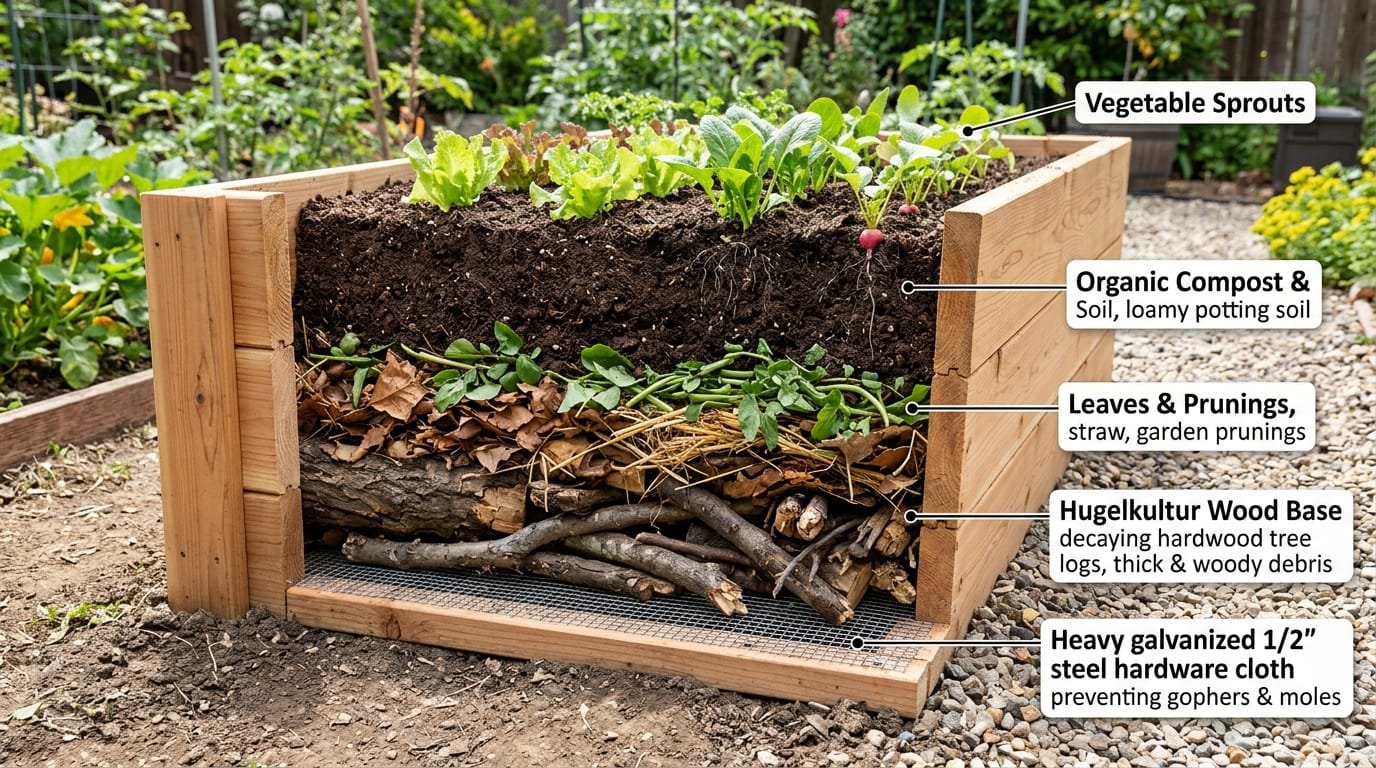
Pocket gophers, voles, and burrowing moles can tunnel beneath raised beds and devour succulent vegetable root crowns overnight. Standard hex chicken wire is made of thin 20-gauge wire that rusts out within two seasons and has openings large enough for voles to squeeze through. Always staple 1/2-inch mesh, 19-gauge hot-dipped galvanized steel hardware cloth across the entire underside of the wooden frame before setting it in place.
The Cardboard Sheet Mulch Layer
Inside the bed, directly on top of the native ground and hardware cloth, lay two overlapping layers of thick, non-glossy, brown corrugated cardboard. This practice, adapted from lasagna gardening sheet mulching, smothers weeds naturally while decomposing into organic matter that attracts earthworms (Lumbricus terrestris).
7. Calculating Soil Volume & The Budget Hugelkultur Base
High-quality raised bed soil is a major financial investment. Calculating exact volume before ordering prevents overpaying for bagged soil or falling short on bulk delivery.
The Soil Volume Formula
To determine the volume of soil needed in cubic feet, multiply the interior dimensions (length × width × depth in feet):
Volume (cu ft) = Length (ft) × Width (ft) × Depth (ft)
For a standard 4×8-foot bed that is 10.5 inches (0.875 feet) deep:
4 × 8 × 0.875 = 28 cubic feet. Converting to cubic yards (1 cubic yard = 27 cubic feet): 28 / 27 ≈ 1.04 cubic yards.
The Hugelkultur Base: Slash Soil Costs by 40%
Instead of purchasing 28 cubic feet of expensive potting mix, fill the bottom 3 to 4 inches of your raised bed using the German Hügelkultur mound principle. Place fallen hardwood logs, branches, pruned orchard twigs, and untreated wood chunks directly onto the cardboard base. As these woody materials slowly decompose, they act as an underground moisture sponge, soaking up excess winter rain and releasing moisture back upward to crop roots during hot summer dry spells.
To maintain optimal fertility across successive vegetable plantings, consult our comprehensive hydroponic crop chart for nutrient targets, or review the tomato nutrient schedule to balance nitrogen and potassium during heavy fruiting stages. For propagating new perennial cuttings to line your garden paths, review our tested recipes for DIY natural rooting hormones.
8. Common Raised Bed Problems & Corrective Actions
Even well-built raised beds encounter environmental wear, soil settling, and biological challenges over time. Use the troubleshooting matrix below to quickly diagnose structural and soil issues and apply permanent corrective remedies:
| Observed Problem | Root Cause | Severity Level | Corrective Engineering Action |
|---|---|---|---|
| Side Planks Bowing Outward | Hydrostatic pressure from wet soil pushing against unbraced 8ft plank midpoints | Critical | Install a center 2×4 vertical cleat and connect sides with a 1/2″ threaded galvanized steel tie rod. |
| Corner Joints Pulling Apart | Screws driven directly into weak end grain without internal corner blocking | Critical | Retrofit an interior 4×4 timber block or install exterior powder-coated aluminum corner brackets. |
| Severe Soil Settling After Year 1 | Natural consolidation of organic compost and decomposition of lower hugelkultur logs | Low | Top-dress each spring with 2 to 3 inches of blended organic compost and worm castings. |
| Soil Rapidly Drying Out | Excessive perlite/sand content or shallow bed depth exposed to high summer heat | Moderate | Apply a 2-inch layer of clean straw or shredded leaves; integrate peat moss or coconut coir into upper root zone. |
| Gophers Devouring Root Crops | Open-bottom bed installed without protective metal barrier | High | Dig out bottom soil and staple 1/2-inch 19-gauge galvanized hardware cloth across entire bottom rim. |
| Wood Rotting at Ground Line | Untreated fir lumber sitting in standing water on poorly drained clay | Moderate | Trench a 2-inch gravel drainage footer under wooden perimeter; seal exterior wood with non-toxic pine tar. |
| Screw Heads Snapping Off | Brittle zinc or drywall screws failing under wood expansion stress | High | Replace all fasteners with #9 exterior ceramic-coated Torx screws or 305-grade stainless steel screws. |
| Weeds Invading from Bottom | Perennial weeds (bermudagrass/bindweed) penetrating through gaps | Moderate | Line base with thick overlapping corrugated cardboard sheets prior to adding soil amendments. |
| Routine structural inspection each spring ensures early detection of loose screws and maintains bed stability. | |||
📌 Save This DIY Raised Garden Bed Plans Guide to Pinterest
Pin this visual reference card to your gardening or plant care board for instant access whenever you need it.
10. Frequently Asked Questions
What is the cheapest wood to use for raised garden beds that will not rot immediately?
Untreated Douglas fir and Western hemlock are the most affordable framing woods, typically costing 50% to 65% less than Western red cedar. When sealed on the exterior with raw linseed oil or non-toxic pine tar and kept off wet clay, a Douglas fir bed lasts 5 to 7 years. Modern MCA pressure-treated lumber is safe under EPA standards, but organic gardeners choose untreated fir, cedar, or redwood.
What is the best depth for a raised garden bed?
A depth of 10.5 to 12 inches (the height of two 2×6 boards or one 2×12 board) is optimal for 90% of vegetable crops including lettuce, brassicas, peppers, and bush tomatoes. Deep taproot crops like parsnips, daikon radishes, and indeterminate tomatoes benefit from 16.5 to 24 inches. Shallower 6-inch beds dry out rapidly in mid-summer heat.
Why do the long sides of raised garden beds bow outward over time?
Wet saturated garden soil weighs between 80 and 100 pounds per cubic foot. In an 8-foot long bed, thousands of pounds of hydrostatic pressure push against the center of the wooden planks. Without a center vertical cleat and an internal horizontal cross-tie or threaded galvanized rod at the 4-foot midpoint, boards inevitably bow outward within 12 to 18 months.
Should I line the bottom of my raised garden bed with plastic or landscape fabric?
Never line the bottom of an open-ground raised bed with impervious plastic sheeting, as it creates an anaerobic waterlogged swamp that suffocates roots. Landscape fabric is also counterproductive at the bottom because it blocks beneficial earthworms and deep subsoil root penetration. Instead, lay untreated corrugated cardboard to smother grass, backed by 1/2-inch galvanized steel hardware cloth to block burrowing gophers.
Which screws should I use when building an outdoor wooden raised bed?
Always use #9 or #10 gauge 3-inch exterior ceramic-coated or epoxy-coated star drive (Torx T25) deck screws. Never use standard black drywall screws or zinc-plated interior screws, which corrode rapidly from soil moisture and snap under wood expansion tension. For acidic redwood and cedar lumber, grade 305 or 316 stainless steel fasteners prevent dark tannin staining.
How do you level a raised bed on sloping ground?
Always dig the high side into the slope rather than propping the low side up on blocks. Trench the uphill and side perimeter so the bottom planks sit level in native earth. For steep grades over 15 degrees, step the beds down into terraced tiers with individual level retaining boxes.
Can you use 1-inch thick lumber to save money?
Nominal 1-inch boards (actual thickness 0.75 inches) should be avoided for beds longer than 3 feet. Wet soil pressure and moisture gradients cause 1-inch boards to cup, split, and warp within a single growing season. Nominal 2-inch dimensional lumber (actual thickness 1.5 inches) provides five times greater torsional rigidity.
How often should you replace the soil in a raised garden bed?
You do not need to replace the entire soil mass. Instead, revitalize the existing soil each spring by top-dressing with 2 to 3 inches of finished organic compost and worm castings. Incorporate balanced slow-release organic meals (bone meal, kelp meal, and feather meal) to replenish depleted macro- and micronutrients.
11. Research References & Extension Citations
- USDA Forest Products Laboratory: Wood Handbook: Wood as an Engineering Material — Chapter 14: Biodeterioration and Preservative Treatments of Untreated Softwoods (fpl.fs.usda.gov).
- Oregon State University Extension: Raised Bed Gardening: Construction, Soil Depth & Ergonomic Design, Publication EM 9027 (extension.oregonstate.edu/gardening).
- University of Florida IFAS Extension: Gardening in Raised Beds: Materials, Soil Selection, and Crop Spacing, Fact Sheet ENH-1211 (edis.ifas.ufl.edu).
- Cornell Cooperative Extension: Soil Mixtures and Gopher Exclusion Barriers for Backyard Raised Bed Systems, Horticultural Information Bulletin 142 (cals.cornell.edu/gardening).

Written & Scientifically Reviewed by Wara Danish, MSc
Wara Danish is an Agronomist and Lead Horticultural Specialist at CurrentGardening. She holds a Master of Science in Plant Sciences and specializes in vertical bio-intensive vegetable production, organic disease prevention, and living soil dynamics.