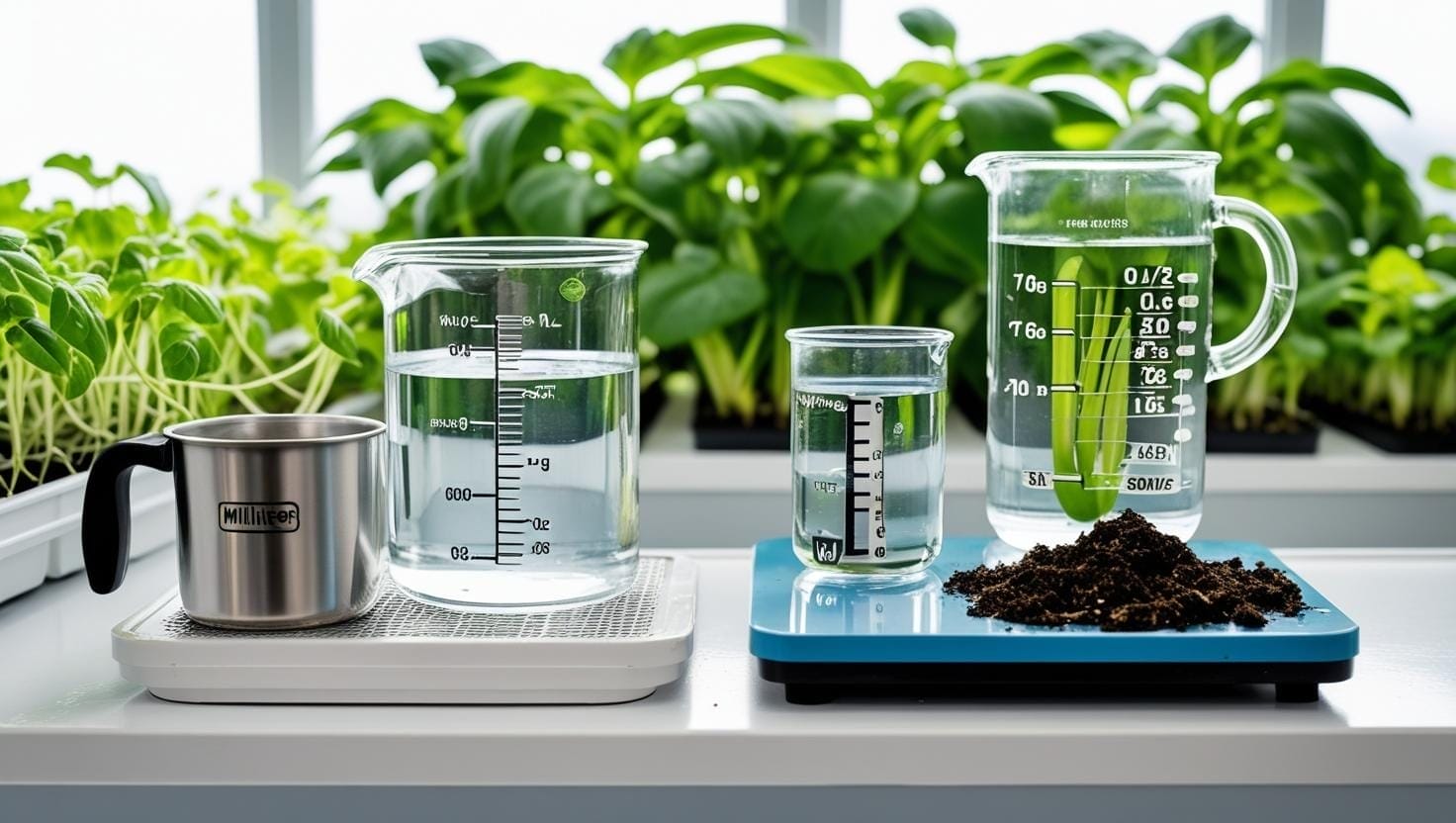
Metric System in Hydroponics: Why Pros Abandon Gallons


Insights Most Growers Overlook

- The Decimal Advantage in Precision: Many growers underestimate how much the metric system’s decimal-based calculations simplify complex tasks like nutrient solution mixing or precise environmental controls, significantly reducing the risk of errors compared to fractional US customary units.
- Unlocking Global Expertise: Adopting metric units isn’t just a conversion; it’s a gateway to a wider world of advanced hydroponic and gardening research, product specifications, and international growing communities, which often publish data exclusively in metric.
- Hydroponics is Fundamentally Metric: While US systems exist, the scientific backbone of modern hydroponics—from EC and TDS measurements to pH buffers and precise nutrient concentrations—is built on the metric system, making fluency essential for advanced growing.
- Beyond the Calculator: Simply converting numbers is a start, but understanding *why* metric is preferred (for precision, scalability, and scientific consistency) empowers growers to make more informed decisions rather than just relying on a tool.
- Preventative Health Benefits: Seemingly small measurement errors in US customary units, especially in critical areas like fertilizer dosage or seed depth, can lead to significant plant health issues (nutrient burn, poor germination). Metric’s precision acts as a preventative measure for common growing problems.
| Gardening Application | Common US Unit Example | Metric Equivalent Example | Conversion Relevance |
|---|---|---|---|
| Nutrient Solution Volume | 5 gallons (reservoir) | 18.93 liters | Essential for precise nutrient mixing, especially for concentrated solutions in hydroponics. |
| Fertilizer Dosage | 1 tablespoon per gallon | ~15 mL per 3.785 liters | Miscalculation can lead to nutrient burn or deficiencies, impacting plant health. (Note: 1 tbsp ≈ 15mL) |
| Plant Spacing | 6 inches apart | 15.24 cm apart | important for optimal growth, air circulation, and light penetration, preventing overcrowding. |
| Seed Depth | 0.5 inches deep | 1.27 cm deep | Ensures proper germination and seedling establishment, vital for crop success. |
| Watering Volume | 2 gallons per day | 7.57 liters per day | Prevents over or under-watering for specific plant needs and system capacities. |
| Harvest Weight | 1 pound of produce | 0.454 kilograms | Important for yield tracking, market sales, or accurately following recipes for processing. |
| Feature | US Customary Units (Typical Grower Experience) | Metric System (Typical Grower Experience) | Direct Benefit for Growers |
|---|---|---|---|
| Base Units & Scalability | Gallons, pounds, inches. Scaling often involves fractions (e.g., 1/2 gallon), leading to complex calculations. | Liters, kilograms, meters. Scaling is decimal-based (e.g., 0.5 liter), simplifying calculations significantly. | Simpler, more consistent calculations; dramatically reduces potential for errors in nutrient recipes or growing plans. |
| Global Compatibility | Primarily used in the United States. Limits access to international growing resources and product specifications. | Adopted by most countries worldwide. High compatibility with global research, scientific studies, and product manuals. | Access to a wider, more advanced range of international growing guides, scientific research, and specialized hydroponic equipment. |
| Precision & Accuracy | Can be less precise with common fractional measurements, leading to estimations in critical areas like nutrient dosing. | Designed for exact measurements using decimal points, ideal for scientific and agricultural precision. | Ensures exact nutrient dosing, pH adjustments, and environmental controls, leading to healthier plants and optimized yields. |
| Hydroponic Application | Common for reservoir sizes and some water flow measurements in US-centric systems. | Standard for nutrient concentrations (e.g., ppm, EC, TDS), pH buffers, and scientific data logging in modern hydroponics. | Facilitates professional-level nutrient management and environmental control, important for advanced hydroponic systems. |
| Tool & Equipment Standards | Basic gardening tools (e.g., measuring cups, rulers) often calibrated in US units. | Specialized meters (pH, EC), scientific lab equipment, and advanced irrigation components are frequently metric. | Better understanding, calibration, and utilization of high-tech sensors, automated systems, and analytical tools. |
Why Use a Unit Converter? (Us To Metric Conversion)
- Switch easily between gallons and liters, pounds and kilograms, inches and centimeters.
- Prevent overwatering or underfeeding plants due to unit mistakes.
- Plan hydroponic nutrient solutions precisely.
- Ensure correct measurements for fertilizers, seeds, and irrigation systems.
Common US/Metric Conversions
| Unit Type | US Unit | Metric Unit | Conversion |
|---|---|---|---|
| Volume | 1 gallon (US) | 3.785 liters | 1 gal × 3.785 = L |
| Volume | 1 liter | 0.264 gallons | 1 L × 0.264 = gal |
| Weight | 1 pound (lb) | 0.454 kilograms | 1 lb × 0.454 = kg |
| Weight | 1 kilogram (kg) | 2.205 pounds | 1 kg × 2.205 = lb |
| Length | 1 inch | 2.54 cm | 1 in × 2.54 = cm |
| Length | 1 cm | 0.394 inch | 1 cm × 0.394 = in |
How to Use the Unit Converter
- Select the type of unit you want to convert (volume, weight, or length).
- Enter the value in either US or metric units.
- Get the converted value instantly.
- Use the converted measurement for watering, nutrient mixing, spacing, or harvesting calculations.
Global Standards in Agricultural Science
Adopting the metric system aligns your personal growing practices with the rigorous standards of global agricultural science. When reading cutting-edge agronomy papers or referencing commercial hydroponic data, liquid volumes and dry weights are universally expressed in liters and grams. By abandoning outdated and imprecise customary units, you guarantee that your nutrient recipes and environmental controls are executed with the exact precision demanded by modern horticultural research.
Why Commercial Growers Only Use the Metric System
If you want to achieve professional results, understanding the **metric system in hydroponics** is absolutely essential.
If you walk into any massive, multi-million dollar commercial greenhouse, you will never hear the words “gallons,” “ounces,” or “teaspoons.” The global standard for professional agriculture and hydroponics is exclusively the metric system. If you want to scale up your operation, transitioning to liters and milliliters is non-negotiable. Ensuring metric system in hydroponics is correct is vital for success. Learn more about hydroponics research.
The Problem with Teaspoons and Tablespoons
US Customary volume measurements are notoriously imprecise.
A “teaspoon” of nutrient powder can vary drastically in weight depending on how tightly it is packed, the humidity in the room, and the exact shape of the spoon used. In advanced hydroponics, where you are dealing with trace minerals like boron and molybdenum, a 10% measuring error caused by a sloppy tablespoon scoop can result in severe nutrient toxicity that wipes out an entire crop overnight. Ensuring metric system in hydroponics is correct is vital for success.
The Beauty of Base 10 Precision
The metric system is built on powers of ten, making scaling effortless and flawless.
Mixing 2.5 milliliters of fertilizer into 1 liter of water scales perfectly to 250 milliliters in a 100-liter reservoir. There are no complicated fractions or bizarre conversions (like 128 ounces in a gallon). Furthermore, in the metric system, 1 milliliter of water weighs exactly 1 gram, and occupies exactly 1 cubic centimeter. This seamless relationship between volume and weight allows growers to mix nutrients on highly accurate digital scales, eliminating volume-based measuring errors entirely. Ensuring metric system in hydroponics is correct is vital for success.
Pin this Metric Guide!
Save this visual guide to your gardening board on Pinterest so you never lose it!

Frequently Asked Questions
Written by Sarah Collins
Sarah Collins is a hydroponic grower and horticultural researcher with 8+ years of hands-on experience in DWC, NFT, recirculating, and soil systems. She designs tools and publishes guides at currentgardening.com to help indoor growers optimize their yields.