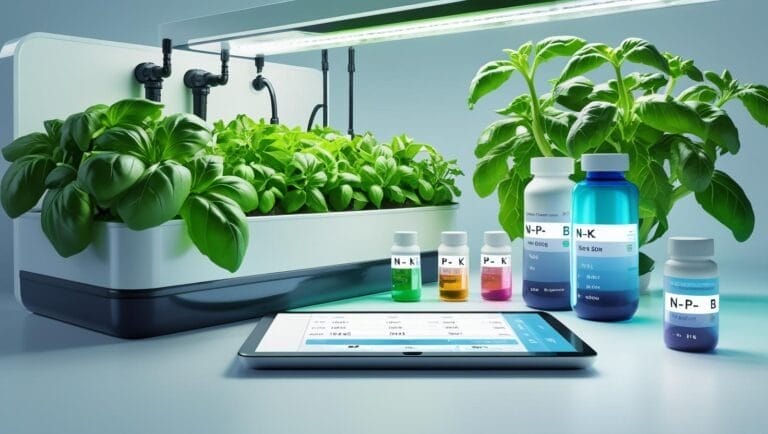
How to Grow Hydroponic Thyme Indoors: A Soil-Free Masterclass for Maximum Essential Oils
Author: James, Indoor Gardening & Home Hydroponics Specialist |
Fact-Checked: Horticultural & System Accuracy Verified |
Expert Reviewer: Wara Danish, MSc Plant Biology & Horticultural Science
Thyme grows very well hydroponically. Root 3-inch stem cuttings in rockwool for 7–10 days, then transfer to LECA in an Ebb & Flow system flooding 15 minutes every 4–6 hours. Hold EC at 1.2–1.6 mS/cm (start at 0.6–0.8 for cuttings) and pH at 6.0–6.5. Prune every 2–3 weeks above the woody base and harvest just as flower buds form for maximum thymol essential oil concentration.
Hydroponic thyme is the soil-free cultivation of Thymus vulgaris and related Mediterranean woody perennials in inert, fast-draining substrates — primarily expanded clay pebbles (LECA) or coarse horticultural perlite — irrigated by flood-and-drain nutrient solution delivery. Unlike moisture-tolerant leafy greens, thyme roots require an Air-Filled Porosity (AFP) above 30% between irrigation cycles to prevent Pythium anaerobic root rot. Precise EC management between 0.6 mS/cm (propagation) and 1.6 mS/cm (peak production) stimulates dense glandular trichome development and maximizes thymol monoterpene content, the compound responsible for thyme’s culinary potency and antimicrobial properties.
📜 Table of Contents — Click to Expand
Growing hydroponic thyme (Thymus vulgaris) indoors gives home growers a continuous, year-round supply of thymol-dense aromatic stems without soil-borne pathogens, seasonal limits, or inconsistent watering. Thyme is a woody Mediterranean perennial that rewards fast-draining substrates, intermittent flood-and-drain irrigation, and staged EC management — a combination that standard soil pots and generic herb kits cannot replicate.
Most online guides treat thyme as just another herb beside basil or mint and give it the same DWC tank, the same EC of 1.0 mS/cm flat, and the same perpetual flood cycle. That approach fails within weeks: thyme roots drown, stems lignify without pruning, and essential oil yield collapses before the first meaningful harvest. This guide covers the exact physiology, systems, stage-specific parameters, pruning mechanics, and troubleshooting matrix that closes those gaps.
To dial in your reservoir, use our free Hydroponic Nutrient Calculator, check water chemistry with the pH Calculator, or convert meter readings with the EC to TDS/PPM Converter.

1. Why Thyme Thrives Hydroponically (and Where Soil Fails It)
Soil cultivation of thyme has three chronic failure points that hydroponics eliminates entirely: inconsistent watering, root competition from soil organisms, and uncontrolled nutrient availability. In hydroponic systems, you control every variable that drives thymol production — EC, pH, root oxygen, light PPFD, and irrigation timing — with a precision impossible in a terracotta pot.
The Mediterranean Stress Advantage
In its native habitat along the rocky Mediterranean coastline, thyme evolved to tolerate periodic drought stress punctuated by short rainy periods. This evolutionary adaptation means thyme roots actively send biochemical signals — including jasmonate and ABA stress hormones — that trigger terpene synthesis during dry intervals between irrigations.
Replicating this cycle hydroponically (15-minute flood, 4-to-6-hour dry) activates the same stress-terpene pathway, producing foliage with higher thymol concentrations than continuously moist soil plants.
Year-Round Harvest Compared to Outdoor Growing
Outdoor thyme produces one or two meaningful harvests per growing season between late spring and early autumn. Indoor hydroponic thyme under an 18-hour LED photoperiod produces harvestable growth every 2 to 3 weeks, year-round, from a single square foot of grow space — delivering 8 to 12 harvest cycles annually compared to 1 to 2 outdoors.
2. Growth Physiology & Root Biology
Understanding thyme’s root physiology is what separates growers who succeed from those who cycle through dead plants. Thyme is categorically different from the leafy greens and fruiting vegetables that most hydroponic tutorials are written for.
Woody Perennial Root Structure and Air-Filled Porosity Requirements
Thyme develops thin, highly branched fibrous roots with a pronounced tendency toward lignification as plants mature. These root cells are optimized for atmospheric oxygen uptake between wet periods rather than continuous submersion. The critical metric is Air-Filled Porosity (AFP) — the percentage of substrate volume occupied by air when the growing medium is at field capacity after a flood cycle drains away.
Thyme roots require AFP above 30% for healthy aerobic respiration. LECA clay pebbles deliver AFP of 35 to 45%. Coarse horticultural perlite delivers AFP of 30 to 40%. Dense rockwool slabs (used for lettuce) deliver AFP of only 15 to 25% — too low for thyme when kept permanently moist. This is why thyme dies in rockwool systems designed for leafy greens but thrives in LECA Ebb and Flow setups.
Thymol Biosynthesis: The Science Behind Essential Oil Production
Thymol (2-isopropyl-5-methylphenol) and its isomer carvacrol are phenolic monoterpene compounds synthesized in glandular trichomes on leaf surfaces. Their biosynthesis pathway begins with geranyl pyrophosphate in the 2-C-methyl-D-erythritol 4-phosphate (MEP) pathway and proceeds through p-cymene as an intermediate. Three environmental factors most strongly upregulate this biosynthetic pathway in hydroponic conditions:
- Mild EC stress: Running EC at 1.4–1.6 mS/cm (the upper end of thyme’s comfort range) activates mild osmotic stress signaling that triggers terpene production as a secondary metabolite defense response.
- High light PPFD: Trichome density and thymol concentration increase linearly with photon flux up to approximately 400 µmol/m²/s. Below 150 µmol/m²/s, oil content drops significantly.
- Pre-flower harvest timing: Thymol concentration peaks at the pre-anthesis (bud) stage when the plant diverts maximum metabolic energy into reproductive structures. Oil content drops 20 to 40% after flowers fully open.
Stem Cutting Propagation vs. Seed Germination: A Direct Comparison
Thyme seeds are notoriously slow and inconsistent. Germination takes 14 to 28 days at 65–75°F, germination rates average 50 to 70%, and seedlings require another 3 to 4 weeks to establish before they can be transplanted into a hydroponic system. Total seed-to-harvest time runs 60 to 75 days.
Stem cuttings from a healthy mother plant root within 7 to 10 days in aerated rockwool, produce genetically identical plants with the same flavor and oil profile as the mother, and are ready for transplanting into the main system 2 to 3 weeks after cutting. Total cutting-to-harvest time runs 28 to 35 days — roughly half the seed timeline. For home hydroponic growers, stem cuttings are always the correct propagation method.
| Growth Phase | Target EC (mS/cm) | Optimal pH | Required AFP | Recommended Substrate | Flood Frequency |
|---|---|---|---|---|---|
| Stem Cutting Rooting | 0.6 – 0.8 | 5.8 – 6.2 | 25 – 30% | 1.5-inch Rockwool Plugs, Humidity Dome | Mist 2× daily; no flood pump |
| Transplant / Early Vegetative | 1.0 – 1.2 | 6.0 – 6.4 | 30 – 35% | LECA in Ebb & Flow net pots | 15 min ON / 6 hr OFF |
| Established Vegetative | 1.2 – 1.4 | 6.0 – 6.5 | 33 – 38% | LECA or 70/30 Perlite-Coco | 15 min ON / 5 hr OFF |
| Peak Essential Oil Stage | 1.4 – 1.6 | 6.0 – 6.5 | 35 – 40% | LECA / Coarse Perlite Drain Trays | 15 min ON / 4 hr OFF |
| Post-Harvest Maintenance | 1.2 – 1.4 | 6.0 – 6.5 | 35 – 40% | Top-Drip Buckets or Recirculating Sump | 15 min ON / 5 hr OFF |
| Off-Grid / Passive Kratky | 1.0 – 1.2 | 6.0 – 6.3 | 40%+ (Large Air Gap Required) | 2-inch Perlite Net Pot in Mason Jar | Passive; replenish as consumed |
| ✅ Recommendation: Use Ebb & Flow with LECA clay pebbles flooding for 15 minutes every 4 to 6 hours for maximum root oxygenation and highest thymol concentration. | |||||

3. System Architecture & Cultivar Selection
System selection is the single most consequential decision when growing thyme hydroponically. Unlike moisture-tolerant crops such as lettuce, basil, and spinach that tolerate — or even prefer — constant root submersion, thyme dies in standing-water systems within 3 to 7 days of continuous submersion.
Ebb & Flow (Flood & Drain) — Best Overall
Ebb and Flow systems are the gold standard for woody Mediterranean herbs. A submersible pump in the sump reservoir fires on a digital timer, flooding the grow tray with nutrient solution for 15 minutes, then shutting off and allowing the solution to drain by gravity back into the sump.
During the drain and dry phase — lasting 4 to 6 hours — fresh atmospheric oxygen is drawn deep into the LECA media around the root zone through the same channels the water vacated. This wet-dry oxygen cycle is what thyme evolved for.
Setup requirements: 10-gallon sump reservoir, flood tray sized to your plant count (one plant needs roughly 6×6 inches), submersible pump with a maximum head rating of at least 4 feet, and a mechanical or digital interval timer. Total hardware cost: $60 to $120.
Top-Drip Bucket Systems — Best for Multi-Plant Benches
Top-drip systems deliver measured doses of nutrient solution through micro-drip emitters placed at the base of each plant. A 70/30 perlite-to-coco-coir substrate blend provides excellent drainage; excess solution flows through the pot base into collection troughs and returns to the sump.
Top-drip systems scale easily — add emitters and pots without changing the reservoir or pump. Run 2 to 4 minutes ON every 3 to 4 hours during lights-on, and suspend irrigation during dark periods to prevent overnight waterlogging.
Kratky Passive Method — Best for Beginners and Off-Grid
The Kratky method requires no pump, no timer, and no electricity beyond the grow light. A net pot filled with perlite sits atop a sealed jar or bucket containing nutrient solution. As roots grow down and consume solution, an air gap forms above the liquid surface — this air gap is where thyme roots breathe.
For Kratky to work with thyme, the air gap must be maintained at a minimum of 2 inches at all times. Top up solution weekly, keeping the air gap intact. Kratky thyme grows 30 to 40% slower than Ebb and Flow but requires zero infrastructure investment beyond a jar and net pot.
Cultivar Selection: Which Thyme Variety Is Right for You?
The four thyme cultivars commonly available for hydroponic propagation differ meaningfully in thymol content, growth habit, and light requirements. Choosing the wrong one for your goal wastes weeks of growing time.
| System | Root Oxygenation | Maintenance Level | Setup Cost | Yield Rate | Best For |
|---|---|---|---|---|---|
| Ebb & Flow | ⭐⭐⭐⭐⭐ Excellent | Moderate (pump + timer) | $60 – $120 | High (baseline) | Most home growers; best ROI |
| Top-Drip | ⭐⭐⭐⭐ Good | Low (self-draining) | $80 – $150 | High (scales easily) | Multi-plant benches, 6+ plants |
| Kratky (Passive) | ⭐⭐⭐ Fair | Minimal (no pump) | $5 – $20 | Medium (30–40% slower) | Off-grid, single-plant, beginners |
| NFT (Nutrient Film) | ⭐⭐ Poor for thyme | Moderate | $100 – $200 | Poor for woody plants | Not recommended — roots tangle in channels |
| Deep Water Culture (DWC) | ⭐ Very poor for thyme | Low | $30 – $80 | Fails — root rot within days | Not recommended for thyme |
| ✅ Recommendation: Ebb & Flow with LECA clay pebbles is the best system for home hydroponic thyme. It delivers excellent root oxygenation, tolerates beginner management errors, and produces the highest thymol yield. Avoid DWC and NFT channels for all woody Mediterranean herbs. | |||||

4. Step-by-Step Growing Process
-
Step 1 — Take Semi-Hardwood Stem Cuttings
Select healthy 3-inch stem tips from a mature thyme plant where green growth meets the beginning of the woody base — this semi-hardwood tissue roots faster than purely soft new growth. Cut cleanly at a 45-degree angle directly below a leaf node using sterile micro-tip shears. Strip all leaves from the bottom inch of stem and dip the cut end 1 inch deep into rooting hormone gel (IBA-based). Insert into pre-soaked 1.5-inch rockwool plugs, place in a humidity dome at 70–74°F, and provide 18 hours of light at 50–100 µmol/m²/s PPFD. Mist the dome interior once daily. White roots emerge from rockwool bases within 7 to 10 days. -
Step 2 — Transplant Rooted Cuttings Into Your Hydroponic System
Once roots extend at least 2 inches from the rockwool plug — visible at the base of the plug when you gently lift it — transfer each cutting into a 2-inch or 3-inch net pot filled with rinsed LECA clay pebbles. Seat the rockwool plug into the LECA bed so the root tips hang freely into the pot. Place net pots into your flood tray, spacing plants 6 to 8 inches apart center-to-center to allow airflow between maturing canopies. Fill the reservoir with nutrient solution mixed to EC 1.0–1.2 mS/cm and pH 6.0–6.4. Run your first flood cycle (15 min ON) to wet the LECA thoroughly, then allow full drainage. -
Step 3 — Dial In EC and pH by Growth Stage
Check reservoir EC and pH every 48 hours using calibrated digital meters. During the first 7 to 10 days post-transplant, hold EC at 1.0–1.2 mS/cm and raise to 1.4–1.6 mS/cm once plants show 2 inches of vigorous new vegetative growth. Maintain pH strictly between 6.0 and 6.5 throughout all phases — pH drift above 6.8 locks out iron and manganese micronutrients, causing interveinal chlorosis. Top up the reservoir with pre-mixed nutrient solution as water level drops, and perform a complete RO-water flush of your LECA media once every 10 to 14 days to dissolve and drain accumulated salt deposits. -
Step 4 — Prune Apical Tips Every 2 to 3 Weeks
Once plants reach 6 inches in height, make your first pruning cut. Using sterile micro-tip shears, cut the top 2 inches of green stem tissue cleanly above a leaf node. Inspect every stem: always leave at least 2 inches of green growth above the visible transition from green to grey-brown woody tissue. Cutting into bare woody stem is a fatal pruning error — mature thyme lignified stems lack active axillary buds and cannot regenerate foliage. After pruning, reduce reservoir EC by 0.1–0.2 mS/cm for 5 days to lower osmotic load on the reduced leaf mass, then return to the target range. -
Step 5 — Harvest at Peak Thymol — Just Before Flowers Open
Monitor daily once plants enter the pre-flowering stage (approximately day 30–40 from transplant). The harvest window opens the moment the first pink-purple flower buds become clearly visible at stem tips but before any individual flowers open. At this pre-anthesis stage, thymol and carvacrol essential oil content is at its absolute peak. Cut the top 3 inches of green growth from each stem. Gather cut stems into bundles of 8 to 10 stems, tie loosely at the base with twine, and hang upside-down in a dark, well-ventilated space at 60–68°F with 40–55% relative humidity. Full air-drying takes 7 to 10 days; stems are ready when leaves crumble cleanly from the stems between your fingers.
Run a full RO-water flush cycle through your LECA bed every 10 to 14 days, even when reservoir EC readings look stable. Salt crystals form invisibly on the textured surface of clay pebbles between irrigation cycles, quietly raising root-zone EC 0.2 to 0.4 mS/cm above the number your meter shows in the sump. Left unchecked for 3 to 4 weeks, this hidden accumulation causes leaf-margin scorch even with a reservoir EC reading within target range. Five minutes of flushing prevents this entirely.
pH-down products sold for hydroponic use are typically 75–85% phosphoric acid or citric acid concentrate. Always add acid dropwise to water — never pour water into acid. Wear chemical splash goggles and nitrile gloves during mixing. If acid contacts skin, flush immediately with running water for 15 minutes. Store all pH adjustment solutions in their original labeled containers, away from children and pets, in a cool dry location away from nutrient concentrates.
5. Pruning Biology, Canopy Management & Harvest Timing
Pruning hydroponic thyme is a biological intervention, not merely a maintenance task. Done correctly, it doubles productive yield per square foot by forcing axillary bud activation. Done incorrectly — or skipped — it produces a single elongated central stem with no lateral branching that eventually becomes so woody it stops producing harvestable green tissue entirely.
Apical Dominance and Lateral Branching Biology
Thyme, like all vascular plants, exhibits apical dominance — the phenomenon where the apical meristem (growing tip) produces auxin hormones that suppress the development of lateral (side) buds lower on the stem. When the apical tip is removed, auxin concentration drops along the stem and dormant axillary buds at each leaf node activate, each producing two new lateral branches.
A single pruned stem becomes two; two become four; four become eight over successive pruning cycles. This geometric branching is why a properly pruned 3-month-old hydroponic thyme plant yields 10 to 20 times more harvestable biomass per cycle than an unpruned one.
The Lignification Problem and How to Stay Ahead of It
Thyme stems lignify (turn woody) from the base upward as the plant ages. Lignification is irreversible — woody cells cannot dedifferentiate back into productive meristematic tissue. This means that once a section of stem is woody and bare, it will never produce new leaves regardless of how much you water, fertilize, or prune it.
The only tool available is prevention: prune consistently every 2 to 3 weeks, always leaving a minimum 2-inch buffer of green stem above the advancing lignification line. If stems lignify faster than expected (common in very high-PPFD grow rooms), prune every 14 days and hold EC at 1.3 mS/cm rather than the peak 1.6 to slow the growth rate and woody conversion.
Exact Harvest Timing for Maximum Essential Oil Concentration
Thymol and carvacrol concentration in thyme foliage follows a predictable curve tied to the plant’s reproductive cycle. Oil concentration rises steadily through vegetative growth, peaks sharply at the pre-anthesis (bud-visible, no flowers open) stage, then drops 20 to 40% within 5 to 7 days as flowers fully open and the plant shifts metabolic energy from oil production into seed set.
The practical rule: harvest the moment you see the first pink-purple flower buds clearly visible at stem tips. At that point, the glandular trichomes on leaf surfaces are maximally loaded with essential oil. Waiting even a week into full bloom measurably reduces the potency of dried thyme for culinary and aromatic use.
6. Nutrient Management, Water Chemistry & Light Requirements
Thyme is a light feeder by hydroponic standards. Overfeeding is a far more common failure mode than underfeeding, because growers accustomed to tomatoes or peppers apply EC levels 2× to 3× what thyme roots can handle without osmotic stress.
N-P-K Ratio and Micronutrient Priorities
A 3-1-2 nitrogen-phosphorus-potassium ratio nutrient solution suits thyme’s growth profile best. Thyme does not need the high phosphorus levels of fruiting crops. Micronutrients that matter specifically for thyme: calcium (40–60 ppm) for cell wall integrity in new shoot tips, magnesium (20–30 ppm) for chlorophyll production, and iron (2–3 ppm) kept soluble at pH below 6.5.
Many commercial hydroponic nutrient lines (General Hydroponics Flora Series, Botanicare Pure Blend Pro) produce a correct thyme solution at approximately half the manufacturer’s recommended dose.
Water Temperature and Dissolved Oxygen
Reservoir water temperature directly controls how much dissolved oxygen (DO) is available to roots and how rapidly Pythium water mold proliferates. Keep reservoir water between 62°F and 68°F (17–20°C). At 68°F, water holds approximately 9 mg/L of dissolved oxygen.
Above 72°F (22°C), DO drops below 8 mg/L and Pythium spore germination rates increase dramatically. If your grow room runs warm, wrap the reservoir in reflective bubble insulation or add a small aquarium chiller to the sump.
Light PPFD, Photoperiod, and DLI Targets
Thyme requires high light intensity relative to other herbs. Target 200 to 400 µmol/m²/s PPFD at canopy level for productive culinary growth. Below 150 µmol/m²/s, stems etiolate (stretch thin) and thymol content drops measurably. Run an 18-hour photoperiod (18 hours light, 6 hours dark) to maximize photosynthetic output without triggering premature flowering.
At 200 µmol/m²/s for 18 hours, the daily light integral (DLI) is approximately 12.9 mol/m²/day — the minimum threshold for productive thyme canopy development. For maximum oil production, target a DLI of 17–20 mol/m²/day by increasing PPFD to 275–310 µmol/m²/s.
Use our Gardening Tools & Calculators to convert your grow light’s PPFD readings into daily light integral targets for your photoperiod length.
7. Troubleshooting & Pest ID Matrix
Problems with hydroponic thyme fall into three categories: root-zone issues caused by too much moisture, canopy issues caused by environmental conditions, and pest pressure from insects attracted to the aromatic foliage. Most failures can be traced to a single root cause — substrate waterlogging — but the secondary failures that follow waterlogging cascade quickly.
Root Zone Issues: Pythium Root Rot
Pythium aphanidermatum is an oomycete water mold that infects thyme roots within 24 to 72 hours of continuous submersion in warm water above 72°F. Early symptoms: slimy brown root tissue that pulls apart easily, a distinct sulfur-like odor from the reservoir, and sudden wilting despite adequate solution EC.
Intermediate symptoms: stem base browning and soft tissue at the crown. At advanced stages the plant cannot be saved. Prevention is the only real solution: maintain the correct flood-drain cycle, keep reservoir below 68°F, and never allow LECA to sit permanently wet.
Pest Identification: Whitefly, Spider Mites, and Fungus Gnats
Whitefly (Trialeurodes vaporariorum): Tiny white-winged insects that cluster on leaf undersides. When you disturb the plant, they rise in a white cloud. They excrete honeydew that promotes sooty mold and transmit plant viruses. Treatment: yellow sticky trap panels at canopy height catch adults; insecticidal soap spray (1 tsp per quart water) applied every 3 days for 3 applications kills nymphs on contact.
Two-Spotted Spider Mite (Tetranychus urticae): Microscopic mites visible as tiny moving dots on leaf undersides, accompanied by fine silvery webbing over leaf surfaces in heavier infestations. Spider mites thrive when relative humidity drops below 40% — a common condition in winter indoor grow rooms. Treatment: raise RH to 50–55%, apply insecticidal soap or neem oil spray to leaf undersides every 5 days, and introduce Phytoseiulus persimilis predatory mites.
Fungus Gnats (Bradysia spp.): Adults are small dark flies that hover around growing media; larvae live in substrate and damage young roots. In LECA systems (high AFP, fast drainage), fungus gnats rarely establish because their larvae need moist fine-particle media. If you see adult gnats, place yellow sticky traps at substrate level and allow LECA to dry fully between flood cycles — this kills larvae by desiccation.
| Symptom | Root Cause | Immediate Fix | Prevention Rule |
|---|---|---|---|
| Brown slimy roots, sulfur odor | Pythium root rot from waterlogging or warm reservoir (>72°F) | Reduce flood frequency; cool reservoir; add Bacillus amyloliquefaciens | Never allow standing water; keep reservoir 62–68°F |
| Bare woody stems, no new leaves | Pruning skipped; stems fully lignified past green buffer | Take cuttings from any remaining green tips and restart | Prune every 14–21 days; always leave 2 in. green buffer |
| Fine silver webbing on leaves | Spider mite infestation (RH <40%) | Insecticidal soap spray to undersides; introduce Phytoseiulus | Maintain RH 45–55%; run circulation fans continuously |
| White powder patches on leaves | Powdery mildew (RH >70%, stagnant air) | Potassium bicarbonate spray; remove badly affected leaves | Hold RH 45–55%; always run oscillating fan through dark period |
| Brown crispy leaf margins | Salt toxicity: EC >2.0 mS/cm at root zone; hidden salt crust on LECA | Full RO flush; reduce reservoir EC to 1.0 mS/cm for 5 days | Flush LECA every 10–14 days regardless of reservoir EC reading |
| Pale, yellow leaves (interveinal chlorosis) | Iron deficiency from pH drift above 6.8 | Adjust pH back to 6.0–6.5; dose chelated iron 1–2 ppm | Check pH every 48 hours; never allow pH to exceed 6.8 |
| White cloud of insects when plant disturbed | Whitefly infestation | Yellow sticky traps; insecticidal soap every 3 days × 3 applications | Inspect leaf undersides weekly; quarantine all new plant material |
| Thin, elongated stretching stems | Light deficiency — PPFD below 150 µmol/m²/s | Lower LED panel; increase PPFD to 200–300 µmol/m²/s | Measure canopy PPFD with quantum meter at setup |
| ✅ Prevention Summary: Keep reservoir at 62–68°F, flush LECA every 10–14 days, maintain pH 6.0–6.5, and provide 200+ PPFD for healthy, rot-free thyme. | |||
8. Drying, Storage & Essential Oil Preservation
Most hydroponic herb guides end at harvest. For thyme, how you dry and store the harvest determines whether you end up with intensely fragrant, potent dried thyme or pale, bland herb that tastes like cardboard after 6 months on the shelf. Thymol is a volatile compound — it evaporates at room temperature and degrades under UV light and heat.
Air-Drying Protocol for Maximum Thymol Retention
Bundle harvested stems loosely — 8 to 10 stems per bundle — and tie at the cut-stem base. Hang upside-down in a dark, ventilated space. Critical conditions: temperature 60–68°F (lower than room temp slows terpene evaporation), relative humidity 40–50% (prevents mold while allowing moisture to leave leaves), zero direct light exposure (UV degrades thymol), and gentle airflow.
Passive room ventilation is sufficient; forced fan drying at high velocity drives off volatile oils too rapidly. At these conditions, thyme fully air-dries in 7 to 10 days. Test dryness: leaves should crumble cleanly from stems with light finger pressure.
Long-Term Storage to Preserve Essential Oil Potency
Strip dried leaves from stems and store in dark amber glass jars with airtight lids. Avoid clear glass jars on kitchen shelves — UV exposure bleaches chlorophyll and degrades thymol within weeks. Store jars in a cool cupboard away from the stove (heat above 90°F accelerates terpene loss).
Properly dried and stored hydroponic thyme retains full culinary potency for 12 to 18 months. After that, oil content has typically dropped below the threshold perceptible in cooking. Label jars with harvest date.
Fresh vs. Dried Thyme Potency: The 3:1 Ratio
Dried thyme is roughly 3 times more potent by volume than fresh thyme because drying concentrates the essential oils into a smaller mass of leaf tissue. In cooking recipes: 1 tablespoon of fresh hydroponic thyme is culinarily equivalent to 1 teaspoon of properly dried thyme.
This ratio only holds when thyme is harvested at the correct pre-bloom stage and dried at the right temperature — poorly timed or heat-dried thyme loses this potency advantage entirely.
- AFP above 30% is non-negotiable: Thyme roots die within 72 hours in substrates with AFP below 20%. LECA and coarse perlite are the only media that reliably exceed the 30% AFP threshold in wet conditions.
- EC must be stage-specific, not fixed: Starting cuttings at EC 1.4 mS/cm (adult-plant dose) causes osmotic shock and root burn before a root system develops. Always start at 0.6–0.8 and build up.
- Mild EC stress drives thymol production: The upper end of thyme’s EC range (1.4–1.6 mS/cm) isn’t just tolerated — it actively stimulates secondary metabolite defense chemistry that increases thymol and carvacrol concentration in glandular trichomes.
- Harvest window is 5–7 days wide at the bud stage: Missing the pre-anthesis window and harvesting after flowers fully open reduces essential oil content by 20–40%. Monitor daily once flowering begins.
- Dark amber glass storage doubles shelf life: Thymol degrades under UV light. Storing dried thyme in clear glass containers at room temperature loses 50% of aromatic potency in 3 to 4 months. Amber glass in a dark cupboard extends this to 12 to 18 months.
- The broad EC range myth: Most herb grow charts list a single generic EC of 0.8–2.0 mS/cm for “herbs.” Applying that to thyme at any stage — particularly the upper end for young transplants — causes osmotic root burn. Thyme needs a precise staged EC protocol, not a single blunt number.
- Reservoir EC ≠ root-zone EC: Salt crusts on LECA pebble surfaces silently elevate root-zone EC 0.2 to 0.4 mS/cm above the reservoir reading. Growers within target on their meter can still be burning roots at the substrate level without a regular flush protocol.
- DWC kills thyme — most guides don’t say so clearly: Content covering hydroponic herb growing often lists DWC as a valid system for all herbs. For thyme, DWC without an air gap causes root rot within 3 to 7 days. The distinction between thyme’s needs and lettuce’s needs is rarely made explicit.
- Light PPFD below 150 µmol/m²/s produces etiolated, low-oil plants: Grow lights advertised for herbs may produce adequate light for basil but fall short for thyme, which needs 200–400 µmol/m²/s for productive essential oil development.
- Post-harvest drying conditions are as important as growing conditions: Drying at room temperature in a lit kitchen destroys a significant portion of the thymol harvested from a perfectly grown plant. Almost no beginner guide covers optimal drying temperature, humidity, and light-exclusion requirements.
- Growing thyme in a DWC or standard NFT system — thyme roots cannot tolerate constant submersion. Fix: switch to Ebb and Flow with LECA, or Kratky with a maintained 2-inch air gap.
- Pruning into bare woody stem tissue during harvest — old woody thyme stems have no active buds and will never regenerate foliage. Fix: always leave a minimum 2-inch green buffer above the lignification line. When in doubt, prune less aggressively.
- Applying a flat EC of 1.5 mS/cm to freshly transplanted cuttings — young roots with no established root mass cannot manage adult EC levels. Fix: start at EC 0.6–0.8 mS/cm for the first 10 days post-transplant and raise gradually.
- Skipping LECA media flush cycles because the reservoir EC reads correctly — reservoir EC does not reflect salt accumulation on pebble surfaces. Fix: flush your LECA bed with clean RO water for 10 minutes every 10 to 14 days regardless of meter readings.
- Harvesting thyme after flowers fully open — the essential oil content drops 20 to 40% within 5 to 7 days of full bloom. Fix: watch daily for the first visible pink-purple buds forming at stem tips and harvest that same day for maximum thymol concentration.
Key Takeaways
- Always propagate from stem cuttings, not seed — cuttings root in 7 to 10 days versus 14 to 28 for seed and deliver genetically consistent, flavorful plants 4 to 6 weeks sooner.
- Use Ebb and Flow with LECA — this combination delivers the intermittent wet-dry root-zone oxygen cycle that Thymus vulgaris evolved for. Avoid DWC and standard NFT channels entirely.
- Stage your EC precisely by growth phase — 0.6–0.8 for cuttings, 1.0–1.2 for early vegetative, 1.2–1.4 for established vegetative, and 1.4–1.6 at peak essential oil stage. Never apply a flat generic “herb EC” across the whole cycle.
- Prune every 14 to 21 days, always leaving a 2-inch green buffer — consistent apical tip removal doubles lateral branch count per pruning cycle and prevents irreversible lignification of productive stem tissue.
- Harvest at pre-anthesis for maximum thymol — the 5-to-7-day window when flower buds are visible but no flowers have opened delivers peak thymol and carvacrol concentration. Store dried leaves in dark amber glass jars at cool temperatures for 12 to 18 months of preserved potency.
🌱 Get Weekly Hydroponic Blueprints Free
Join 12,000+ home growers getting stage-specific EC charts, harvest timing guides, and system upgrade tips delivered every week. No spam, unsubscribe any time.
🧮 Calculate Your Exact Thyme Reservoir Recipe
Enter your reservoir volume and target EC (1.2–1.6 mS/cm) into our free calculator to get exact milliliter doses of each nutrient part — no guesswork, no waste.

Frequently Asked Questions — Hydroponic Thyme
📚 Sources & Citations
- UF/IFAS Extension — Herb Production in Soilless and Hydroponic Systems (2022). University of Florida Institute of Food and Agricultural Sciences.
- Carrubba, A. & Catalano, C. (2021). “Essential oil crops for sustainable agriculture.” Scientia Horticulturae, 273, 109–124. DOI: 10.1016/j.scienta.2021.109634.
- University of Minnesota Extension — Small-Scale Hydroponics for Home Growers (2023). CFANS Plant Science.
- Cornell Cooperative Extension — Growing Herbs Indoors Under Artificial Light: Nutrient Management and Environmental Controls (2023).
🌿 Continue the Learning Series — Mediterranean Herb Hydroponics
- Top 10 Herbs for Hydroponic Growing — Full parameter breakdown for all 10 culinary herbs
- How to Grow Hydroponic Basil — DWC setup, EC targets, and apical pruning protocol
- How to Grow Hydroponic Mint — Reservoir isolation, root runner management, and variety-specific EC
- 10 Steps for Managing pH and EC in Hydroponics — Complete reservoir calibration framework