Cucumber Trellis Ideas: 7 DIY Vertical Trellises for Maximum Yield
The best cucumber trellis for home gardens is a foldable wooden A-frame or an arched metal cattle panel standing 5 to 6 feet tall with 4×4-inch grid openings. Vertical trellising increases cucumber yields by up to 200%, eliminates soil rot and yellow bellies, and reduces powdery mildew by improving canopy airflow by 300%.
5 to 6 Feet
Prevents top-heavy splay
80 to 120 lbs
Wet vines + fruit weight
4″ × 4″ or 6″ × 6″
Allows fruit to hang freely
Up to 70% Less Mildew
Accelerates dew drying
Table of Contents
- 1. Essential Equipment & Shopping List
- 2. Step-by-Step DIY A-Frame Cucumber Trellis Tutorial ($18 Weekend Build)
- 3. 7 Best Cucumber Trellis Designs: Structural Comparison Matrix
- 4. Cattle Panel Arches: Indestructible Walk-Through Garden Tunnels
- 5. Cultivar Selection: Vining vs. Bush Cucumbers for Vertical Growth
- 6. Common Trellising Problems & Corrective Actions
- 7. Save This Visual Trellis Guide to Pinterest
- 8. Frequently Asked Questions
- 9. Research References & Extension Citations
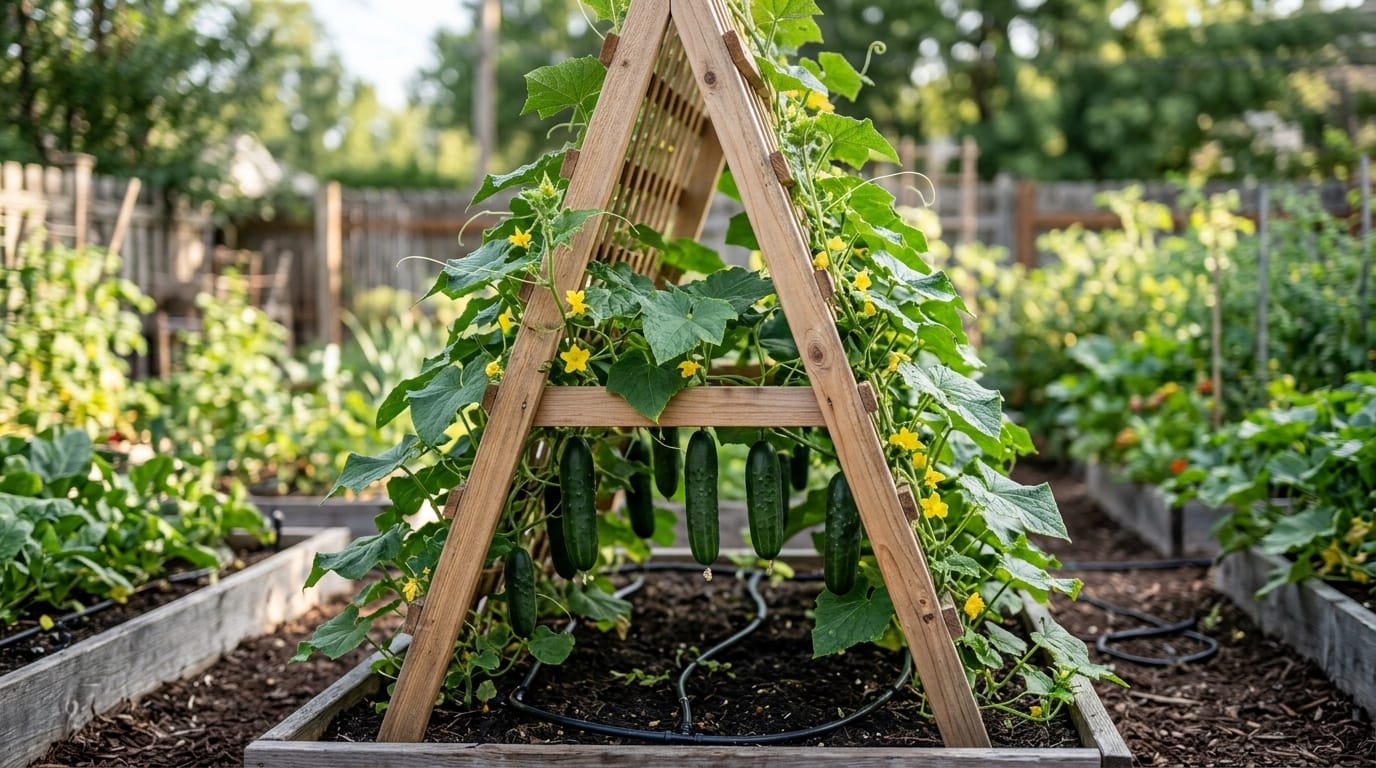
1. Essential Equipment & Shopping List
Building a durable cucumber trellis requires weather-resistant materials capable of withstanding moisture and wind loads. Below is the honest gear breakdown of essential materials versus optional stability upgrades:
| Category | Item Description | Specification / Grade | Estimated Cost (USD) |
|---|---|---|---|
| Essential | Framing Lumber (4 boards) | 2×4 Untreated Cedar or Fir (72″ Length) | $11.50 |
| Essential | Cross Rail Lumber (4 rails) | 1×2 Wood Furring Strips (45″ Length) | $3.80 |
| Essential | Galvanized Utility Hinges | 3-inch Rust-Resistant Zinc Plated (Pair) | $3.20 |
| Essential | Exterior Deck Screws | 2.5-inch Coated Star Drive (T25 Bit) | $4.50 |
| Essential | Trellis Grid Netting | 4-inch Square Heavy-Duty Nylon Netting | $5.00 |
| Optional | Ground Anchor Stakes | 18-inch Steel Rebar Stakes or Ground Wedges | $6.00 |
| Optional | Limiter Safety Chain | 36-inch Lightweight Zinc Safety Chain | $2.50 |
| Total Essential Materials Cost: ~$28.00 (under $18.00 if using scrap woodworking lumber). | |||
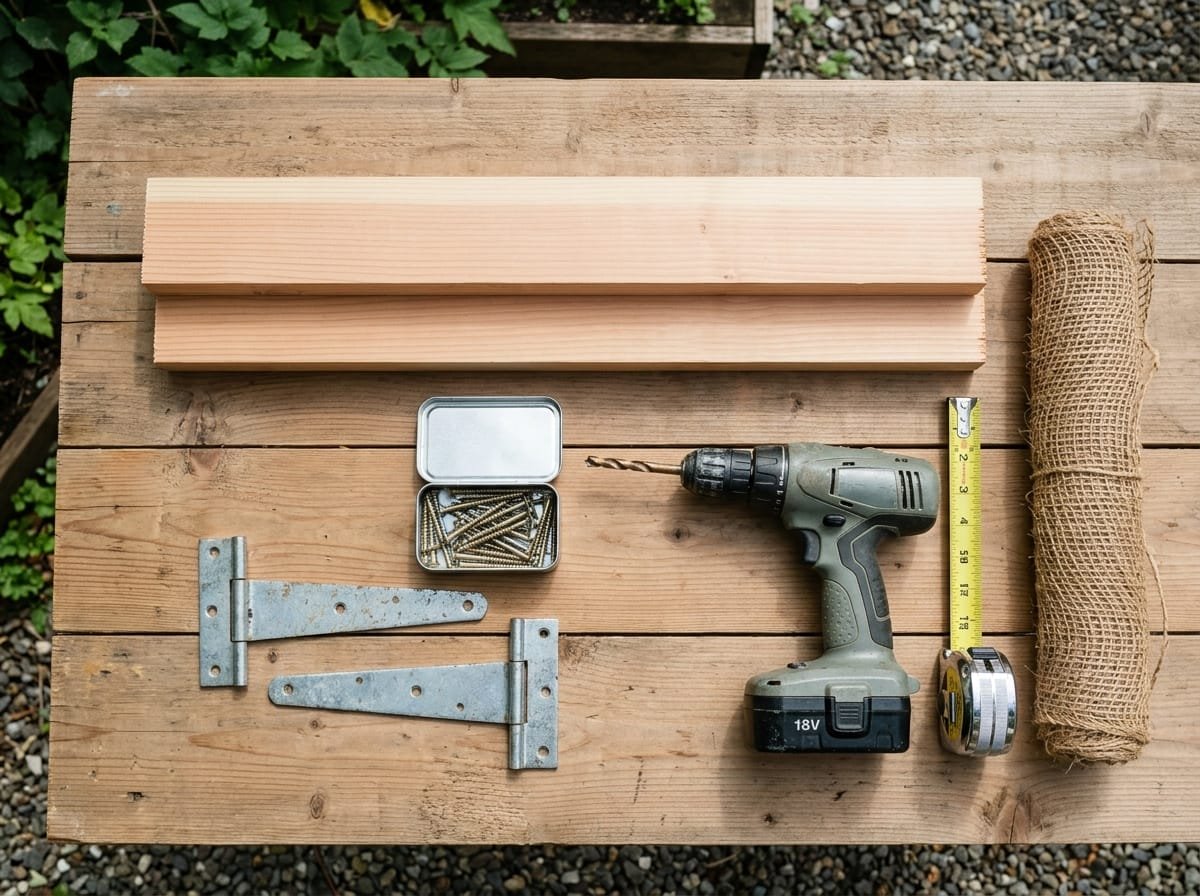
2. Step-by-Step DIY A-Frame Cucumber Trellis Tutorial ($18 Weekend Build)
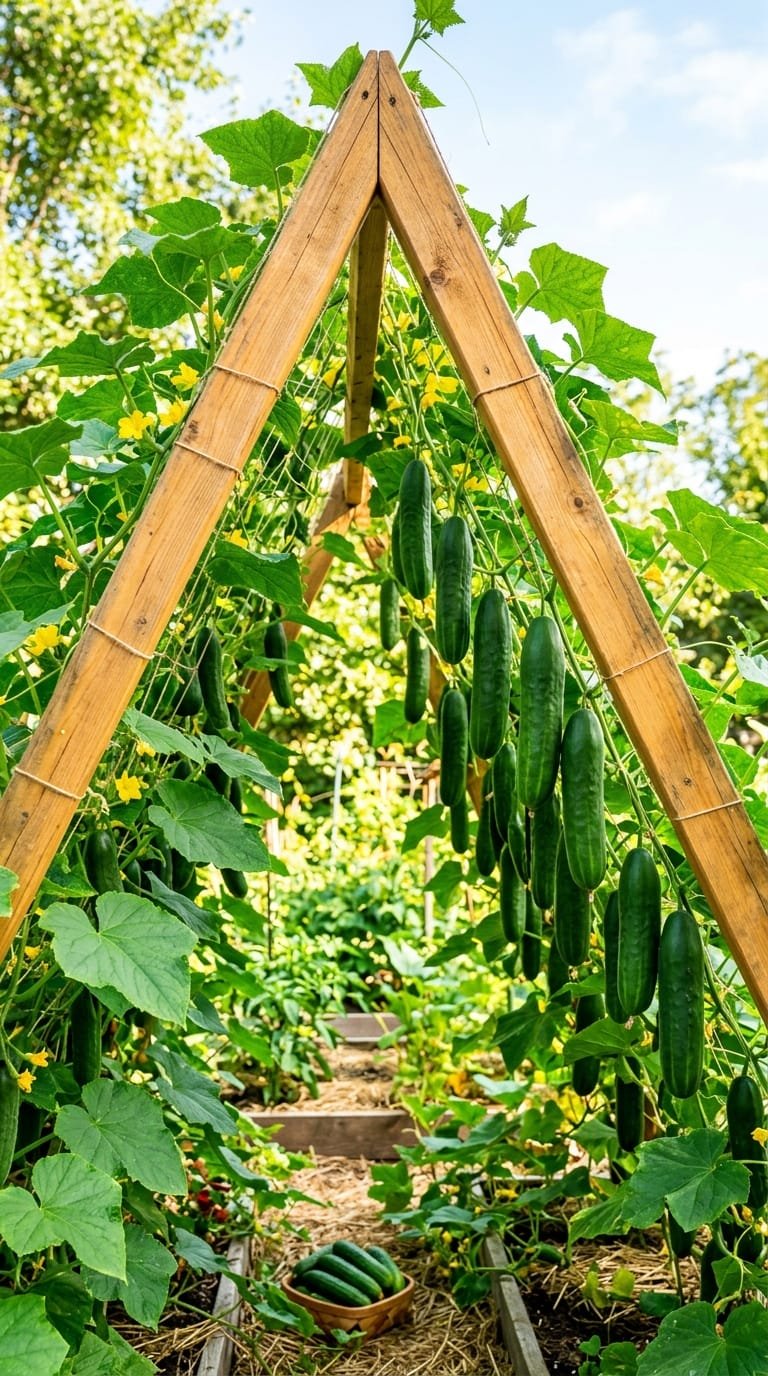
The A-frame design is widely regarded by horticultural extension specialists as the premier all-around trellis for backyard raised beds. It creates an inclined surface that guides heavy fruit to hang straight downward into the open central cavity, making inspection and harvesting effortless. For gardeners utilizing living soil mounds, this design pairs smoothly with lasagna gardening sheet mulching to maintain deep root hydration.
Step 1: Cutting and Preparing Timber Uprights
Measure and cut the four 2×4 legs to a uniform length of 72 inches. For improved stability when resting against garden soil, cut a 15-degree bevel angle across the bottom foot of each leg. Lightly sand rough edges to prevent splinters during handling and vine training. If planting in small spaces, compare these dimensions with DIY hanging pot planter ideas for compact trailing setups.
Step 2: Constructing the Two Ladder Panels
Place two 6-foot uprights parallel on your workbench, spaced 48 inches apart outer-edge to outer-edge. Measure 12 inches up from the bottom feet and position the first 45-inch horizontal 1×2 brace. Position the second cross brace 12 inches down from the top edge. Pre-drill pilot holes using an 1/8-inch drill bit to prevent wood splitting, and secure each brace with two 2.5-inch exterior deck screws per joint. Repeat this assembly for the second panel.
Step 3: Mounting Top Hinges and Splay Limiter Chains
Position the two finished panels upright, face-to-face, aligning the top edges. Fasten the two 3-inch galvanized hinges 6 inches in from the outer edges along the top seam. Next, attach a 36-inch lightweight galvanized safety chain between the center points of the lower cross braces on both panels. This safety chain maintains a stable 45- to 50-degree resting angle and prevents the trellis from splaying flat under the immense weight of wet mid-summer vines.
Step 4: Installing High-Tension Trellis Netting
Lay the hinged assembly flat on the ground. Unroll your 4-inch square garden netting over the exterior face of one panel. Beginning at the top corner, drive 1/2-inch galvanized staples every 4 to 5 inches along the timber frame. Pull the netting taut toward the opposite side and bottom rail before stapling. Trim excess netting neatly with scissors. Repeat for the opposing side.
Step 5: Bed Placement & Ground Anchoring
Position the finished A-frame across your planting row. In raised beds, straddle a 3-foot to 4-foot wide bed, orienting the open ends East-to-West so both climbing faces receive balanced North-South solar exposure. Secure each leg to the interior raised bed walls with 3-inch corner brackets or drive 18-inch rebar pins into the soil beside the feet to resist high winds. Similar vertical setups can also support climbing legumes like sugar snap and snow peas during early spring.
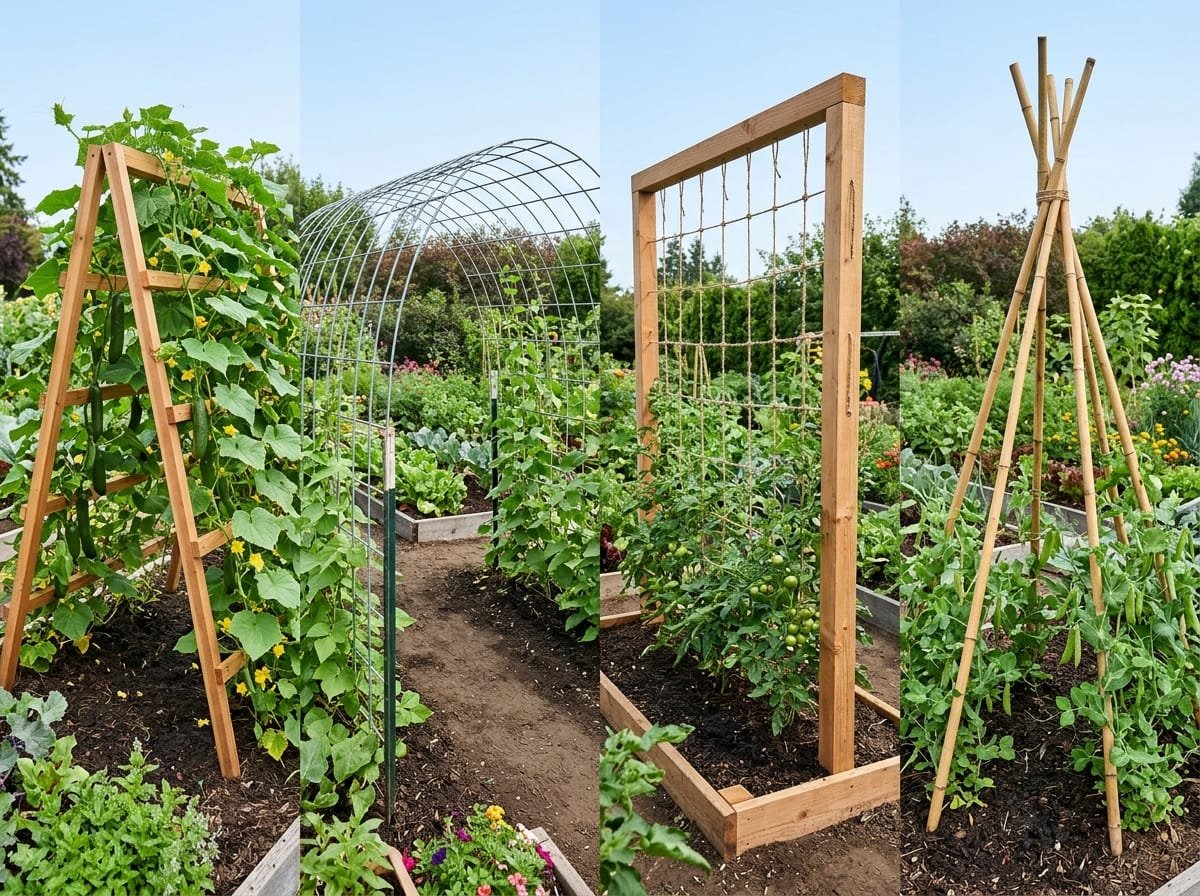
3. 7 Best Cucumber Trellis Designs: Structural Comparison Matrix
Every garden space has unique wind exposures, bed orientations, and budget parameters. Use the structural engineering matrix below to select the ideal trellis design for your specific garden layout:
| Trellis Design Type | Estimated Build Cost | Expected Lifespan | Max Dynamic Weight Capacity | Garden Bed Suitability | Best Cucumber Cultivars |
|---|---|---|---|---|---|
| Foldable Wooden A-Frame | $15 – $25 | 5 – 8 Years | 120 lbs | Raised beds (4×4 or 4×8 ft) | Marketmore 76, Straight Eight |
| Arched Cattle Panel Tunnel | $35 – $45 | 15+ Years (Galvanized) | 250+ lbs | Spanning between two beds | Suyo Long, Armenian, Lemon |
| Vertical Conduit String Trellis | $12 – $18 | 8 – 10 Years | 90 lbs | Single linear in-ground row | Green Finger, Diva, Corinto |
| Rustic Bamboo Cane Teepee | $5 – $10 | 2 – 3 Years | 60 lbs | Circular in-ground mounds | Boston Pickling, National Pickling |
| Wall-Mounted Wire Lattice | $20 – $30 | 10+ Years | 100 lbs | Sunny exterior fences & walls | Japanese Long, Marketmore |
| Lean-To Slanted Trellis | $15 – $22 | 5 – 7 Years | 110 lbs | North border of raised beds | Straight Eight, Sweet Slice |
| Heavy-Duty Folding Wire Cage | $18 – $28 | 7 – 10 Years | 75 lbs | Large 15-20 gal containers | Spacemaster, Bush Champion |
| Summary: For raised beds, A-frames provide the best cost-to-stability ratio; for high-production market gardens, cattle panel arches offer lifetime durability. | |||||
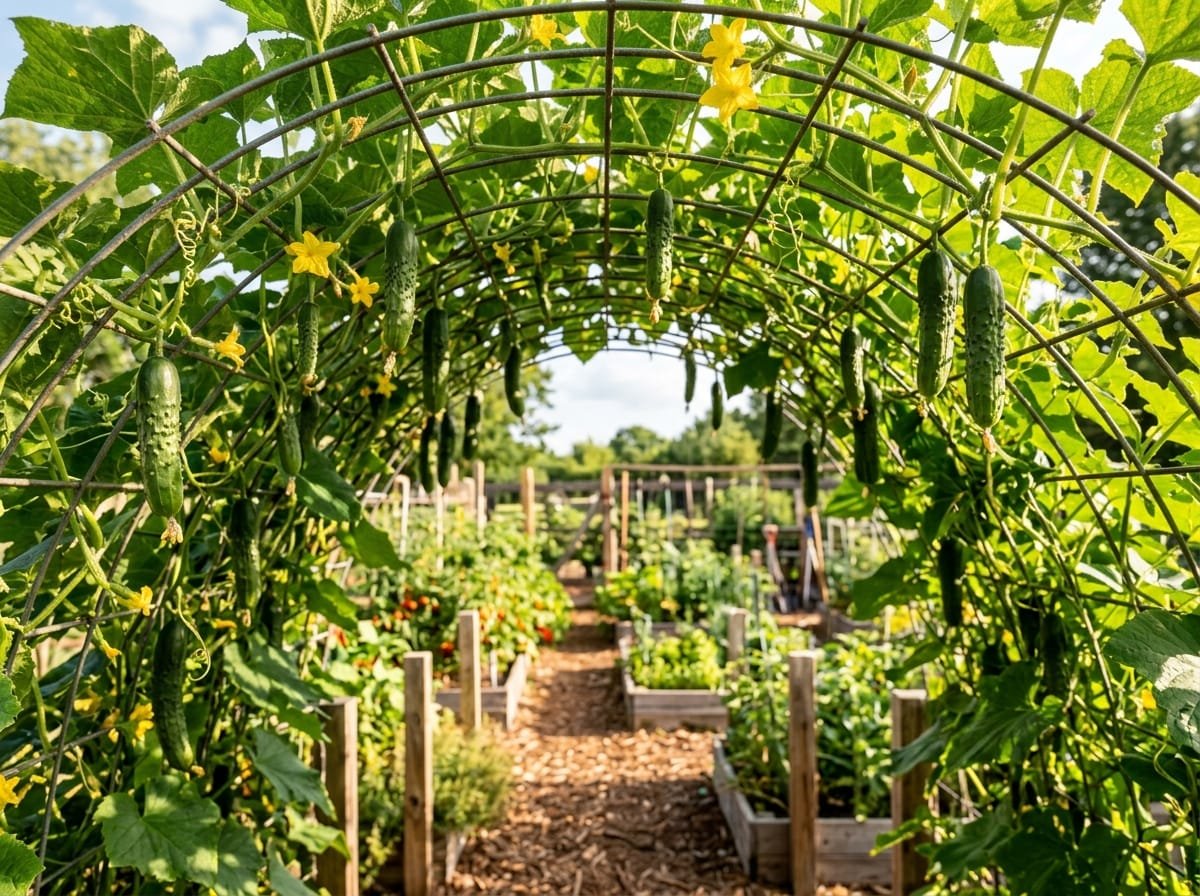
4. Cattle Panel Arches: Indestructible Walk-Through Garden Tunnels
If you desire a permanent vertical structure that will never sag, crack, or rot, a 16-foot 4-gauge galvanized cattle panel arch is the gold standard of organic market gardens.
A single standard cattle panel measures 16 feet long by 50 inches wide with graduated 4-inch by 8-inch wire openings. To install, drive four heavy-duty metal T-posts 2 feet deep into the soil—two posts on one side of a garden pathway and two on the opposite bed, spaced 3.5 to 4.5 feet apart. Bend the stiff 16-foot panel into an arched semi-circle, slipping the ends inside the T-posts. Fasten the panel securely to the T-posts using galvanized wire clips or UV-resistant zip ties.
The resulting Gothic arch provides a 6.5-foot walk-through tunnel. As cucumbers climb up the exterior curve, gravity pulls the fruit downward through the wide mesh, creating a canopy where hundreds of crisp cucumbers hang cleanly at eye level for effortless harvest without stooping. For companion container crops that flourish adjacent to trellis arches, see our guides on growing eggplant in containers and growing bok choy baby greens.
5. Cultivar Selection: Vining vs. Bush Cucumbers for Vertical Growth
Before building a vertical trellis, verifying the genetic growth habit of your cucumber seed packets is critical. Cucumbers fall into two distinct botanical categories:
- Vining (Indeterminate) Cultivars: These plants produce long, continuous runner vines reaching 6 to 10 feet throughout the entire summer. They produce abundant tendrils that readily climb vertical grids. Top performing vining varieties include Marketmore 76 (the standard for disease resistance), Straight Eight, Suyo Long (bitter-free heirloom), Lemon Cucumber, and Boston Pickling.
- Bush (Determinate) Cultivars: These plants form compact 24- to 36-inch mounds with short internodes and limited tendril development. Bush varieties produce a concentrated harvest over 3 to 4 weeks and do not possess the vine length to climb tall trellises. Cultivars like Spacemaster, Bush Champion, and Picklebush are designed for containers. To prepare healthy soil beds for heavy-feeding vining varieties, explore hugelkultur raised bed gardening. You can also review how to grow bush beans for companion row planting.
6. Common Trellising Problems & Corrective Actions
Even with a well-engineered trellis, growers occasionally encounter vine training or environmental challenges. Use this diagnostic table to rapidly troubleshoot common cucumber vertical growing issues:
| Observed Symptom | Likely Biological Cause | Severity Level | Immediate Horticultural Remedy |
|---|---|---|---|
| Vines Sprawling on Ground | Lack of early training; tendrils unable to grasp thick timber | Low | Loosely tie main vine to lowest netting rail with soft cotton twine or flexible plant clips. |
| Trellis Leaning Under Weight | Insufficient ground anchoring or missing center splay chain | Critical | Drive 18-inch rebar stakes beside legs and attach a 36-inch limiter chain across the center. |
| White Powdery Leaf Spots | Powdery mildew fungus (Podosphaera xanthii) in dense foliage | Moderate | Prune lower 18 inches of foliage; spray potassium bicarbonate or organic sulfur at dusk. |
| Misshapen / Pinched Fruit | Fruit expanding inside narrow mesh openings (e.g. chicken wire) | Moderate | Switch to 4-inch or 6-inch grid netting; gently reposition young fruit to hang clear of rails. |
| Yellowing Lower Leaves | Normal senescence or soil splashback during overhead watering | Low | Strip bottom yellowing leaves with sterilized pruners; water strictly at base with soaker hose. |
| Curled Stunted Fruit | Incomplete bee pollination or severe moisture fluctuation | Moderate | Plant flowering pollinator attractors adjacent to trellises and maintain consistent soil moisture. |
| Sudden Mid-Day Wilt | Bacterial wilt spread by cucumber beetles (Acalymma vittatum) | High | Apply yellow sticky traps and organic kaolin clay spray; remove and destroy infected vines immediately. |
| Netting Sagging Under Load | Loose staples or lightweight polypropylene stretching in heat | Moderate | Weave a 12-gauge horizontal wire through netting centers and tension with turnbuckles. |
| Prompt corrective action prevents structural failure and preserves vine health throughout mid-summer heat. | |||
📌 Save This Cucumber Trellis Ideas Guide to Pinterest
Pin this visual reference card to your gardening or plant care board for instant access whenever you need it.
8. Frequently Asked Questions
How tall should a cucumber trellis be for vining varieties?
An ideal cucumber trellis for indeterminate vining cultivars should stand 5 to 6 feet (1.5 to 1.8 meters) tall. Most vigorous vining cucumbers reach 6 to 8 feet in length; a 6-foot structure gives vines sufficient vertical runway while keeping mature fruit at eye level for comfortable, ergonomic harvesting.
Can you use chicken wire or metal hardware cloth for cucumbers?
Chicken wire is not recommended for cucumbers because its small 1-inch hexagonal openings trap developing fruit, causing cucumbers to become deformed or strangled as they expand. In addition, reaching your hand through chicken wire to harvest cucumbers or prune lateral suckers causes painful skin scratches. Use trellis netting or cattle panels with at least 4-inch by 4-inch grid openings.
Do cucumbers climb trellises naturally on their own?
Cucumbers possess sensitive, spring-like curling tendrils that actively grasp thin structures like string, wire, and slender wooden dowels. However, young cucumber vines need gentle initial training. Once seedlings reach 10 to 12 inches tall, manually weave the main leader through the lowest trellis openings or secure it loosely with flexible garden tape. Once established, they climb autonomously.
Which cucumber varieties require a trellis versus growing as a bush?
Vining (indeterminate) cucumber varieties—such as Marketmore 76, Straight Eight, Lemon Cucumber, Japanese Long, and Boston Pickling—require a vertical trellis to thrive and prevent rot. In contrast, bush (determinate) varieties—such as Spacemaster, Bush Champion, and Picklebush—grow compact 2- to 3-foot vines that perform best in patio containers or small raised beds without tall trellising.
How much weight does a cucumber trellis need to hold at peak harvest?
A full-sized, mature cucumber plant carrying dense foliage, thick stems, and 10 to 15 water-dense developing cucumbers weighs between 15 and 25 pounds (6.8 to 11.3 kg). When planting 4 to 6 vines along an 8-foot trellis, the total dynamic wet load during peak summer can exceed 80 to 120 pounds, particularly after heavy rainfall. Always use sturdy framing anchored into the ground.
Does trellising cucumbers truly prevent powdery mildew?
Yes, vertical trellising significantly reduces powdery mildew and fungal leaf blight. By elevating foliage off the damp ground, trellises increase air circulation through the plant canopy by over 300% and accelerate morning dew evaporation. Additionally, trellising prevents fungal spores in the soil from splashing onto lower leaves during heavy rainstorms or overhead watering.
Can I grow shade-loving leafy greens underneath an A-frame trellis?
Yes, utilizing the shaded microclimate beneath an A-frame cucumber trellis is one of the most effective permaculture intercropping techniques. While cucumber vines thrive in full sun on the south-facing trellis slope, the cool shaded space underneath is perfect for planting quick-maturing, heat-sensitive crops like butterhead lettuce, spinach, radishes, and cilantro without premature bolting.
How do you disinfect and store a wooden cucumber trellis for winter?
At the end of autumn, strip all dead cucumber vines and roots from the trellis and dispose of them (do not compost diseased foliage). Spray the wooden frame and netting thoroughly with a 10% household bleach solution (1 part bleach to 9 parts water) or 3% hydrogen peroxide to kill overwintering fungal spores. Fold the A-frame flat and store it under a covered shed or garage to prevent winter wood rot.
9. Research References & Extension Citations
- University of Minnesota Extension: Growing Cucumbers in Home Gardens — Vertical Trellising, Plant Spacing & Fruit Quality Research (extension.umn.edu/vegetables/growing-cucumbers).
- University of Georgia Extension: Commercial and Home Cucumber Production: Trellising and Disease Control Strategies, Circular 1034 (extension.uga.edu/publications/detail.html?number=C1034).
- Iowa State University Extension: Cucumbers and Melons: Vertical Trellising Guidelines for Backyard Vegetable Plots, Extension Bulletin HORT-3042 (hortnews.extension.iastate.edu/cucumbers-and-melons-trellising).
- Cornell Cooperative Extension: Managing Powdery Mildew and Downy Mildew in Cucurbits Through Canopy Air Circulation, CALS Vegetable Pathology (cals.cornell.edu/vegetable-pathology/cucurbit-powdery-mildew).

Written & Scientifically Reviewed by Wara Danish, MSc
Wara Danish is an Agronomist and Lead Horticultural Specialist at CurrentGardening. She holds a Master of Science in Plant Sciences and specializes in vertical bio-intensive vegetable production, organic disease prevention, and living soil dynamics.