DIY Hanging Pot Planter Ideas: 11 Creative Projects for Indoor & Balcony Spaces
To build a safe DIY hanging planter, anchor into ceiling joists with 2.5-inch lag screws or drywall with 1/4-inch toggle bolts rated for saturated soil weight (4.5 to 12 lbs). Tie 4mm 3-ply cotton cord with symmetrical square knots, and always double-pot inside a sealed cachepot to prevent root rot and floor drips.
4.5 to 12.0 lbs
6″ to 8″ pot with water
3mm to 4mm 3-Ply
Tensile rating >40 lbs per strand
1/4″ Toggle Bolt
Never use plastic push anchors
Cachepot Double-Pot
Prevents drips & root rot
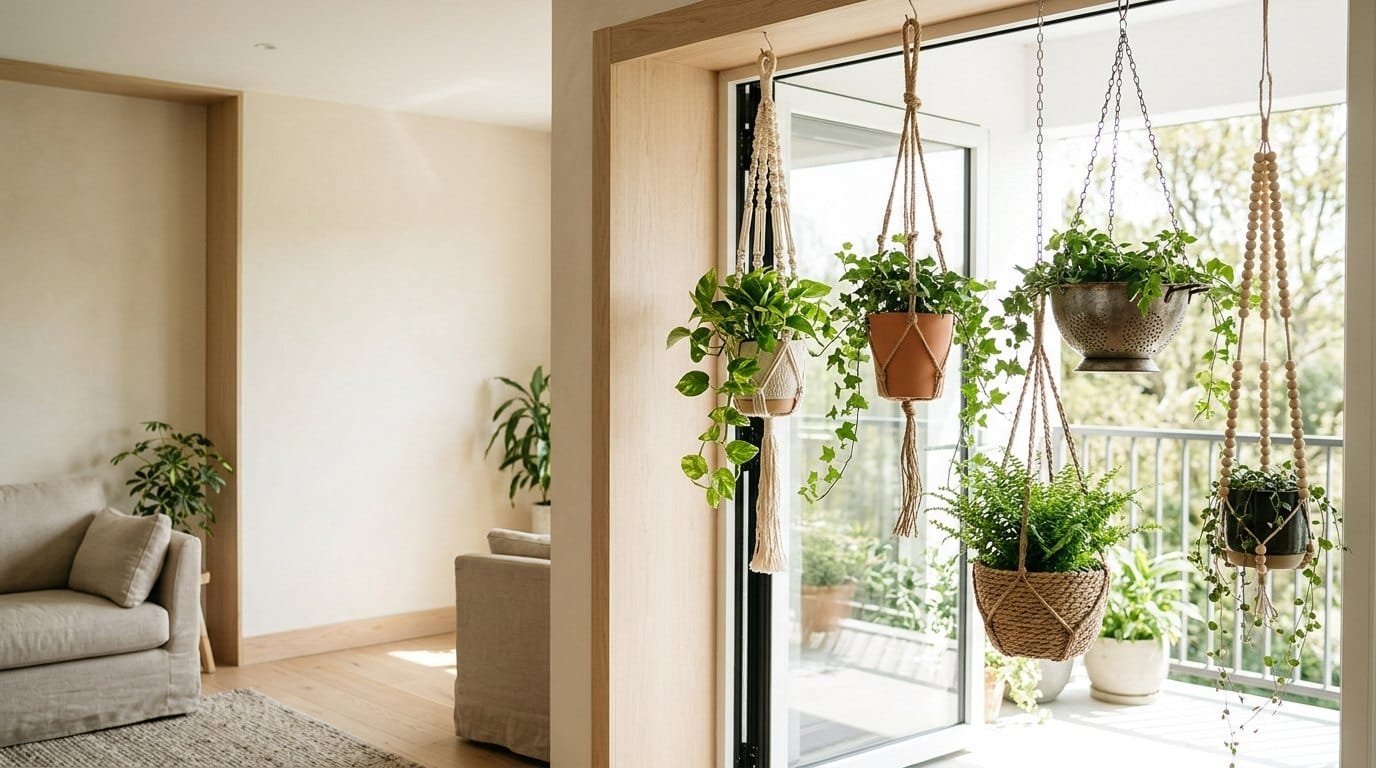
Table of Contents
- 1. Essential Equipment & Structural Hardware Load Matrix
- 2. Step-by-Step Macramé Rope Planter Tutorial
- 3. Critical Structural Physics: Wet Weight & Mounting Anchors
- 4. 11 Creative DIY Hanging Planter Projects (Material Breakdown)
- 5. Plant Selection by Ceiling Transpiration & Light Dynamics
- 6. Diagnostic Troubleshooting Guide for Hanging Planters
- 7. Save This Guide to Pinterest
- 8. Frequently Asked Questions
1. Essential Equipment & Structural Hardware Load Matrix
Hanging planters transform unutilized vertical air space into lush living green zones. However, every hanging display functions as a suspended gravitational load. A standard 6-inch container filled with dry potting soil weighs approximately 1.8 pounds, but when fully saturated with water after irrigation, that same container increases in mass to over 5 pounds. Using improper hanging hooks or weak craft string is the primary cause of sudden ceiling collapse and broken pottery. Pair your projects with well-aerated soil blends similar to our container potting soil guides and review pot container depth recommendations to balance soil mass.
| Ceiling / Wall Substrate | Recommended Hardware | Rated Tensile Load | Max Pot Diameter | Safety Failure Mode |
|---|---|---|---|---|
| Solid Wood Ceiling Joist | 1/4-inch x 2.5-inch Steel Lag Eye Screw | 75+ lbs (Safe Working Load) | 12-inch heavy ceramic or wood box | Requires pre-drilled pilot hole to avoid wood splitting |
| Hollow Drywall (1/2″ Ceiling) | 1/4-inch Spring-Wing Metal Toggle Bolt | 30 lbs (Tensile Static Rating) | 8-inch lightweight plastic / terracotta | Drywall punch-through if overloaded when saturated |
| Plaster and Lath Ceiling | Long-shank Toggle Bolt or Joist Lag Screw | 40 lbs (Safe Working Load) | 8-inch container | Brittle plaster spalling; drill slowly with masonry bit |
| Concrete / Brick Balcony Wall | 1/4-inch Steel Sleeve Anchor or Tapcon Screw | 100+ lbs (Safe Working Load) | Multi-pot vertical racks | Requires hammer drill with carbide masonry bit |
| Metal Balcony Railing | Heavy-Duty Clamping Steel Saddle Bracket | 40 lbs (Safe Working Load) | Trough / Rail planter | Wind shear lifts un-clamped hooks off rails |
| Engineering Safety Factor: Always design hanging installations with a 3:1 safety margin against estimated maximum wet soil weight. | ||||
2. Step-by-Step Macramé Rope Planter Tutorial
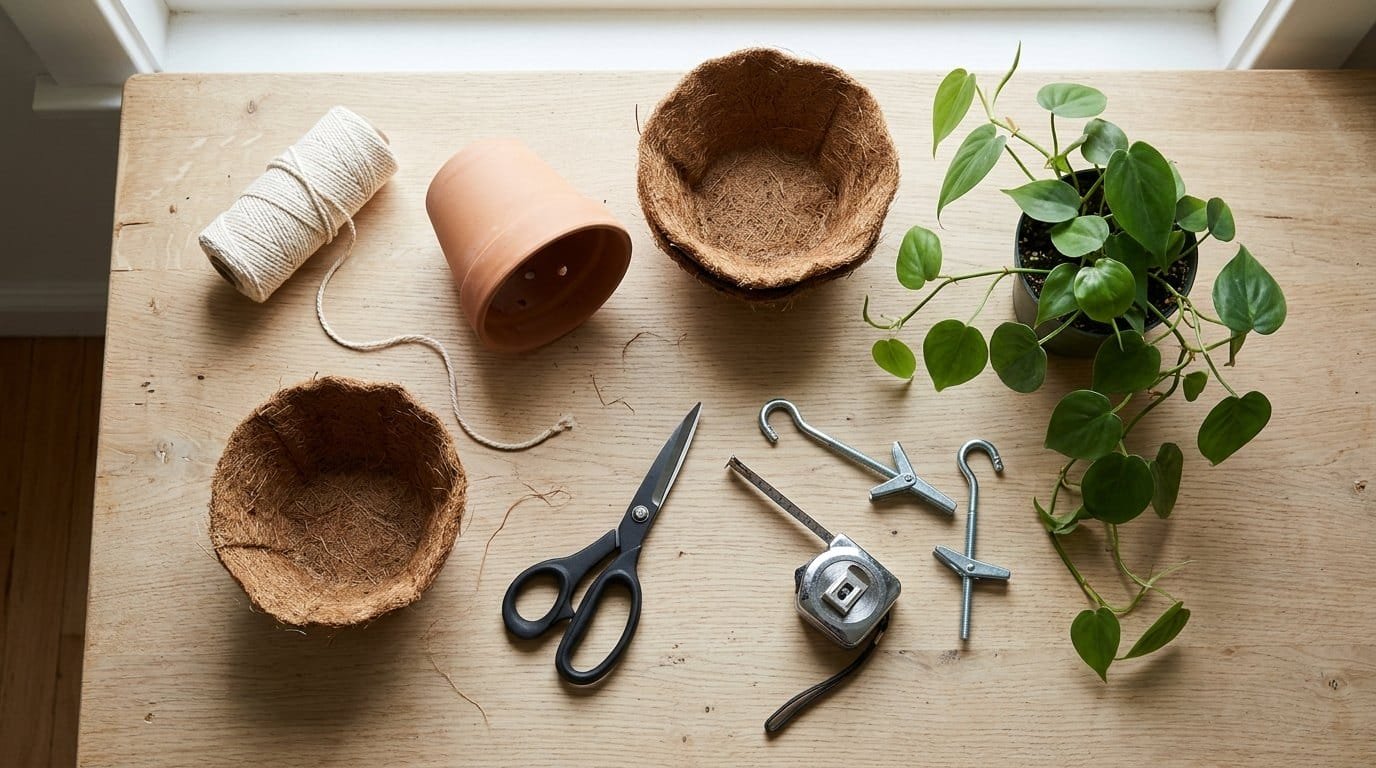
Step 1: Cord Measurement and Structural Ring Threading
Cut 8 identical lengths of 4mm 3-ply twisted natural cotton rope, each measuring exactly 10 feet (120 inches / 3 meters) in length. Natural cotton cord provides superior knot friction compared to slick synthetic cords. Fold all 8 strands evenly in half through a 2-inch solid welded metal or solid hardwood ring, resulting in 16 working strands hanging 5 feet long from the ring apex.
Step 2: The Gathering Wrap Knot Collar
Cut an extra 3-foot length of cord to form the primary load-bearing collar. Form a 3-inch U-shaped bight against the 16 hanging cords just below the ring. Wrap the long tail tightly around both the cords and the bight loop 7 to 8 times moving downward. Pass the wrapping end through the exposed bottom loop, and firmly pull the top standing tail upward until the knot is pulled into the center of the wrap. Trim both tag ends flush.
Step 3: Tying the Four Structural Arms
Separate the 16 hanging strands into 4 distinct groups of 4 cords each (2 outer working cords and 2 inner stationary filler cords per group). Starting 2 inches below the gathering wrap knot, tie a series of 5 consecutive Square Knots on each arm. Leave a 5-inch unknotted cord gap, and tie another sequence of 5 Square Knots. This creates 4 balanced structural suspension arms that prevent the pot from tilting sideways, similar to balance principles used in vertical garden trellises.
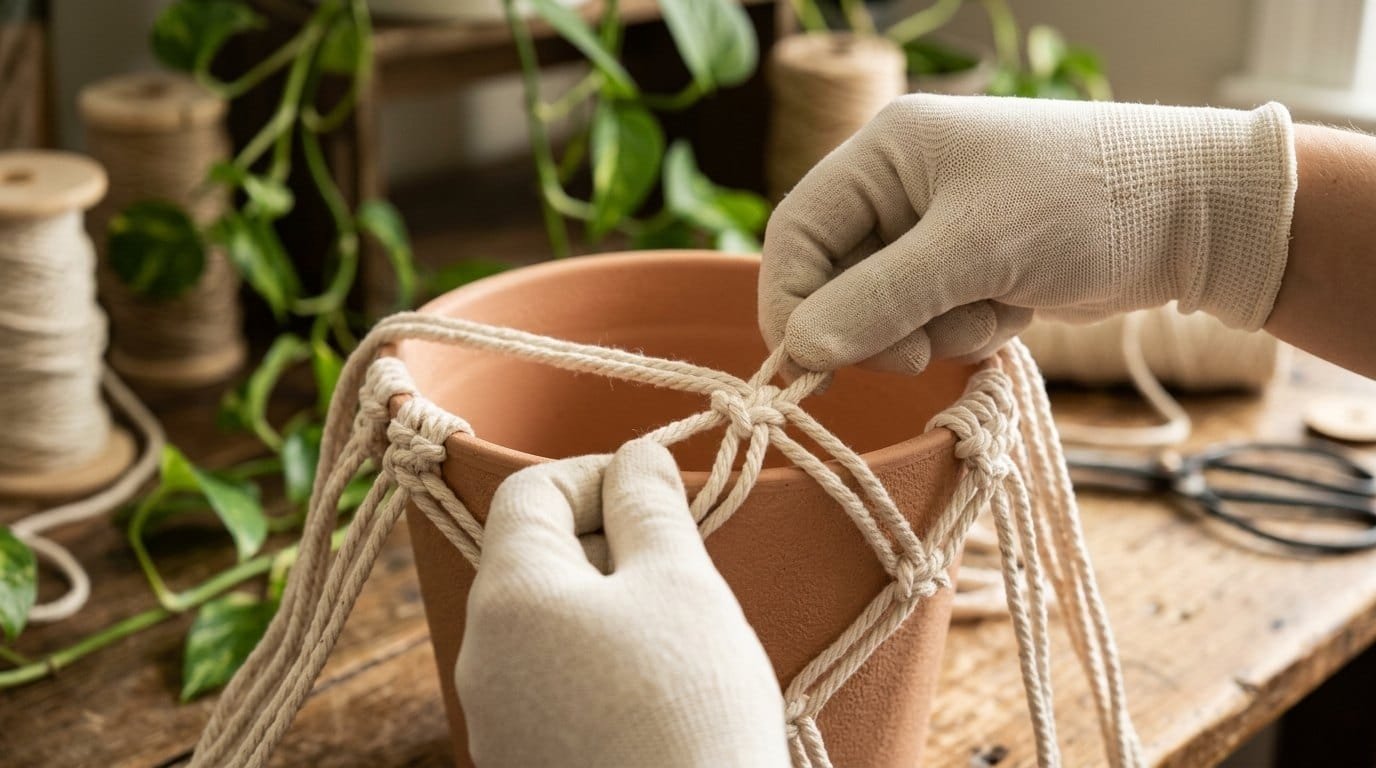
Step 4: Forming the Cradle Net with Alternating Knots
To create the flexible basket that cradles the container body, take 2 cords from one arm and the 2 adjacent cords from the neighboring arm. Position them 4 inches below the upper knot band and tie a secure alternating square knot. Repeat around all four sides. Move down another 3.5 inches and repeat this cross-over knotting. This forms an interconnected diamond netting basket that automatically cinches tight around pots between 6 and 8 inches in diameter.
Step 5: Bottom Base Seal and Static Load Verification
Gather all 16 loose strands together 3 inches below the lowest basket knot. Use another 3-foot piece of cord to tie a heavy-duty 2-inch gathering wrap knot beneath the base of the pot. Trim the bottom tassel to 6 inches for a clean aesthetic. Before hanging your valuable houseplant, place an empty pot filled with 10 pounds of hand weights or dry gravel inside the hanger and suspend it 6 inches above a soft carpet for 15 minutes to pre-stretch the knots and verify structural integrity.
3. Critical Structural Physics: Wet Weight & Mounting Anchors
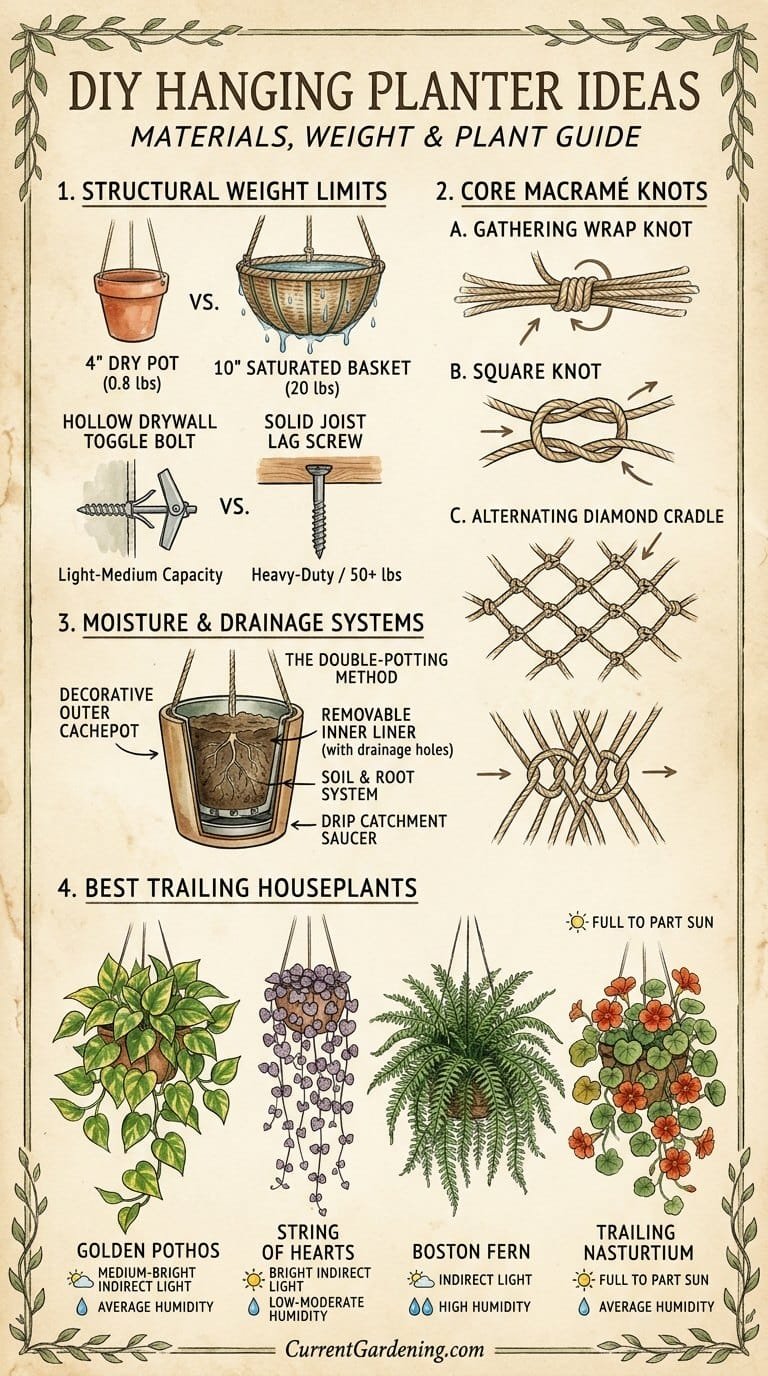
Before driving hooks into ceilings or building macramé nets, gardeners must understand the physics of moisture mass. High-quality soil-less potting substrates contain spherical peat moss, vermiculite, and coconut coir engineered specifically to absorb 400% to 600% of their dry weight in water. When you irrigate a dry hanging pot, its mass increases instantly.
Consider these real-world weight benchmarks before selecting your hanging hardware:
- Small 4-inch pot (Succulent / Herb): Dry weight 0.8 lbs → Saturated wet weight 1.8 to 2.2 lbs.
- Standard 6-inch pot (Pothos / Spider Plant): Dry weight 1.9 lbs → Saturated wet weight 4.5 to 5.5 lbs.
- Medium 8-inch pot (Fern / Trailing Philodendron): Dry weight 3.8 lbs → Saturated wet weight 9.5 to 12.0 lbs.
- Large 10-inch exterior basket (Flowering Annuals / Fruiting): Dry weight 6.0 lbs → Saturated wet weight 18.0 to 22.0 lbs (common in suspended container strawberry baskets).
Never anchor heavy hanging baskets into hollow drywall using standard plastic expansion plugs or conical anchor sleeves. These friction-based fasteners are rated exclusively for shear loads (downward pull along a vertical wall) and possess near-zero resistance against vertical tensile withdrawal from ceilings. A toggle bolt, by contrast, deploys spring-loaded metal wings that spread the physical load across a 2-inch footprint on the hidden upper surface of the drywall sheet.
4. 11 Creative DIY Hanging Planter Projects (Material Breakdown)
Upcycling everyday domestic items into hanging planters saves money, reduces landfill waste, and injects unique architectural character into interior living spaces. Review the comprehensive project comparison below before assembling your materials.
| Project Concept | Difficulty | Ideal Plant Selection | Best Environment | Primary Agronomic / Structural Risk |
|---|---|---|---|---|
| 1. Classic Cotton Macramé | Easy – Moderate | Golden Pothos, Spider Plant | Indoor living rooms & bedrooms | Fiber rot if bottom gathering knot stays wet from pot drainage |
| 2. Upcycled Food Tin Can | Easy | Thyme, Oregano, Dwarf Chives | Sunny kitchen windows & patios | Thin metal overheats roots rapidly; sharp drilled rims cause cuts |
| 3. Mason Jar Cradle | Moderate | Hydroponic water cuttings (Philodendron) | Bright indirect window sills | Root rot in stagnant soil; solar lens thermal damage to foliage |
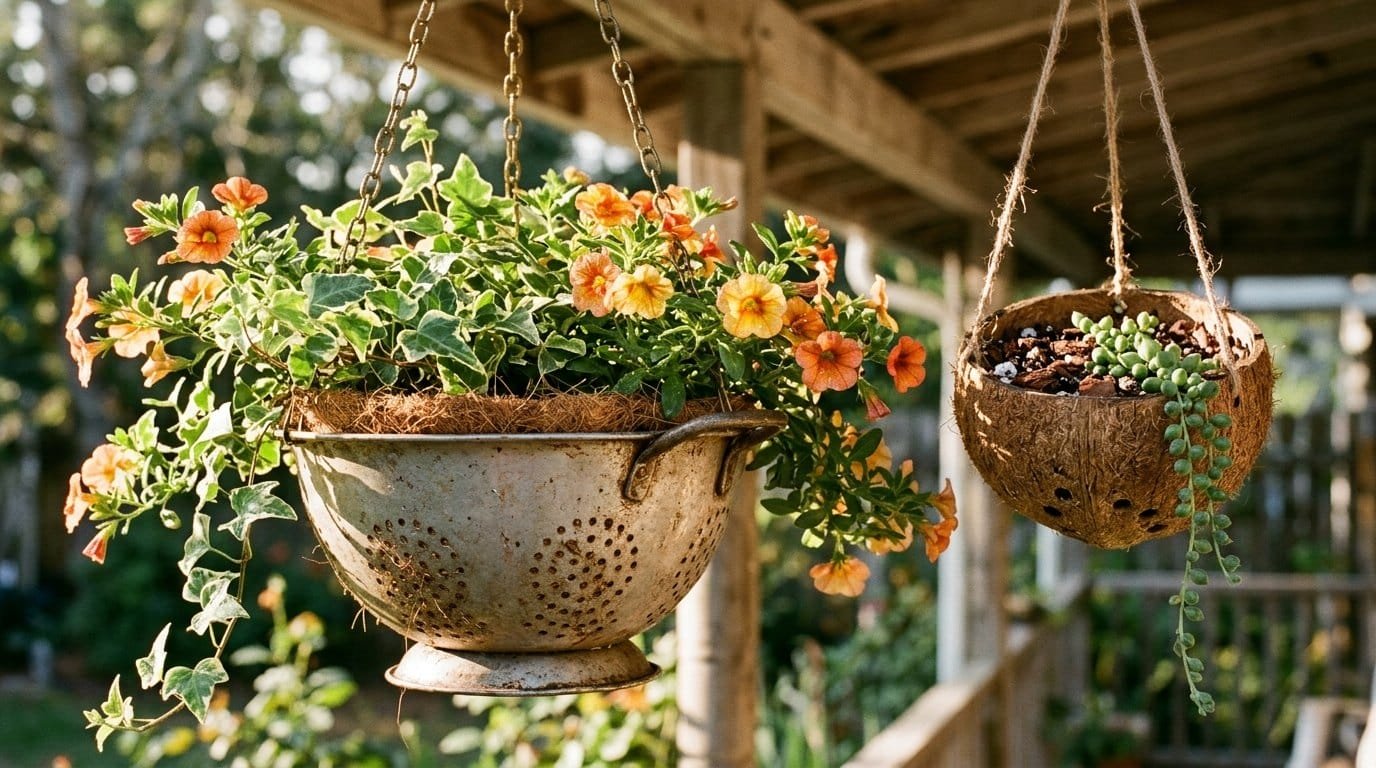
| 4. Kitchen Colander Basket | Easy | Trailing Petunias, Calibrachoa | Covered porches & balconies | Extreme transpiration dry-out in under 12 hours without plastic liner |
| 5. Hardwood Bead Jute Hanger | Moderate | Heartleaf Philodendron, Peperomia | Modern bohemian interiors | Rough bead holes abrading cord fibers over time |
| 6. Natural Woven Seagrass Basket | Easy | Boston Fern, English Ivy | Sheltered indoor corners | Basket base collapses from mildew if saturated directly with runoff |
| 7. Vintage Ceramic Teacup | Moderate | Haworthia, Baby Jade, Air Plants | Narrow kitchen window nooks | Zero root volume; ceramic cracks if drilled without water cooling |
| 8. Reclaimed Cedar Trough Box | Advanced | Trailing Strawberries, Nasturtiums | Outdoor sunny decks & pergolas | High combined wet weight (15–20 lbs) requiring lag joist screws |
| 9. Halved Coconut Shell | Easy – Moderate | Miniature Phalaenopsis, String of Pearls | Humid bathrooms & sunrooms | Natural salt and tannin accumulation stunts sensitive roots |
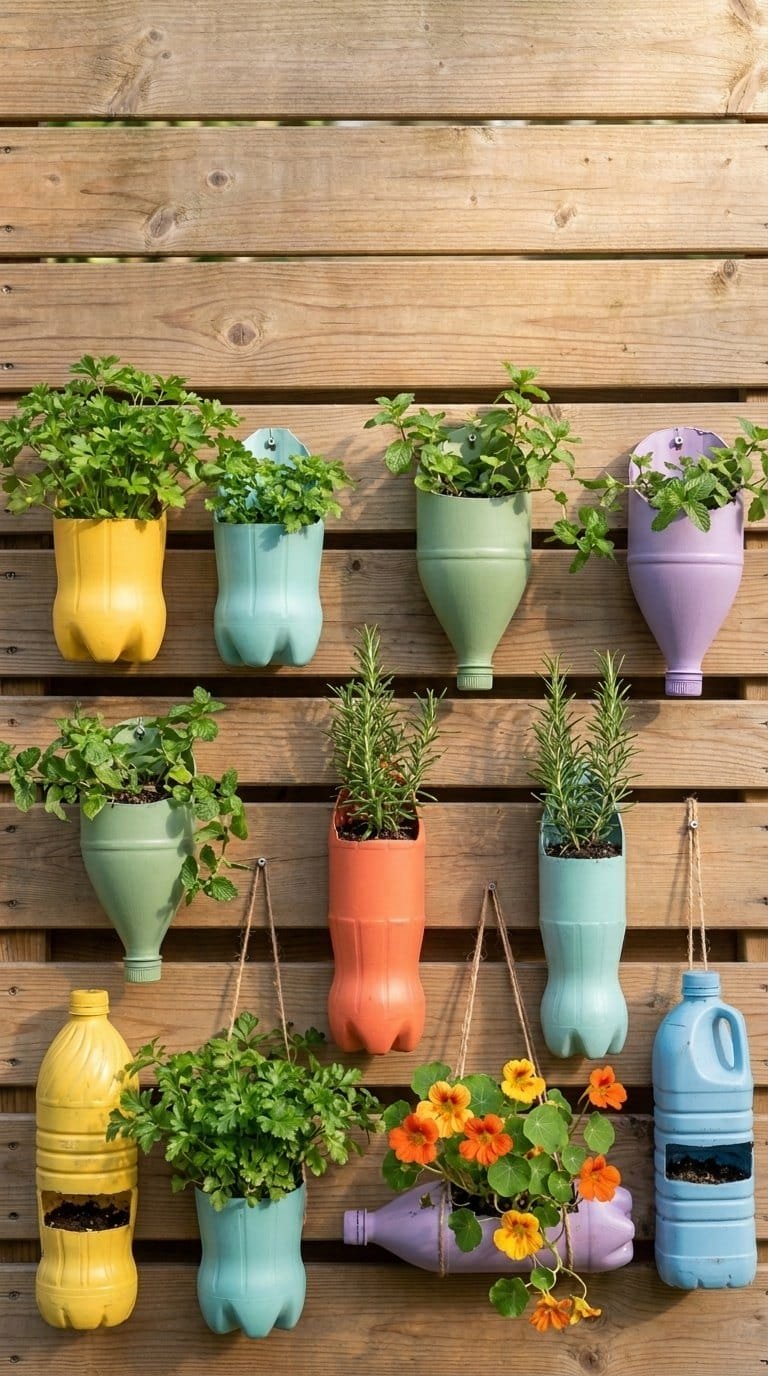
| 10. Tiered Multi-Pot Ladder (refer to our companion planting chart for vertical tiering) | Advanced | Culinary herb collection (Basil, Parsley) | Apartment balcony walls | Top pot water drips brown soil residue onto lower foliage tiers |
| 11. Clamped Railing Planter (excellent for compact container bok choy) | Moderate | Bush Beans, Compact Bok Choy, Alyssum | Urban balcony railings | Wind sheer dislodging unsecured hanging hooks into pedestrian paths |
| Agronomic Rule: For containers with non-porous walls (metal, ceramic, glass), always use the double-pot cachepot system. | ||||
Detailed Material Execution Protocols
1. The Upcycled Food Tin Can: Empty steel food cans are ideal for growing shallow-rooted greens in pots. They must be deburred along the interior rim with needle-nose pliers and smoothed with 120-grit sandpaper to eliminate razor edges. Drill four 3/8-inch drainage holes in the base. Spray the interior with a non-toxic, bitumen-free seal or line with a plastic cup insert to isolate acidic nutrient solutions from reacting with metallic tin, preventing zinc toxicity.
2. The Mason Jar Cachepot: Never plant soil directly into mason jars. Glass acts as a botanical solar lens, concentrating solar radiation on roots and triggering cellular scorch. Use mason jars exclusively for rooting node cuttings in water or as an outer decorative vessel holding a perforated 3-inch plastic orchid basket with natural rooting hormone solution.
3. The Perforated Colander Flower Basket: Metal colanders offer natural drainage, but their countless perforated holes cause soil to dry out within hours on windy balconies. Cut a round circle of recycled plastic potting compost bag, puncture 4 pinholes in the center, and place it beneath the coconut coir liner. This retains a subterranean perched moisture buffer while venting excess water safely.
4. The Leached Coconut Shell: Raw coconut shells contain high concentrations of sodium and bitter polyphenolic tannins. Before planting, boil the halved shell in water for 20 minutes, discard the brown tea-colored water, and drill three 1/4-inch drainage holes in the lowest point. Pair with chunky bark mix for epiphytic houseplants, similar to substrates detailed in our container acid soil guide.
5. Plant Selection by Ceiling Transpiration & Light Dynamics
The microclimate near a home ceiling or covered balcony roof differs drastically from floor level. Warm air rises through convective stratification, elevating temperatures near the ceiling by 4°F to 8°F (2°C to 4.5°C) higher than the ambient room average. Relative humidity drops correspondingly by 10% to 15%. Selecting plants that naturally tolerate rapid transpiration prevents chronic tipburn and defoliation.
- High Ceiling Warmth & Bright Light: Choose drought-resistant trailing succulents with thick waxy cuticles. Senecio rowleyanus (String of Pearls), Ceropegia woodii (String of Hearts), and Sedum morganianum (Burro’s Tail) store water in fleshy leaf tissues, withstanding dry ceiling air.
- Filtered Light & High Humidity (Bathrooms / Kitchens): Epiphytic ferns and tropical aroids thrive here. Boston Fern (Nephrolepis exaltata), English Ivy (Hedera helix), and Heartleaf Philodendron (Philodendron hederaceum) absorb ambient steam through stomatal cavities without suffering desiccation. For lower light areas, consider vegetables and greens that thrive in low light.
- Sunny Outdoor Balconies (High Wind Transpiration): Trailing edible flowers and herbs withstand wind shear. Trailing Nasturtiums (Tropaeolum majus), Calibrachoa, and trailing prostrate rosemary thrive in outdoor hanging baskets. Feed them monthly with diluted worm castings tea or organic potassium amendments. During colder seasons, explore outdoor winter seed starting techniques.
6. Diagnostic Troubleshooting Guide for Hanging Planters
Hanging planters require unique maintenance protocols because visual root inspection is difficult without unhooking the display. Use this field diagnostic matrix to resolve hanging planter issues quickly.
| Observed Symptom | Primary Etiology | Horticultural / Structural Corrective Action |
|---|---|---|
| Water drips onto flooring or wooden furniture | Direct irrigation without a drainage catchment reservoir | Implement cachepot double-potting; soak inner nursery pot in sink, drain for 15 minutes, then return to hanger. |
| Pot leans noticeably to one side | Uneven cord arm lengths or asymmetrical plant canopy weight | Take down planter; loosen knot bights on short arm to equalize strand lengths; rotate pot 90 degrees weekly toward light. |
| Cotton rope develops dark mold or black staining | Drainage runoff pooling against bottom cotton gathering knot | Insert a non-porous plastic saucer between bottom of pot and rope cradle; wash cord with dilute hydrogen peroxide. |
| Foliage wilts 24 hours after thorough watering | Root-bound container or high convective ceiling heat desiccation | Lower planter 12 inches to cooler ambient air zone; repot into next pot size or blend 15% vermiculite into substrate; see our soil moisture aeration guides. |
| Ceiling drywall cracks radiating from hook | Tensile load exceeding drywall sheer capacity; improper anchor | Remove planter immediately; patch drywall and relocate hook to a solid ceiling joist with a 2.5-inch steel lag eye screw. |
| Green slimy algae coating glass or clear plastic | Direct sunlight reaching moist transparent container walls | Wrap container with decorative burlap or opaque cardstock; roots must remain in complete darkness to thrive. |
| Lower leaves turn yellow and drop prematurely | Hypoxic root rot from water sitting permanently in outer vessel | Empty collected stagnant water from outer pot immediately; check roots and consult our leaf nutrient deficiency matrix. |
| Rope strands show fraying and thinning fibers | Mechanical abrasion against sharp ceiling hooks or UV fiber breakdown | Retire cord immediately; replace with 4mm synthetic UV-stabilized paracord or smooth-radius metal hanging rings. |
| Pro Tip: Conduct a 60-second tactile safety inspection of hooks, rings, and knots once per month during routine watering. | ||
📌 Save This DIY Hanging Pot Planter Ideas Guide to Pinterest
Pin this visual reference card to your gardening or plant care board for instant access whenever you need it.
8. Frequently Asked Questions
What is the safest ceiling anchor for hanging a plant pot in drywall without a stud?
For drywall ceilings between ceiling joists, use a 1/4-inch spring-wing toggle bolt rated for at least 30 to 50 lbs of static tensile load. Never use plastic conical wall anchors, threaded drywall anchors, or adhesive hooks, which pull out cleanly under wet substrate weight.
How do you calculate the true wet hanging weight of a plant pot?
To calculate wet weight, add the empty container weight, dry potting mix weight, mature plant mass, and water retention capacity. As a horticultural rule, fully saturated potting soil weighs approximately 8.34 pounds per gallon (1 kg per liter) of water retained.
How can you prevent water from dripping onto floors and furniture from hanging pots?
Use the double-potting cachepot technique: grow the plant inside a standard plastic nursery pot with drainage holes, and nest it inside a sealed decorative outer planter with a 0.5-inch gravel or saucer reservoir. For watering, lift the inner pot, soak thoroughly over a sink, drain for 15 minutes, and return.
Why is clear glass like a mason jar risky for growing plants directly in soil?
Clear glass transmits direct sunlight to the root zone, which inhibits root cell division through negative phototropism, superheats fragile root tips, and triggers rapid green algae blooms. Additionally, glass lacks drainage, creating a perched water table that induces anaerobic root rot.
What type of rope or cord is best for indoor vs. outdoor hanging planters?
For indoor decor, 3mm to 4mm 3-ply twisted natural cotton cord provides excellent knot grip, aesthetics, and tensile strength up to 40 lbs. For outdoor balconies exposed to rain and sun, use UV-stabilized polypropylene, nylon paracord (550 cord), or braided polyester to resist mildew and fiber rot.
How do you prevent metal colanders and wire baskets from drying out too fast?
Perforated metal colanders and wire baskets lined solely with coconut coir lose moisture rapidly in ambient breezes. Line the interior of the coir with a repurposed plastic liner or nursery saucer punctured with 4 needle drainage slits to retain moisture while preventing soil washout.
Which trailing houseplants tolerate warm ceiling heat and dry air best?
Warm air naturally stratifies near ceilings. Drought-tolerant trailing species with thick succulent leaves—such as Golden Pothos (Epipremnum aureum), String of Hearts (Ceropegia woodii), and Wax Plant (Hoya carnosa)—tolerate warm upper ceiling zones far better than delicate ferns.
Can you drill drainage holes into vintage ceramic teacups without cracking them?
Yes, by using a 1/4-inch diamond-grit or carbide-tipped masonry hole saw drill bit at low speed (under 500 RPM) while keeping the ceramic submerged under 1 inch of cool water. Alternatively, avoid drilling entirely by keeping the plant in a tiny 2-inch plastic nursery insert.
University Extension & Agronomic Field Resources
- University of Florida IFAS Extension: Hanging Baskets for Florida Landscapes & Interiors (Publication EP109)
- Oregon State University Extension: Container and Suspended Planter Physical Soil Mechanics (OSU Extension Service)
- UMass Center for Agriculture: Water Retention and Saturated Bulk Density in Peat-Lite Container Substrates (UMass Crop Sheets)
- North Carolina State University Extension: Hanging Basket Plant Selection and Temperature Stratification Dynamics (NCSU Extension AG-509)